


Josh Allen’s Heartbreaking Loss: A Moment of Sports Tragedy and Human Emotion
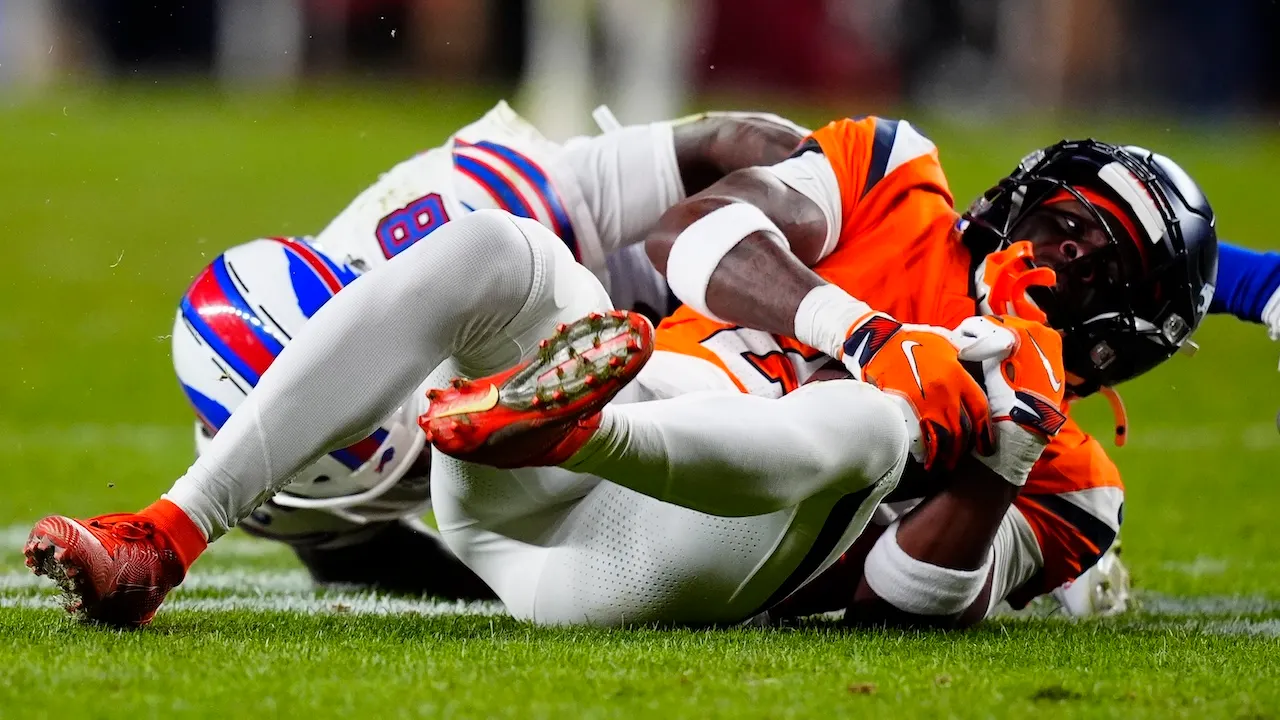
In a devastating turn of events during the AFC Divisional Round game against the Denver Broncos, Buffalo Bills quarterback Josh Allen experienced what can only be described as a cruel twist of fate. With the game in overtime, Allen delivered what should have been the game-winning pass to wide receiver Brandin Cooks, a throw that would have positioned the Bills for a field goal victory. Instead, as Cooks went to the ground with the ball, it somehow shifted into a position where Broncos defensive back Ja’Quan McMillian managed to gain possession. Despite video evidence suggesting Cooks had control of the ball when he hit the ground—which normally would end the play with a completed pass—officials ruled it an interception and upheld the call after review. This controversial decision became the turning point that ultimately sent the Broncos, not the Bills, to the AFC Championship game.
The aftermath of this call resonated deeply throughout social media, with fans expressing outrage and disbelief at what many considered an incorrect ruling. Comments flooded in with statements like “in no world is that an interception” and “Cooks had it,” highlighting the widespread sentiment that the Bills had been robbed of a legitimate completion. The controversial interception wasn’t Allen’s only struggle of the night—in a stark departure from his previous postseason performances, where he had gone six playoff appearances without a turnover, Allen threw two interceptions and lost two fumbles on strip-sacks by Nik Bonitto. This uncharacteristic performance broke Allen’s impressive streak of 204 consecutive completions in the postseason, and despite throwing for 283 yards and three touchdowns, his final pass of the season would be McMillian’s disputed interception.
Perhaps the most poignant moment came in the post-game press conference, where Allen approached the podium visibly emotional, tears streaming down his face. His voice breaking, he took full responsibility for the loss with the heartfelt admission: “I let my teammates down tonight.” This raw display of emotion revealed the profound human dimension of professional sports—behind the statistics, strategies, and controversies are individuals who pour their hearts and souls into their craft, and who feel the weight of defeat as deeply as anyone could. Allen’s tears weren’t just about a single game; they represented the culmination of a season’s worth of hope and effort, suddenly extinguished in a moment that seemed both unfair and beyond his control.
For Buffalo fans, this loss adds another chapter to the city’s storied history of playoff heartbreak. Buffalo’s sports narrative has long been characterized by dramatic near-misses and unusual defeats, creating what some might call a curse on the franchise’s postseason ambitions. The Bills have now experienced multiple devastating playoff exits in recent years, each seemingly more improbable than the last. This particular defeat—turning on a contested call in a moment that could have led to victory—fits perfectly into this unfortunate tradition. The emotional weight of these repeated disappointments doesn’t just affect the players; it resonates throughout a fanbase that has remained loyal through decades of challenging moments, always believing that next year might finally bring the championship that has eluded them.
Meanwhile, the Denver Broncos move forward to what will be their first AFC championship appearance in exactly ten years, since their “No Fly Zone” defense helped carry them to a Super Bowl victory. The Broncos will face either New England or Houston for the AFC title at Empower Field at Mile High, where they’ve established remarkable dominance, winning 14 of their last 15 games. Denver’s opportunistic defense created five takeaways against the Bills, showcasing a team that capitalized on every opportunity presented to them. The controversial interception was just the final moment in a game where the Broncos repeatedly found ways to disrupt the Bills’ offense and create game-changing plays. After the interception, quarterback Bo Nix led Denver into field goal range, aided by two crucial pass interference penalties against the Bills defense, setting up Will Lutz’s game-winning kick.
This game ultimately transcends the basic narrative of wins and losses to highlight the human element that makes sports so compelling. Josh Allen’s tears remind us that athletes aren’t just performers for our entertainment but people who invest their identities and emotions into their craft. The controversial ending underscores how thin the line between victory and defeat can be, and how a single moment—one that will be debated by fans for years to come—can dramatically alter the trajectory of a season, a career, and a franchise. As Denver moves forward in their championship pursuit and Buffalo faces another offseason of “what ifs,” both teams and their fanbases demonstrate the full spectrum of emotions that make sports such a powerful reflection of the human experience: the elation of unexpected victory, the agony of defeat, the controversy of contested decisions, and ultimately, the resilience to move forward and believe in the possibility of redemption next season.