






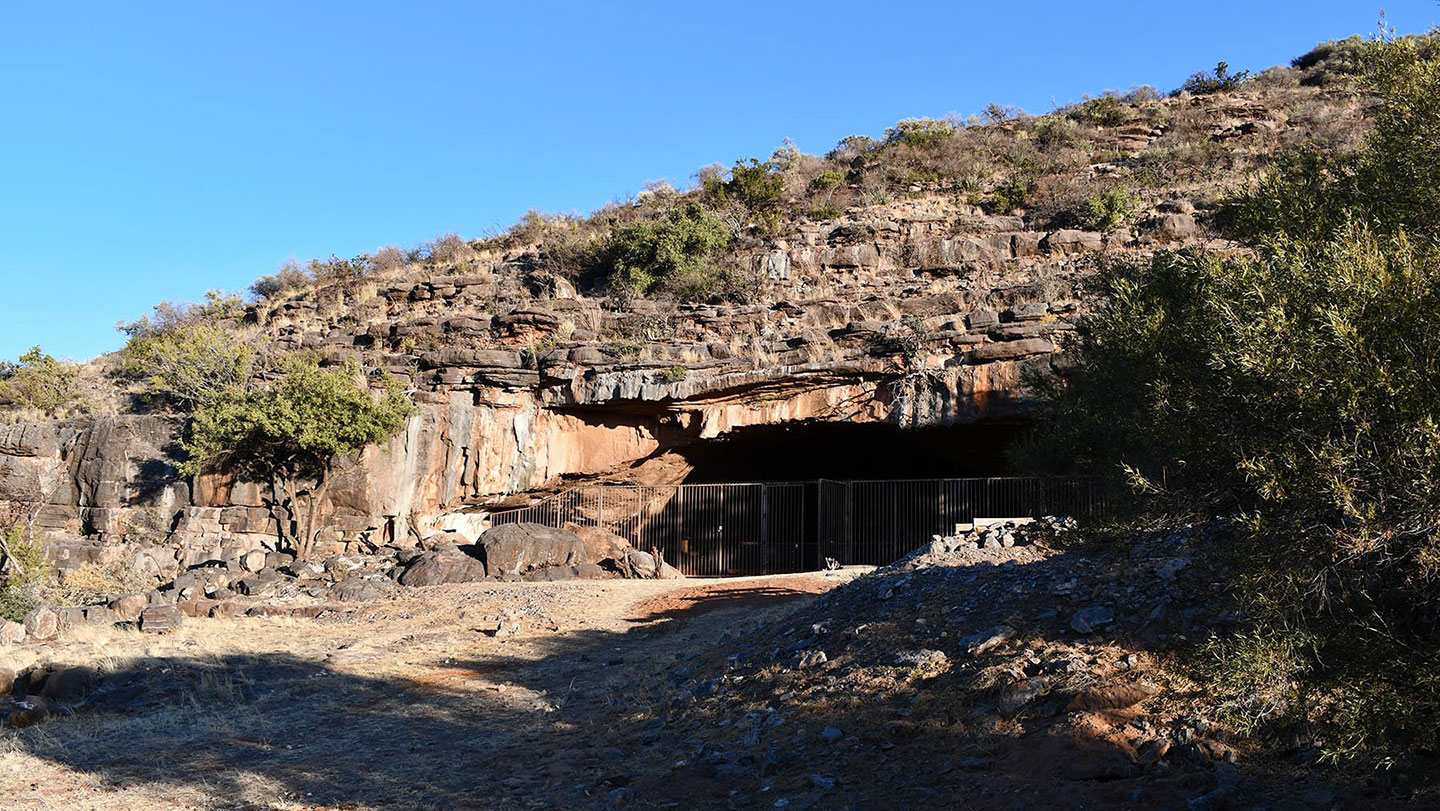
Imagine standing at the mouth of a deep, dark cave nearly 1.8 million years ago, watching the flickering warmth of a fire dance across the stone walls. For our ancient ancestors, Homo erectus, this glowing flame was not just a source of comfort, but a revolutionary shield against the terrors of the prehistoric night. A groundbreaking study published in PLoS One has revealed that these hominids were utilizing fire hundreds of thousands of years earlier than previously thought. By uncovering the microscopic charring of ancient debris in South Africa’s Northern Cape province, researchers have rewritten a massive chapter in the story of human evolution, proving that our relationship with fire began in the incredibly distant past.
This remarkable breakthrough unfolded in Wonderwerk Cave, a massive geological wonder that has served as a sanctuary for both animals and early humans for millennia. Led by Michael Chazan, an archaeologist from the University of Toronto, researchers dug deep into the cave’s stratified floor, looking past layers of known human activity to uncover sediment dating back between 1.07 and 1.79 million years. Chazan confidently places the age of this newly discovered fire level at the older end of that spectrum, roughly 1.7 to 1.8 million years ago. Prior to this discovery, the earliest accepted proof of hominid fire use sat at about 1 million years ago—found, fascinatingly enough, in the very same cave. This new find represents a massive temporal leap, changing our understanding of how early our ancestors integrated this natural force into their daily lives.
To confirm that these ancient flames were real and not just a trick of geological preservation, the research team stepped outside the traditional archaeological toolkit. They borrowed a sophisticated luminescence detection method commonly used by modern forensic scientists to identify heat-altered bones at crime scenes. The material they tested was as quirky as it was revealing: the calcified, burnt remnants of ancient owl pellets. These indigestible packages of fur and tiny bones, coughed up by barn owls after feasting on small rodents, had accumulated on the cave floor over generations. By analyzing these minuscule bones, the team was able to prove beyond a doubt that they had been subjected to intense heat from ancient hearths.
This unique partnership of archaeology and paleontology paints a cozy, if slightly chaotic, picture of life in Wonderwerk Cave. For hundreds of thousands of years, the cave was shared between nesting barn owls (Tyto alba) roosting high in the crevices and nomadic groups of Homo erectus seeking shelter below. As the owls went about their nightly hunts and dropped their pellet refuse onto the cave floor, our human ancestors lived right on top of this debris. Whenever the hominids gathered to build fires, the heat radiating downward baked the owl pellets scattered in the dirt. It is a beautiful irony of history that a bird’s rejected meal would become the vital clue helping modern scientists understand the behaviors of our oldest relatives.
Despite their familiarity with fire, these early humans were not master survivalists rubbing sticks together in the way we might imagine. The archaeological record suggests that Homo erectus did not actually know how to spark a flame from scratch—a milestone humanity would not achieve until about 400,000 years ago. Instead, they had to be opportunistic custodians of the landscape, capturing embers from natural wildfires caused by seasonal heat or lightning strikes and carefully carrying them back to the safety of the cave. Chazan emphasizes that this was an era of fire collection rather than fire creation, requiring a keen understanding of the natural world and a dedicated effort to keep the captured flames alive.
Because of this reliance on nature to source their fires, the warmth in Wonderwerk Cave was likely an occasional luxury rather than a daily guarantee. The fires were highly dependent on seasonal weather patterns, meaning Homo erectus could not yet build their entire lifestyle around a reliable hearth. Even so, these periodic experiences of warmth, light, and protection from predators represent a profound step forward. They highlight a species starting to interact with their environment in a remarkably active way, laying the delicate, smoky foundations for the complex, fire-wielding societies we live in today.