





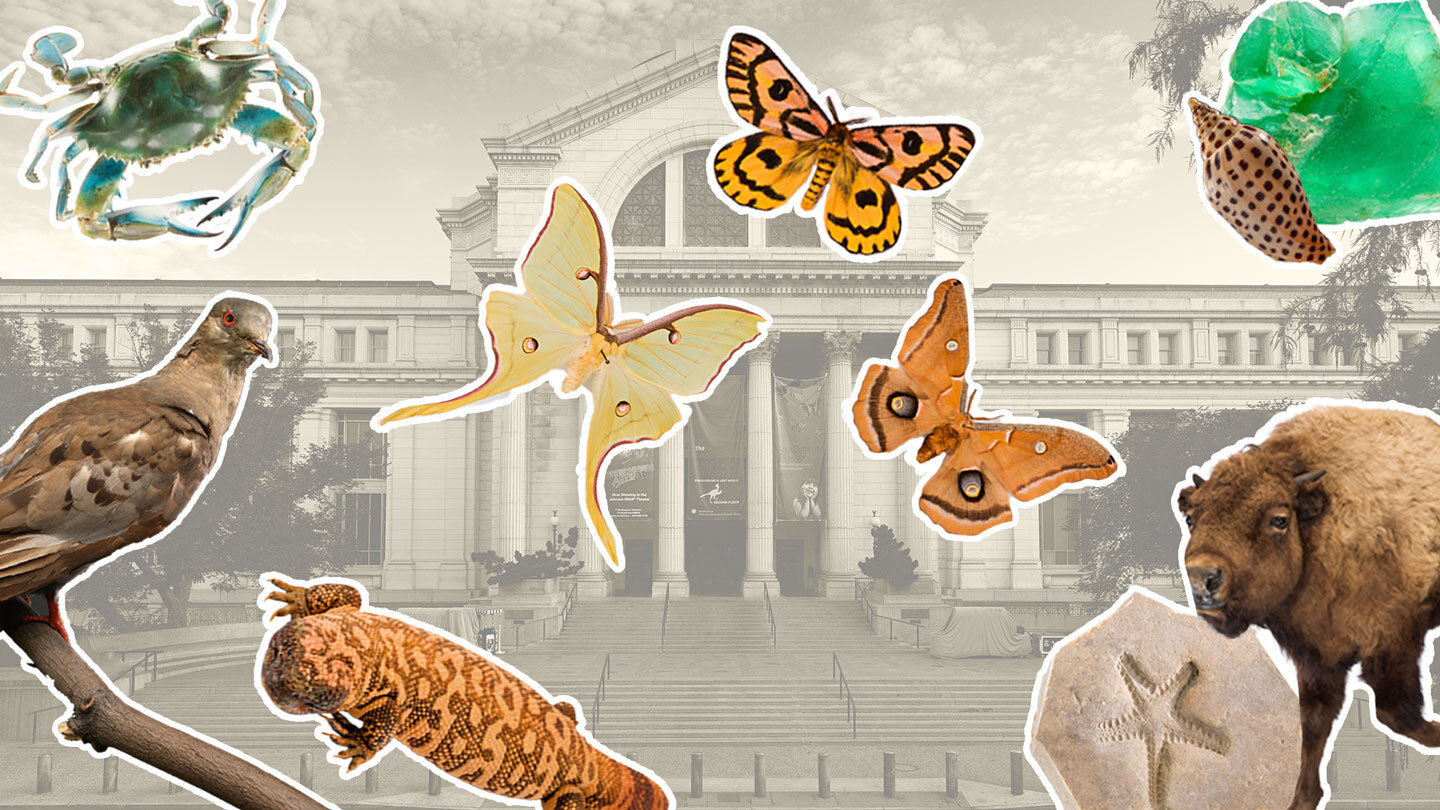
Step across the threshold of the Smithsonian National Museum of Natural History, away from the echoing marble corridors and the majestic, familiar silhouette of Henry the African bush elephant in the rotunda, and you will find yourself entering a space that feels less like a traditional gallery and more like a sanctuary of living memory. The museum’s latest landmark exhibition, “From These Lands,” represents a profound evolution in how we display, understand, and feel the natural heritage of the North American continent. Rather than cataloging the natural world as a series of isolated specimens frozen behind glass, this exhibition invites visitors into an immersive, sensory-rich narrative of connection, survival, and mutual belonging. Walking into the gallery, the sharp, clinical lighting of the modern museum softens into daylight filtered through conceptual forest canopies, accompanied by the gentle, low-frequency hum of wind rustling through Midwestern tallgrass prairies and the distant, rhythmic lap of waves on Pacific shores. It is an immediate reminder that nature is not something we merely look at; it is an environment that cradles us, a dynamic and ancient system that has shaped human identity, culture, and survival for millennia. By centering the human heart within the broader tapestry of geological deep time and ecological diversity, “From These Lands” breaks down the artificial barriers that have long segregated human history from natural history. Visitors are not invited merely to observe, but to recollect, to feel the dirt beneath their conceptual feet, and to recognize that the history of America is written not just in textbooks and treaties, but in the very soil, stone, and waters of the continent we call home. It is a stunning, beautifully humanized debut that challenges us to reconsider our place in the web of life, urging us to step out of our rapid-fire digital existences and slow down to the patient, enduring heartbeat of the Earth.
To truly understand the present state of the American landscape, the exhibition guides visitors on a journey backward through deep geological time, showing how the physical foundations of our world were forged over millions of years of dramatic transformation. Here, the sterile language of paleontology is infused with poetic resonance and deep human curiosity, illustrating how ancient tectonic shifts, massive glacial retreats, and volcanic upheavals created the wildly diverse biomes that define the United States today. Massive rock strata, glittering mineral deposits, and towering fossil assemblies are displayed alongside interactive features that allow visitors to visualize how the Great Plains were once a vast inland sea, or how the towering peaks of the Appalachian Mountains were once as high and rugged as the modern Himalayas before being worn down by the patient, persistent hands of wind, ice, and rain. The exhibit brilliantly juxtaposes these immense physical transformations with the human scale of time, helping us realize that our entire history is but a brief whisper in the long, epic poem of this continent. By framing geology as the literal ‘bones’ of our shared home, the Smithsonian transforms cold stones into storytellers, revealing how the mineral richness of the Earth dictated where our ancestors settled, where our cities grew, and how our societies flourished. Witnessing these deep-time artifacts, visitors are struck by a profound sense of humility, realizing that the rich topsoil feeding our agricultural heartlands and the aquifers quenching our thirst are precious, non-renewable legacies bequeathed to us by eons of planetary history. Through this perspective, the museum coaxes us to view the ground beneath our feet not as mere real estate, but as a living record of our collective past and a silent partner in our ongoing journey.
A pivotal strength of “From These Lands” lies in its brave and beautiful decentering of the traditional European-centric narrative of the “untamed wilderness,” replacing it with a rich, collaborative tapestry of Indigenous stewardship and traditional ecological knowledge. For generations, natural history museums displayed North America as an empty, pristine frontier awaiting discovery, largely ignoring the sophisticated environmental management practiced by Native communities for thousands of years. This exhibition directly corrects that omission by weaving the living voices, oral histories, and ecological insights of Native American, Alaska Native, and Native Hawaiian communities directly into the scientific narrative of the continent. Visitors learn how controlled cultural burns managed by tribal groups maintained the health of Western forests, how traditional agricultural systems like the “Three Sisters” (corn, beans, and squash) optimized soil health without chemical fertilizers, and how coastal peoples developed sustainable fishing technologies that preserved salmon populations for generations. Beautifully preserved cultural artifacts—from intricately woven sweetgrass baskets to hand-carved cedar canoes—are displayed alongside biological specimens, proving that human culture and environmental health have always been inextricably linked. This section of the exhibit operates on the principle that conservation is not about keeping people separate from nature, but about restoring a relationship of reciprocal care, highlighting how these enduring practices are not relics of the past, but vital blueprints for our collective ecological survival in the face of modern climate challenges. By listening to the stories of elders who speak of the earth as a relative rather than a resource, visitors are invited to shed their detachment and embrace a deeper, ancestral way of belonging to the land.
Where many traditional exhibits rely heavily on visual observation, “From These Lands” engages the full spectrum of human senses to forge an emotional, physical bond between the visitor and the natural world. The curators have thoughtfully integrated state-of-the-art sensory technology with tactile elements, allowing people to smell the rich, earthy scent of damp Pacific Northwest red cedar after a simulated rainstorm, feel the contrasting textures of different soils from across the continent, and listen to the distinct acoustic ecology of various habitats. In one particularly moving alcove, visitors can sit quietly and listen to a “symphony of the wild,” a carefully composed soundscape featuring the haunting mating calls of the common loon on a misty Minnesota lake, the wind whispering through Arizona canyonlands, and the deep, reassuring grunts of bison moving across the plains. These sensory stations are highly accessible, designed to ensure that visitors of all physical abilities can connect with the exhibit on a deeply personal level. By appealing directly to our senses, the exhibit triggers personal memories—perhaps of a childhood summer spent near a lake, a hike through a crisp pine forest, or the simple joy of watching birds in a suburban backyard. This intentional emotional cultivation turns scientific education into a deeply empathetic experience, reminding us that our love for nature is first and foremost physical and sensory, rooted in the sights, smells, sounds, and textures that have comforted and inspired humanity since the dawn of our existence. It is this sensory awakening that shifts the visitor from a state of passive learning to one of active, emotional engagement, making the plight of nature feel like an intimate family matter.
While the exhibition celebrates the immense beauty and resilience of the American landscape, it does not shy away from the darker, more painful chapters of environmental degradation, resource exploitation, and biodiversity loss that have characterized the modern era. Through a series of sobering, honest displays, “From These Lands” chronicles the devastating impacts of industrialization, suburban sprawl, deforestation, and fossil fuel consumption on our fragile ecosystems. Visitors are confronted with the stark realities of habitat fragmentation, rising global temperatures, and the silent tragedy of extinction, illustrated by poignant displays of lost species such as the passenger pigeon and the Carolina parakeet. Yet, the exhibition narrative resists falling into a pit of hopeless despair; instead, it masterfully pivots toward the inspiring stories of ecological restoration, modern climate science, and human agency. Guests are introduced to contemporary scientists, local community activists, and ordinary citizens who are working tirelessly to heal these fractured ecosystems through pioneering projects. From the triumphant reintroduction of the American bison to the Great Plains and the restoration of vital wetlands along the Mississippi River, to urban community gardens transforming concrete jungles into biodiverse havens, these stories of action prove that human ingenuity and determination can reverse environmental decline. This section acts as a powerful witness to both our capacity for destruction and our immense, beautiful potential for healing, leaving visitors feeling not defeated, but deeply motivated to participate in the restoration of our shared backyard. It reminds us that while we have been the authors of much damage, we are also uniquely equipped to be the architects of recovery.
As visitors prepare to leave the warm, restorative embrace of “From These Lands” and step back out into the bustling streets of Washington, D.C., they are met with a quiet, reflective space designed for introspection and commitment. This final chapter of the exhibit serves as an intellectual and emotional bridge, asking us to carry the lessons of deep time, Indigenous stewardship, sensory love, and active conservation into our daily lives and local communities. It reminds us that “these lands” are not just remote national parks or distant wildernesses, but are also the creeks running through our suburban neighborhoods, the urban parks outside our office windows, and the soil supporting the food on our dinner tables. The exhibition transforms the visitor from a passive observer of natural history into an active participant in its ongoing creation, posing the fundamental question: what legacy will we leave for the generations that follow us? By grounding complex scientific concepts in human stories, sensory experiences, and cultural truths, the Smithsonian National Museum of Natural History has created far more than a mere showcase of specimens; it has constructed a mirror reflecting our own collective soul and our eternal, unbreakable bond with the Earth. “From These Lands” is a triumphant, deeply humanized masterpiece that does not just educate the mind, but profoundly nourishes the spirit, reminding us that we do not merely live on this land, but that we are, in every meaningful way, a living, breathing part of it.