



Scientific Breakthroughs of 2025: Pushing the Boundaries of Discovery
In 2025, science has reached astonishing new heights, with researchers around the globe making discoveries that stretch the boundaries of human knowledge. From record-breaking natural phenomena to groundbreaking applications of artificial intelligence, this year has delivered a fascinating array of scientific achievements that capture both our imagination and our curiosity about the world around us.
One of the most spectacular discoveries of 2025 was the identification of Earth’s longest lightning bolt ever recorded. In October 2017, scientists finally confirmed an extraordinary megaflash that stretched approximately 830 kilometers from Dallas all the way to Kansas City, Missouri. This colossal electrical discharge, which lasted an impressive 7.39 seconds, officially surpassed the previous record holder – a 709-kilometer bolt that had zipped across Brazil and Argentina in 2019. What makes this discovery particularly remarkable is its rarity; such enormous lightning megaflashes occur in only about one in every thousand thunderstorms across the Americas. The identification of this record-breaking bolt has provided meteorologists with valuable new insights into the extreme capabilities of electrical storms and their potential impact on our infrastructure and safety protocols. This finding reminds us that even familiar natural phenomena like lightning can still surprise us with their extraordinary power and scale.
Meanwhile, in the realm of artificial intelligence, 2025 has witnessed a significant milestone as researchers successfully created the first AI-generated genomes for living organisms. Scientists managed to use artificial intelligence to write the genetic blueprints for 16 different bacteria-killing viruses – all carefully selected to pose no threat to humans. This breakthrough represents a monumental step toward potentially using AI technology to design entirely new living organisms in the future. However, the scientific community acknowledges that artificial intelligence still has limitations when working independently. At a recent conference, researchers put AI’s scientific capabilities to the test by having AI agents generate hypotheses, analyze data, and produce academic paper submissions, which were then evaluated by human reviewers. The results revealed a mixed performance, with human researchers often needing to step in to correct errors, and some AI-produced papers being deemed neither interesting nor important by human standards. This reality check highlights that while AI continues to advance rapidly, the unique creativity and judgment of human scientists remains irreplaceable in the scientific process.
The field of archaeology experienced its own remarkable breakthrough this year with the discovery of the world’s oldest known mummification technique. Researchers studying curled up, crouched skeletons of ancient people buried across southern China and Southeast Asia found evidence that these remains were slowly smoke-dried over fires more than 10,000 years ago. This finding is particularly significant as it predates the previously known earliest mummification practices in Ancient Egypt and South America by approximately 7,000 years. One particularly well-preserved example includes a man’s remains dating back more than 9,000 years. This discovery fundamentally shifts our understanding of how ancient cultures preserved their dead and suggests that ritualized care for deceased individuals emerged much earlier in human history than previously thought. The sophistication of these preservation techniques indicates a level of cultural and technological advancement among these ancient populations that forces archaeologists to reconsider the timeline of human innovation in mortuary practices.
Equally significant in pushing back our understanding of Earth’s earliest history, geologists have identified what may be our planet’s oldest rocks in a remote outcrop located in northeastern Canada. Dating to an estimated 4.16 billion years old, these ancient formations originated during the Hadean Eon – a violent period when asteroids frequently collided with our young planet, including the massive impact that broke off chunks of rock now forming our moon. This finding strengthens earlier research from 2008 that had suggested these same rocks might be as old as 4.3 billion years. What makes this discovery so valuable is that these are the first rocks definitively dated to Earth’s earliest geological period, providing scientists with tangible material evidence from a time when our planet was still in its formative stages. By studying these ancient rocks, geologists can glean crucial information about the conditions and processes that shaped Earth during its infancy, potentially revealing insights about how our planet developed the conditions necessary for life to eventually emerge.
In the animal kingdom, researchers captured remarkable footage that may represent the first evidence of tool use in wild canids. Video recorded in British Columbia shows a gray wolf ingeniously dragging a crab trap ashore and then feasting on the bait inside. This observation has sparked debate among scientists about whether this behavior truly constitutes tool use or should more accurately be classified as object use, since the wolf didn’t set up or control all components of the trap. Regardless of the classification, this clever demonstration of problem-solving indicates that wolves may possess more sophisticated cognitive abilities than previously recognized. This finding adds to our evolving understanding of animal intelligence and suggests that the capacity for using objects as tools may be more widespread across species than we once believed. If confirmed as genuine tool use, this would represent a significant addition to the small club of non-human animals known to manipulate objects as implements to achieve their goals.
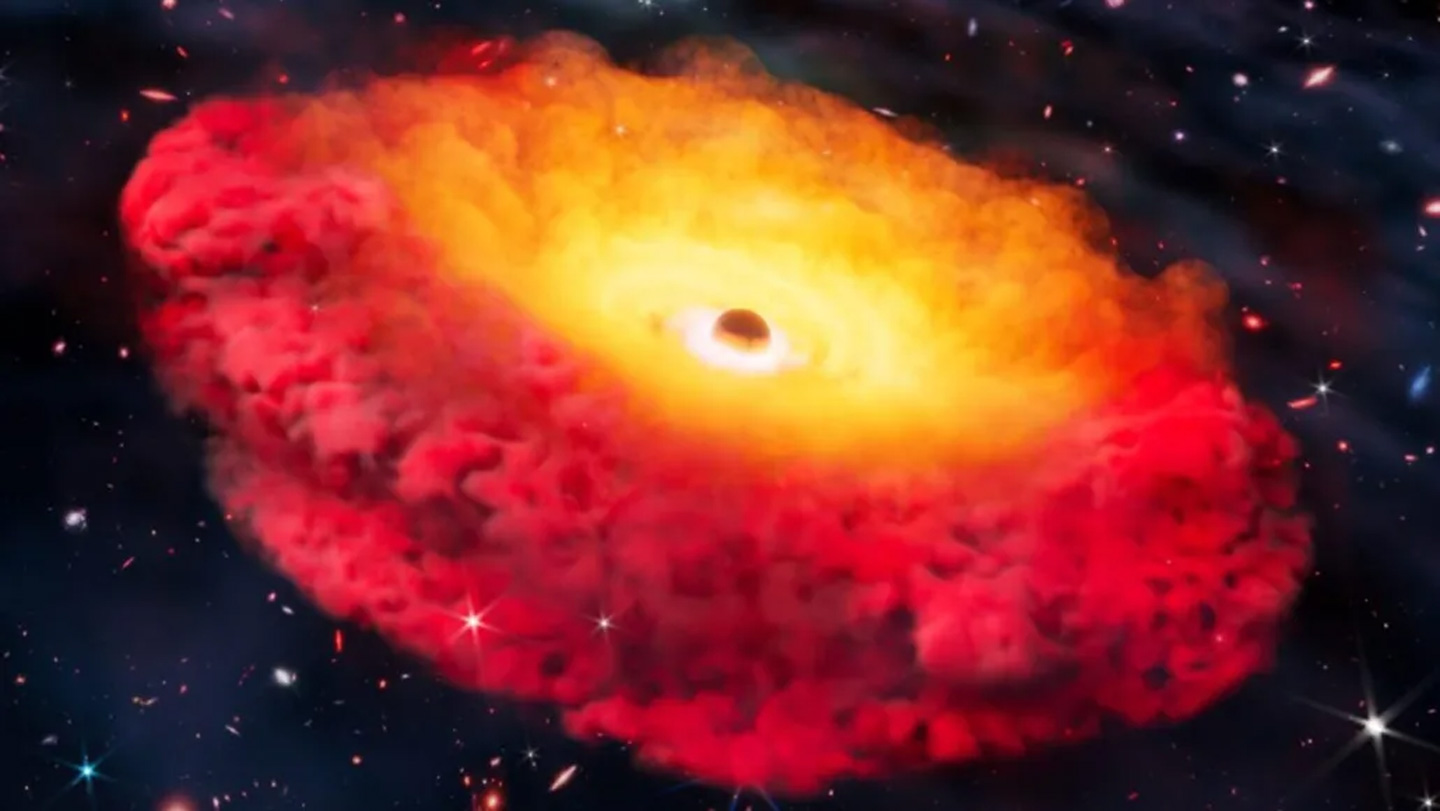
Finally, in the cosmic realm, astronomers have documented two extraordinary black hole discoveries that challenge our understanding of the universe. Researchers recorded the largest collision ever confirmed between two black holes, each with masses exceeding 100 times that of our sun. This massive cosmic merger resulted in a black hole approximately 225 times the sun’s mass – a phenomenon that defies conventional physics theories because collapsing stars shouldn’t be able to form black holes of the size involved in this collision. Scientists are puzzling over how these enormous cosmic entities formed in the first place, with possibilities including repeated mergers of smaller black holes or a scenario where a smaller black hole consumed the gas surrounding a much larger counterpart. Meanwhile, another significant discovery identified the oldest known black hole, designated CAPERS-LRD-z9. With a mass of 38 million suns, this ancient cosmic sinkhole formed more than 13 billion years ago, within just 500 million years of the Big Bang itself. These findings not only push the boundaries of what we thought possible regarding black hole formation and evolution but also provide valuable insights into the earliest epochs of our universe.