


Tiny T. Rex Cousin Confirmed: Nanotyrannus Is Indeed Its Own Species
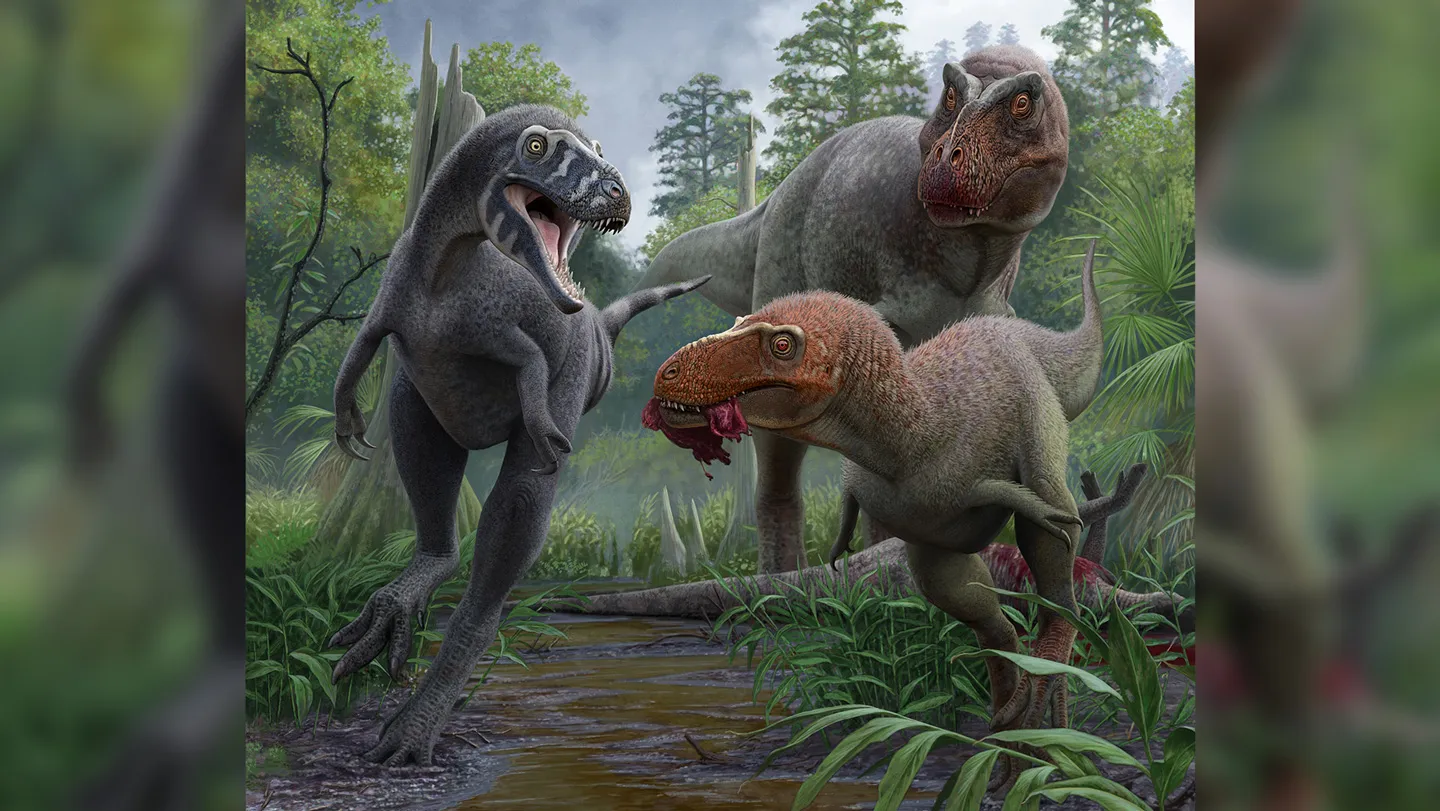
In a scientific breakthrough that settles one of paleontology’s longest-standing debates, researchers have confirmed that Nanotyrannus is a distinct species and not simply a juvenile Tyrannosaurus rex. The conclusion comes from two separate studies published just months apart in 2025, each using different analytical methods but arriving at the same result. This revelation marks a significant turning point in our understanding of tyrannosaur diversity during the Late Cretaceous period.
The controversy centers around a small tyrannosaur skull discovered in the 1940s. For decades, scientists have argued over its classification – was it a young T. rex still growing into its fearsome adult form, or a separate, smaller species of tyrannosaur? Until this year, the scientific consensus favored the juvenile T. rex interpretation, but a persistent minority of researchers maintained it represented a distinct miniature tyrannosaur they named Nanotyrannus lancensis. Now, compelling evidence from multiple research teams has definitively settled the debate in favor of Nanotyrannus being its own species.
In the most recent study, Princeton University paleontologist Christopher Griffin and colleagues took an innovative approach to analyzing the controversial skull. Griffin, a specialist in bone histology (the study of growth rings to determine age), wondered if this technique could be applied to a fossil specimen that lacked limb bones, which are typically used for such analysis. The team focused on the hyoid – a set of throat bones with a simple tubular structure similar to limb bones – and carefully examined thin cross-sections under a microscope to analyze growth patterns. “We thought we would find it’s immature, juvenile,” Griffin admitted, noting that at the time he began the research, the T. rex hypothesis was dominant. “I’m not a Tyrannosaur expert, I was just taking everybody at their word.”
The results, published in Science on December 4, took the research team by complete surprise. The hyoid analysis not only proved effective but revealed that the animal was fully mature – not a juvenile as the T. rex hypothesis required. To validate their methodology, the team conducted extensive comparative studies of hyoid cross-sections from living dinosaur relatives including caimans, alligators, and ostriches, as well as fossils of T. rex, Allosaurus, and other dinosaurs. In all cases, the hyoid-based age estimates aligned with traditional maturity indicators like limb bone histology, confirming the reliability of their approach. This comprehensive analysis led to an inescapable conclusion: the skull belonged to a fully grown Nanotyrannus lancensis, not a young T. rex.
Remarkably, this finding comes just one month after another research team published similar conclusions using entirely different evidence. Their study of another small tyrannosaur fossil also determined it was a mature specimen of Nanotyrannus lancensis rather than a juvenile T. rex. “We converged on the same ultimate conclusion using two very different lines of evidence,” Griffin observed, highlighting how these independent investigations reached identical results through distinct methodological approaches. This convergence of findings from separate research teams using different analytical techniques provides particularly strong support for Nanotyrannus as a valid taxon.
The confirmation of Nanotyrannus as its own species has profound implications for our understanding of dinosaur ecology and evolution. It suggests the ecosystem of Late Cretaceous North America was more complex than previously thought, with multiple tyrannosaur species occupying different ecological niches. Rather than a single apex predator dominating the landscape in the form of T. rex, we now understand that smaller tyrannosaurs coexisted alongside their massive relatives. This revelation invites paleontologists to reconsider other contested species classifications and demonstrates how new analytical techniques can resolve longstanding scientific debates. As we continue to refine our methods for studying these ancient creatures, we may discover that the prehistoric world was even more diverse and fascinating than we’ve imagined.