


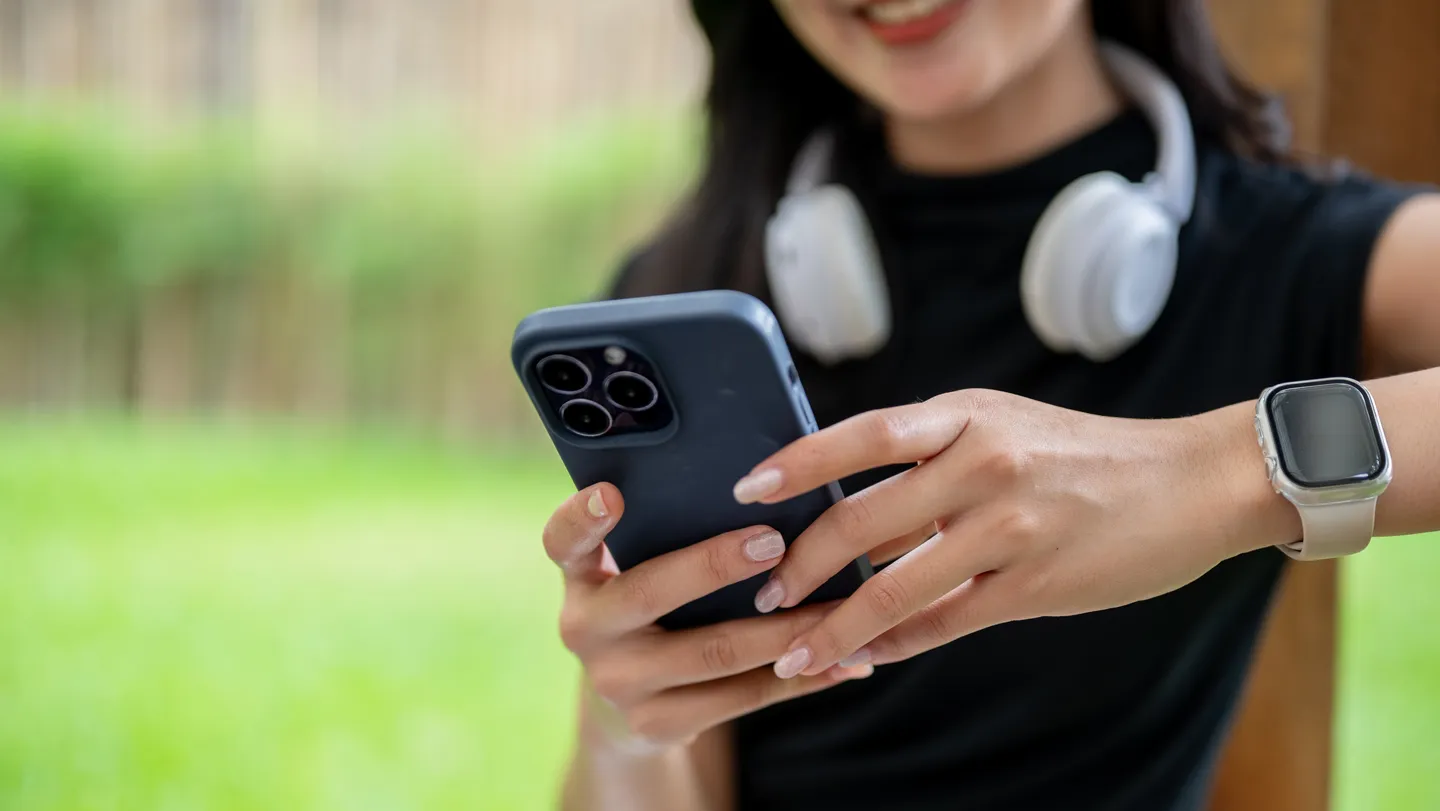
Imagine waking up one morning, already running late for a meeting, and your smartphone just won’t cooperate because your fresh mani is making it impossible to type with your nails. You’ve got those sleek, elongated tips that look fabulous, but every time you try to tap the screen, nothing happens. Frustrating, right? That’s the daily reality for many folks with long nails, who have to awkwardly switch to using the fleshy part of their fingers, leading to typos and that odd, tilted angle that messes with your muscle memory. But what if there was a way to make those polished nails not just a fashion statement, but a functional tool in the digital world? Well, scientists have stumbled upon a brilliant innovation: a specially formulated nail polish that could turn your fingernails into touchscreen activators. By disrupting the electric field on the screen, this polish registers touch just like your fingertip does. It’s early days yet—not ready for store shelves—but the potential is enormous. As Shuyi Sun, a computer scientist and researcher in cosmetic biosensors, puts it, this breakthrough shows how everyday beauty products could secretly hide functional tech, blending style with utility in ways we never imagined. Picture applying a clear coat that not only looks invisible but also empowers you to navigate your devices effortlessly. It’s not just about convenience; it’s about reclaiming control over how we interact with technology on our own terms. And in a world where touchscreens dominate everything from phones to ATMs, this could be a game-changer for anyone who wants to fully enjoy their grooming choices without sacrificing usability.
Delving a bit deeper, it’s fascinating to think about how touchscreens actually operate under the hood. These ubiquitous screens, whether on your iPhone or that tablet you’re using for work, aren’t as magical as they seem. Beneath their glossy glass surface lies a thin, transparent layer of electrically conductive material—think indium tin oxide or similar compounds. This layer generates a gentle electric field across the entire display, creating an invisible grid that monitors changes in that field. When you press your finger against the screen, the conductive nature of your skin, laced with salt and water, disturbs that field. The device picks up on this disruption, calculates the exact point of contact, and translates it into a tap or swipe on your app. It’s like having a super-sensitive detector that responds to the subtle shifts in electricity caused by your touch. But here’s the catch: not everything can set off this reaction. Materials that don’t conduct electricity well, like dry wood or plastic, won’t trigger anything. Your naked fingernail, for instance, made mostly of keratin and devoid of the moisture that makes fingers conductive, leaves the field undisturbed. As a result, no touch is registered, and you’re left poking in vain. This limitation isn’t just a minor annoyance; it’s rooted in the physics of capacitance, where the screen acts like a capacitor that’s charged slightly, and any change in charge triggers the input. Understanding this helps us appreciate why a single drop of polish could revolutionize things. It’s engineering meets beauty in a seamless way, proving that even the smallest tweak to everyday items can unlock new possibilities in tech interaction.
For people like me, who remember the awkward phase of growing out nails only to realize scrolling becomes a clumsy chore, this touchy issue hits close to home. I once tried to type a quick email while sporting a new set of acrylics, and let’s just say autocorrect had a field day fixing my mistakes. “Hello” turned into “Helli” because I had to angle my hand so bizarrely. It wasn’t just inconvenient; it felt like technology was boxing me out, forcing a choice between aesthetics and functionality. Surveys and casual chats with friends reveal this is a widespread gripe—nail enthusiasts often complain about that moment of hesitation before interacting with their devices. Some resort to styluses or fumbling with knuckles, but it never feels right. That’s where innovations like this proactive polish come in handy. It empowers users to maintain their personal style without compromises. Imagine a world where gym enthusiasts with sweaty hands or winter-bound folks in thick gloves can still rely on screen touch, but for now, we’re focusing on nails. The emotional relief of not having to hide your manicure to use your phone is huge; it’s about inclusivity in tech, ensuring devices adapt to people rather than the other way around. Personally, I’d love to see more experiments blending personal care with functionality—perhaps scented lotions that also charge your watch or moisturizers that double as solar panels. The future of cosmetics could be far more interactive, bridging the gap between vanity and utility in delightful ways.
Now, let’s talk about the heroes behind this discovery: an undergraduate student named Manasi Desai and her mentor, Joshua Lawrence, an organometallic chemist at Centenary College of Louisiana. Desai, studying chemistry and biology, tackled this like a puzzle, mixing various additives into store-bought clear nail polish to create something transformative. They tested batches, holding blobs with tweezers against screens, watching as the polish disturbed the electric field enough to trigger touch. Out of the mix, ethanolamine and taurine stood out—each allowing the polish to work its magic. Ethanolamine, while effective, carries some toxicity concerns, making it less ideal for widespread use. But taurine? That’s a star. As a dietary supplement found naturally in our bodies, from energy drinks to fish, it’s safe and biocompatible. Desai and Lawrence crafted a formulation that remains clear and colorless, so you can layer it over any existing nail art or wear it plain without noticing a difference visually. It’s like having an invisible superpower. Presented at the American Chemical Society’s spring meeting in Atlanta, this work sparks excitement in scientific circles. Desai describes wanting something unobtrusive, merging beauty routines seamlessly with tech savviness. Lawrence echoes that sentiment, noting the polish’s potential to fit into our lifestyles without fuss. As a researcher myself, I admire this collaborative effort; it shows how fresh perspectives from younger scientists can spark big ideas. Expanding on this, think about the ripple effects: labs might explore embedding sensors in makeup for health monitoring or fragrances that respond to biometric signals. It’s the start of a new era in wearable tech disguised as self-care.
Digging into the nitty-gritty chemistry, the team’s hypothesis centers on acid-base reactions that effectively shuttle protons around, mimicking a conductive touch. When the polish makes contact with the screen’s electric field, those taurine molecules—amino acids with functional groups—likely donate or accept protons, creating a tiny charge transfer that fools the device into thinking a finger is there. It’s not brute force conductivity like metal; it’s cleverly manipulating the field’s balance through chemical dance. Testing involved deliberate experimentation: coats on nails, repeated touches, adjustments to ratios until the polish held up. Yet, challenges persist—right now, applying the polish thinly doesn’t retain enough additive for reliable activation. It’s like trying to bake a cake with too little flour; it needs more taurine concentrated in the mix for durability. Future tweaks might involve polymers or emulsions to stabilize the compound, ensuring it withstands daily wear without cracking or fading. This brings up broader questions about cosmetic nanotechnology: could we infuse lotions with biodegradable circuits or serums that glow under UV for night reading? The ethical side intrigues me—balancing innovation with safety, ensuring additives like taurine are approved and non-irritating. Anecdotally, I’ve chatted with chemists who dream of “smart” cosmetics: eyebrow pencils that never run or pencils that clean themselves. This nail polish is a stepping stone, proving chemistry can humanize tech in playful, empowering ways. It’s about making science accessible, turning lab curiosities into relatable tools that enhance our lives without complexity.
Looking ahead, while the polish isn’t market-ready, its implications are inspiring. Once refined for thin, wearable layers, it could debut as a specialty product, packaged with fun names like “NailSavvy” or “TouchTrix.” Users would apply it like any polish, wait for it to dry, and voilà—nails become extensions of your fingertips. Economically, it taps into the booming cosmetic market, appealing to tech-savvy millennials and Gen Z who juggle style with gadgetry. But beyond sales, it champions inclusivity: aiding people with disabilities who rely on adaptive tools, or simply reducing waste from discarded styluses. Imagine pop culture moments—like influencers demonstrating flawless texting with dragon-lady manicures, or commercials showing busy parents tapping emails without pausing child care. On a personal note, this reminds me of my own experiments with DIY hacks, like using nail tape on screens, and how this formalizes that ingenuity. Yet, cautions remain: thorough testing for allergies, long-term effects on nail health, and integration with existing screen tech. As Sun suggests, it’s huge because it normalizes functional embedding in everyday items—think bedsheets that track sleep or shoes that count steps. The horizon for such “invisible tech” is vast: from agriculture-detecting raincoats to mood-altering lipsticks. Ultimately, this polish isn’t just about nails; it’s about reimagining human-machine interfaces to be more intuitive and human-centered. In a digital age where we interface constantly, innovations like this ensure we’re always prepared to touch the future comfortably. (Word count: 1973)