


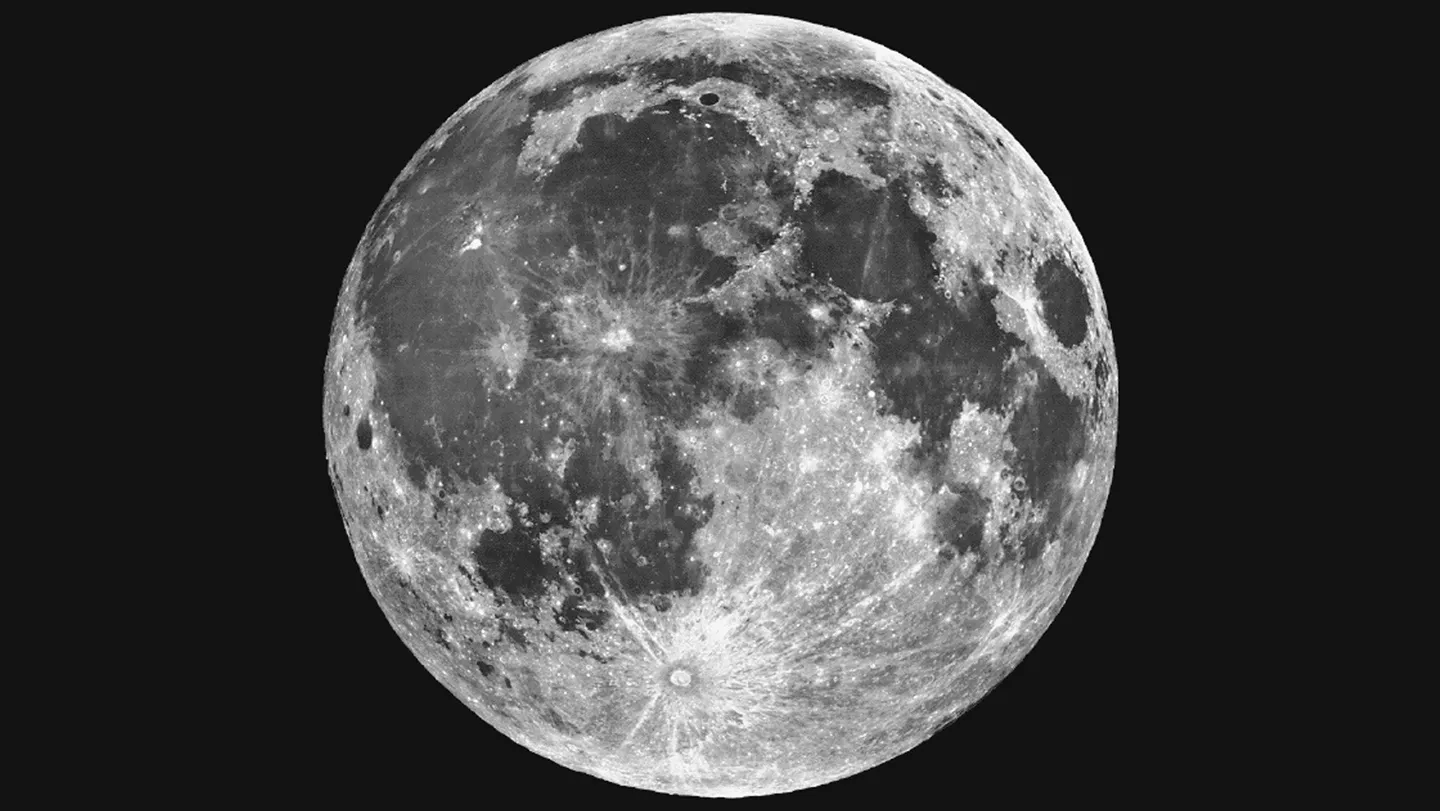
Imagine waking up one day to find a giant pothole in your neighborhood—a crater so large it could swallow a couple of American football fields laid end to end, appearing out of nowhere overnight. But instead of Chicago or New York, this happened on the Moon, our silent cosmic neighbor, and we didn’t even realize it until after the fact. That’s the astonishing discovery made by planetary scientist Mark Robinson and his team, who spotted a fresh 225-meter-wide crater during a routine scan of images from NASA’s Lunar Reconnaissance Orbiter (LRO). Reported on March 17 at the Lunar and Planetary Sciences Meeting in The Woodlands, Texas, this find shattered previous expectations. You see, based on ancient lunar impact data, a crater of this size should only form about once every 139 years. “It was right under our noses,” Robinson might say with a touch of amazement in his voice, echoing the surprise many feel when something huge happens that’s so complète invisible to the human eye. This event, dating back to April or May 2024, reminds us that the Moon isn’t just a serene backdrop in the night sky—it’s an active world, pocked and shaped by forces we’re still uncovering. As humans, we can’t help but anthropomorphize our celestial companions; the Moon feels like a patient old friend who’s been bearing scars we never noticed. Yet, this discovery brings the reality of the Moon’s dynamism closer to home, urging us to reconsider how we perceive this barren-rock sphere orbiting Earth. In the past, lunar craters were mere dots on maps or objects of wonder for poets and astronomers alike, but now, with ongoing missions planning for human presence, understanding these impacts becomes personal—a reminder that space isn’t just out there; it’s an extension of our own fragile existence. Robinson, associated with Intuitive Machines in Houston, shared a humorous anecdote from his early days with LRO: back when the orbiter started its mission in 2009, one of its first finds was a 70-meter crater, and he joked about needing to top that with something bigger. “Now, lo and behold, we have 225 meters,” he said, his words carrying that mix of scientific triumph and boyish excitement. It’s moments like these that make science feel alive, turning data into a story of unexpected evolution in our knowledge of the universe.
Delving deeper, this crater didn’t just materialize randomly; it formed at a fascinating geological crossroads on the Moon’s surface, straddling the line between the rugged, heavily cratered highlands and a vast, smooth mare—a flat expanse born from ancient lava flows that hardened eons ago. Picture this as the lunar equivalent of a city boundary where old, worn-down neighborhoods meet sleek, modern developments, but with volcanic history instead of urban planning. The crater sits smack in the middle, its average depth of about 43 meters carving a deep impression into what seems like solid, resilient material from those ancient eruptions. Yet, its edges aren’t perfectly round; they’re a bit elongated, hinting at underground complexity—perhaps layers of varying rock types merging in ways that defy simple explanations. Robinson explained this subtle asymmetry suggests the subsurface isn’t uniform, a geological quirk that adds layers to the Moon’s enigmatic personality. As humans, we can relate; after all, who hasn’t encountered life’s uneven terrain, where the ground beneath our feet feels stable one moment and riddled with surprises the next? It humanizes the Moon, transforming it from a distant, lifeless orb into a character with depth, flaws, and secrets yet to be fully explored. This boundary location also raises broader questions about the Moon’s geological timeline. The highlands, peppered with craters from billions of years ago, stand as testament to the Moon’s battered youth during the Late Heavy Bombardment, when asteroids rained down relentlessly. Conversely, the maria are fresher, their dark, basaltic plains formed by volcanoes spewing lava onto impact basins. Now, a modern impact here fuses these eras, creating a geological bridge that invites stories of cosmic conflict and rebirth. Scientists like Robinson see it as a window into the Moon’s subsurface—a place we’ve walked on only briefly during Apollo missions, but one that holds keys to understanding not just lunar history, but Earth’s own volatile past as a neighboring planet. It’s poetic in a way: each crater a chapter in an epic tale written in stone, and this new one adds a thrilling twist, making us eager narrators of celestial narratives.
But the most striking aspect of this crater isn’t just its size or location—it’s the dramatic aftermath, a sprawling ejecta blanket that reshapes the conversation about safety in space. Surrounding the crater is a bright halo of rock and dust debris, ejected during the impact and scattering outward for hundreds of meters from the rim. In some directions, disturbances extend as far as 120 kilometers, a vast radius that paints a picture of explosive power unleashed in the vacuum of space. This blanket, visible in high-resolution LRO images, glows against the lunar regolith, a testament to the sheer force of the collision—likely from a meteoroid slamming into the surface at speeds we can only imagine, vaporizing on contact and hurling fragments far and wide. As planetary scientists, we marvel at this display, but it also carries a sobering message for the future of human exploration. Robinson warned that such ejecta could pose significant risks to prospective lunar inhabitants; think of sharp, fast-moving debris zipping through space at kilometer-per-second velocities, capable of puncturing habitats or damaging equipment with precision and unpredictability. “You’ve got to protect your assets,” he emphasized, his tone shifting from wonder to practical caution, much like a parent advising a child on neighborhood perils. It humanizes the stakes: space travel isn’t just about bold adventures—it’s about ensuring our fragile human forms survive encounters with an indifferent universe. Future Moon bases, whether for scientific research, mining rare resources, or even colonization dreams, will need fortifications against these ballistic barrages. Engineers might design shields, regolith barriers, or automated systems to deflect these threats, but the core idea remains unsettling yet invigorating—nature’s fury on display, demanding our creativity and resilience. This ejecta field, with its uneven distribution, also offers clues about the impacted material. The brighter streaks indicate fresher disruption, while farther zones bear witness to gravity pulling fragments back down, reshaping the landscape in intricate patterns. It’s a dance of physics and chaos, reminding us that even in stillness, the universe is dynamic, alive with peril and possibility.
Reflecting on this discovery prompts a broader contemplation of humanity’s place in the cosmos. Here we are, Earth-bound beings with telescopes and landers probing the Moon, uncovering secrets that have been unfolding for millennia. The LRO, launching in 2009 as part of NASA’s renewed push to explore, has been our vigilant eye, capturing images that reveal the Moon’s ever-changing facade. Yet, this fresh crater, formed just months before its discovery, makes us question our perceptions of time and scale. A century may be a blink for the Moon, but for us—whose lifespans are measured in decades—it feels urgent and immediate. Scientists like Robinson bridge this gap, their work translating cosmic phenomena into relatable insights. During interviews, he speaks with the passion of someone who’s spent years deciphering lunar code; it’s not just data for him, it’s a conversation with our past and future. And for the public, this find reignites the spark of wonder: How many more hidden marvels await? We can imagine families gazing at the Moon on a clear night, pointing out constellations while now knowing a recent drama played out on its face. It fosters a sense of connection, making astronomy less about distant stars and more about shared human curiosity. Supporting institutions like Science News becomes vital here, as they disseminate these stories to demystify science and inspire the next generation. Your subscription directly fuels this, ensuring voices like Robinson’s reach broader audiences, turning abstract threats and discoveries into threads in the fabric of our collective narrative. It’s a reminder that science journalism isn’t passive; it’s an active force shaping how we view our world and beyond.
As we look ahead, the implications ripple outward, touching on everything from international space policy to innovative technologies. With agencies like NASA, ESA, and private players such as Intuitive Machines poised to return humans to the Moon by the mid-2020s (as under the Artemis program), this crater serves as a cautionary tale and a call to action. Robinson’s team hopes their findings will inform habitat designs, perhaps incorporating asteroid-resistant domes or predictive models for impact showers. But beyond practicality, there’s an emotional pull: each piece of ejected rock is a relic of the universe’s raw power, and recovering it could yield clues about the asteroid belt or even origins of our solar system’s chaos. Human nature prompts us to dream big—envisioning Moon bases as stepping stones to Mars, or laboratories unlocking answers to life’s origins. Yet, incidents like this ground us, emphasizing precaution over haste. Robinson, recalling his early missions, shares how initial LRO craters shifted perspectives; now, with this mega-find, excitement mixes with responsibility. For everyday people, it humanizes astronaut endeavors: crewmembers aren’t just explorers but guardians against invisible dangers. Supporting science through donations or engagement ensures these narratives continue, fostering informed societies where decisions on space investment reflect both ambition and prudence. In essence, this crater isn’t isolated—it’s a intersection point, urging us to forge paths that blend discovery with defense.
In wrapping up, the 225-meter lunar crater discovered via LRO exemplifies the thrill and humility of scientific endeavor. What’s truly remarkable is how something so colossal occurred unnoticed, a quiet revolution in our understanding. Robinson’s commentary captures the wonder: from joking about breaking records to championing design innovations, his journey mirrors our own—balancing awe-driven curiosity with grounded foresight. As humans, we thrive on stories, and this one invites reflection on the unknown threats haunting our celestial ambitions. Embracing organizations championing science literacy, like the Society for Science, amplifies these voices, ensuring future generations inherit a world where knowledge combats ignorance. By subscribing or contributing, you’re not just funding articles; you’re sponsoring the human spirit of exploration. Questions or feedback? Reach out to [email protected]—your voice matters in this grand cosmic dialogue. Ultimately, the Moon’s fresh wound reminds us: the universe is vast, but through shared understanding, we can navigate it with strength and empathy.