



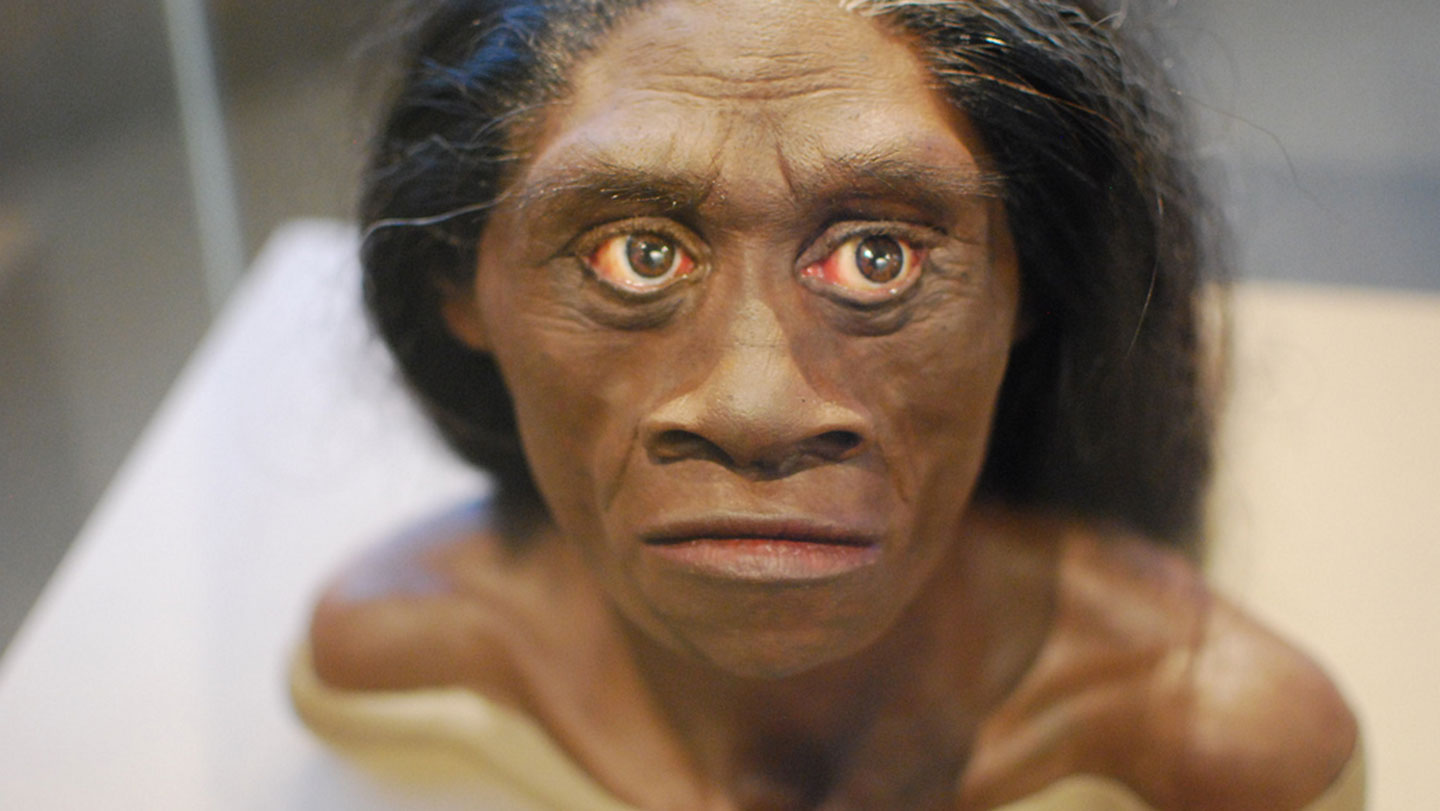
Deep in the lush, evolutionary laboratory of the Indonesian island of Flores, an ancient drama once unfolded beneath the canopy. Tens of thousands of years ago, this isolated ecosystem was a land of dramatic extremes, home to island-bound giants and dwarves alike. Three-meter-long venomous Komodo dragons ruled the landscape, alongside towering species of storks and rats. In stark contrast, other species underwent “island dwarfism,” shrinking over generations to survive on limited resources. Among these miniaturized residents were Stegodon florensis insularis—an extinct elephant relative standing apenas waist-high—and Homo floresiensis, the famous, one-meter-tall human relatives affectionately nicknamed “hobbits” who vanished roughly 50,000 years ago.
For over two decades, our understanding of these diminutive hominids was defined by a narrative of surprising sophistication. When scientists first discovered the hobbits’ remains inside the Liang Bua cave, they found what appeared to be stone-tool cut marks on ancient Stegodon bones, alongside charred animal remains. Because Homo floresiensis possessed a brain size roughly equivalent to a chimpanzee’s, the idea that they were hunting giant game and controlling fire was revolutionary. It suggested that a small brain was no barrier to complex, human-like behaviors. However, this compelling theory of the “mighty hobbit hunter” had never been subjected to a rigorous, systematic skeletal analysis—until now.
In a pioneering study published in Science Advances, a research team led by Elizabeth Grace Veatch, a paleoanthropologist at the Smithsonian’s National Museum of Natural History, set out to uncover the truth behind these ancient bones. The researchers meticulously analyzed more than 3,000 fragments of ancient Stegodon bones unearthed at Liang Bua, spanning a massive timeline from 190,000 to 50,000 years ago. To properly identify the source of the mysterious bone markings, Veatch’s team conducted a unique experiment: they fed goats to modern Komodo dragons and used state-of-the-art 3D imaging to capture the precise shape and depth of the tooth marks left behind on the bones.
The results of the comparative analysis were definitive and shifted the historical narrative. The marks preserved on the ancient Stegodon fossils were nearly identical to the modern bite wounds inflicted by the Komodo dragons, bearing none of the hallmarks of incisions made by hominid stone tools. Furthermore, the researchers searched the Stegodon bones for impact fractures or puncture wounds that would indicate spear strikes, but found absolutely nothing. This evidence strongly implies that the giant, venomous lizards were the primary hunters and butchers of Flores’ mini-elephants, while the hobbits played a much more submissive role in the local food chain.
If Homo floresiensis was eating elephant meat, they were almost certainly scavenging the scraps left behind by the apex predators. This realization introduces a harsh survival reality. As Indonesian paleontologist Mika Rizki Puspaningrum points out, Komodo dragons are notoriously thorough eaters, often consuming up to 88 percent of a carcass and leaving behind only skin, dense bone, and negligible organs. This raises fascinating questions about how our tiny relatives managed to salvage enough energy-dense food to survive, and whether they had to brave the toxic breath and predatory wrath of the dragons just to steal a few scraps of sinew and marrow.
The blow to the hobbits’ reputation for sophistication runs even deeper: they likely didn’t even cook their scavenged meals. To test the hypothesis that the cave’s residents controlled fire, Veatch’s team examined nearly 7,000 delicate rodent bones littering the cave floor, which would have inevitably been scorched by any campfires. Not a single one showed signs of charring, suggesting the cave was fire-free. Ultimately, if these ancient hobbits were not hunting big game or taming fire, they likely evolved from an older, simpler branch of the human family tree that also lacked these milestones. This discovery reshapes our understanding of human evolution, reminding us that our ancestors’ survival was often a story of humble, raw resilience rather than immediate biological dominance.