


Gravity: The Familiar Force That Remains a Mystery
In his captivating book “Crush,” author James Riordan invites readers on a journey through the enigmatic force that shapes our universe. Isaac Newton, the brilliant 17th-century English polymath who formulated the universal law of gravitation, admitted that while he could describe what gravity did, he couldn’t explain why it existed or how it worked. Remarkably, over three centuries later, gravity continues to be both the most familiar and most mysterious of all the forces in our universe. This fascinating dichotomy forms the foundation of Riordan’s exploration, where he skillfully navigates through biology, physics, and history with enthusiasm and humor, making complex concepts accessible even as they grow increasingly complex.
Gravity’s influence is so pervasive in our daily lives that we rarely notice it until something changes, like that momentary feeling during an elevator ride. But as Riordan eloquently explains, gravity literally shapes life on Earth in profound ways. It determines the physical structure of animals—from the position of a snake’s heart to the maximum possible size of land creatures. When humans venture into space, the absence of gravity dramatically reshapes their bodies: torsos swell, senses dull, and both bones and muscles gradually deteriorate in microgravity. These biological impacts highlight just how fundamentally our bodies are adapted to Earth’s gravitational field.
The influence of gravity extends far beyond our planet, potentially determining which worlds throughout the universe can harbor life. A planet’s mass directly affects whether it can maintain an atmosphere and support liquid water—two elements considered essential for life as we know it. Riordan takes readers beyond conventional thinking about habitable zones to consider “rogue planets,” those wandering worlds that drift through space without orbiting a star. On these untethered planets, gravity plays a crucial role by trapping heat from planetary formation and radioactive decay beneath thick ice shells, potentially creating subsurface oceans that could persist for billions of years. Since these rogue planets vastly outnumber those with stars, they might statistically represent some of the most likely habitats for extraterrestrial life in our universe.
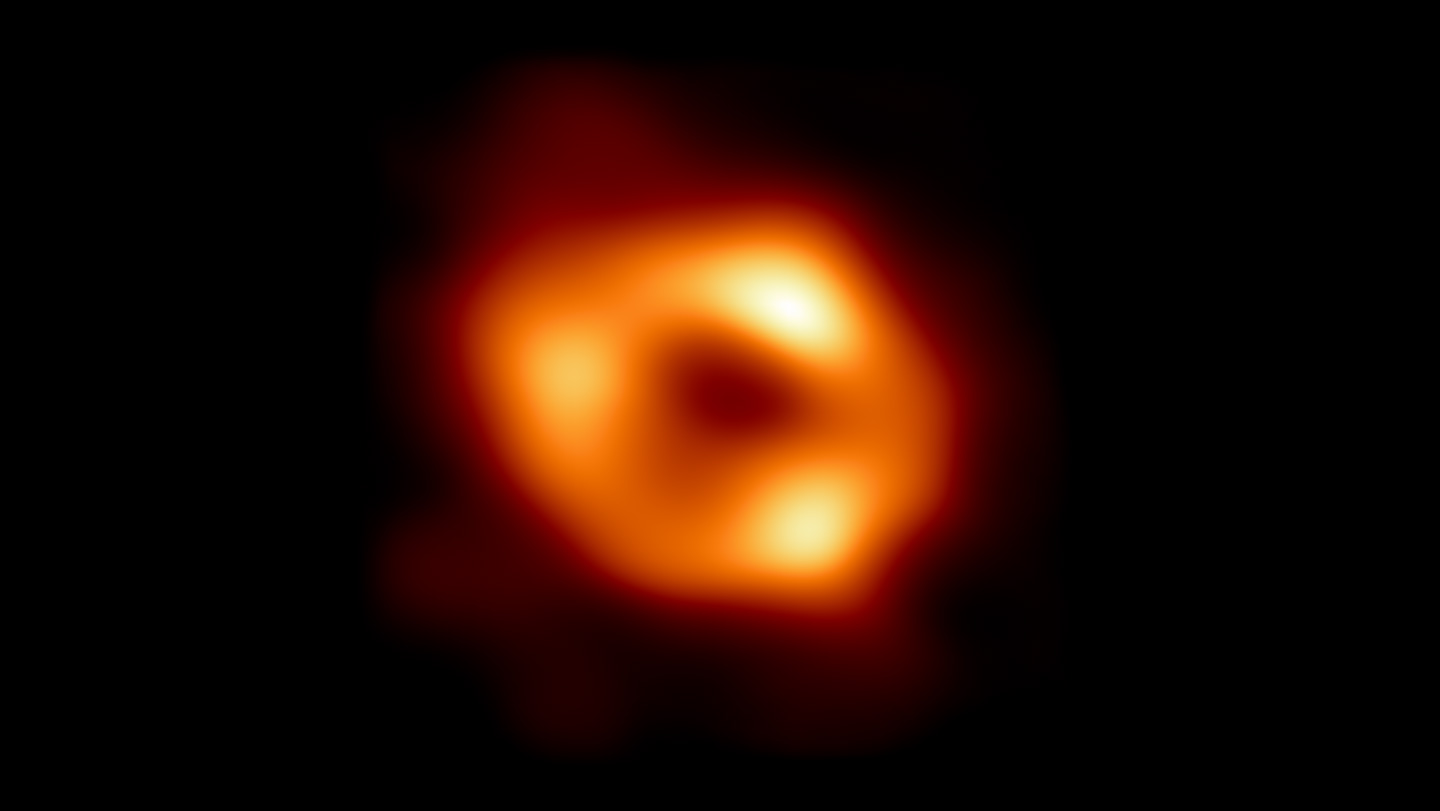
Where Riordan truly excels is in making complex physics accessible through creative metaphors and relatable examples. When explaining the mind-bending concept of black holes—regions where gravity is so intense that not even light can escape—he begins with the disarmingly simple statement: “I have a black hole in my kitchen.” Through this everyday example of a running sink, he guides readers through the complexities of warped spacetime. The author consistently connects abstract theoretical frameworks to practical applications, showing how our understanding of gravity enables technologies we rely on daily, such as GPS and cell phones, and even how gravitational measurements have been used to investigate the ancient pyramids of Giza.
Throughout the book, Riordan emphasizes the substantial gaps in our understanding of gravity. While our knowledge has progressed from Newton’s law to Einstein’s theory of general relativity, significant mysteries remain. Scientists continue to struggle with unifying gravity—which explains the behavior of planets and stars—with quantum mechanics, which governs the subatomic world. Additionally, approximately 95 percent of the universe consists of dark matter and dark energy, phenomena that remain largely unexplained despite their gravitational effects. These unknowns remind us that despite centuries of scientific progress, gravity still holds profound secrets.
Although “Crush” occasionally feels fragmented due to its broad scope and somewhat uneven structure, the book succeeds through vivid thought experiments that capture the imagination. Riordan entertains readers with speculations about the various ways one might die inside a black hole and calculations about how a giant’s skeletal structure would need to be proportioned to support its enormous mass. Through these engaging scenarios, the book accomplishes its primary goal: making gravity feel simultaneously familiar and strange. While readers may not find a single, tidy narrative, they will undoubtedly finish the book with a newfound appreciation for the invisible force that surrounds us constantly, shapes everything from our bodies to the cosmos, and continues to challenge our most brilliant scientific minds.