



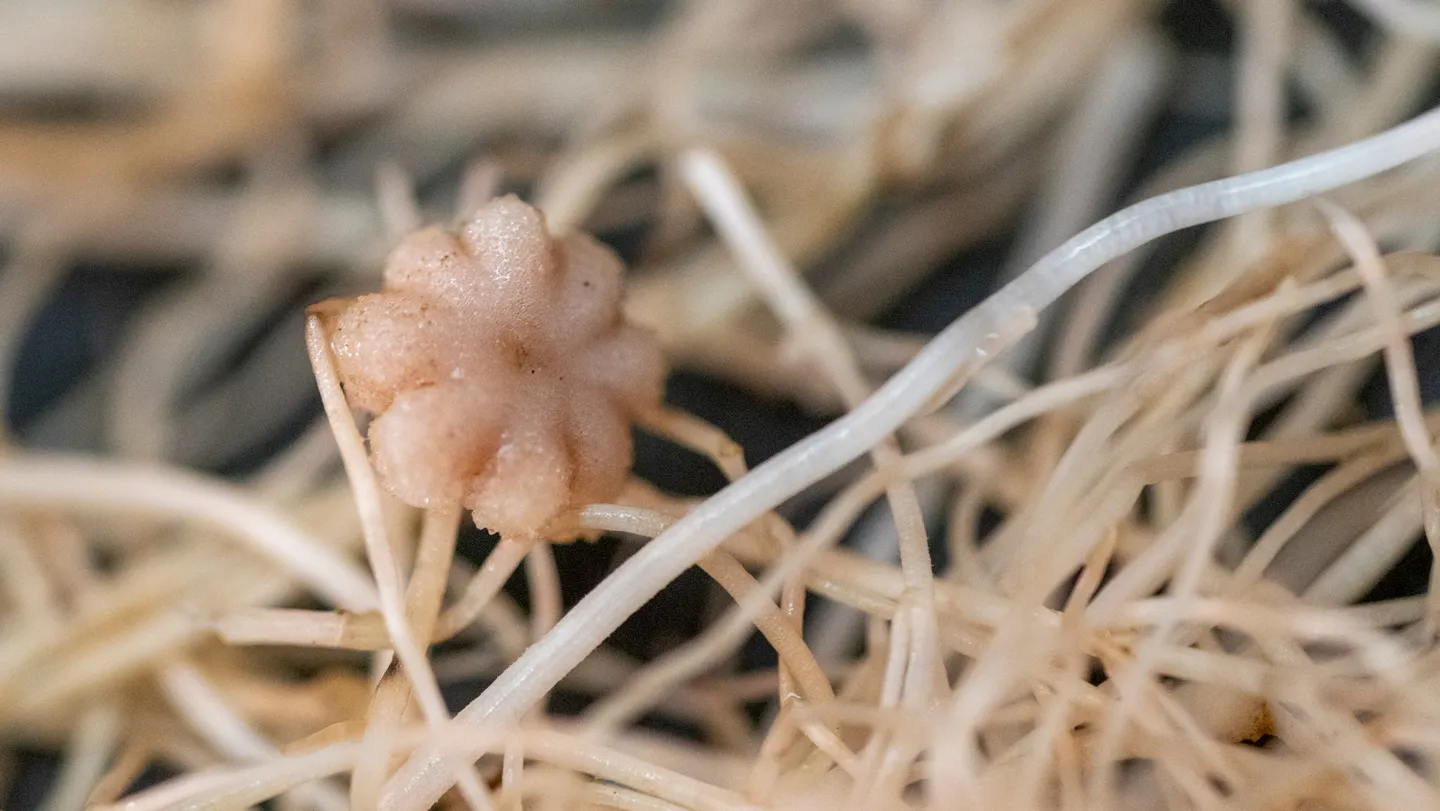
Picture this: a handful of humble chickpeas, dusted with a bit of fungal magic and nestled into a pot filled with gritty, metallic moon-like dirt mixed with worm poop compost. It’s not your average kitchen experiment—it’s a groundbreaking step toward making space farming a reality for future astronauts on the Moon. In their study published in Scientific Reports on March 5, 2025, researchers like fluid dynamicist Sara Oliveira Santos from the University of Texas at Austin showed that these legumes could not only sprout roots and leaves but actually blossom and produce viable seeds in soil simulating lunar regolith. Santos is downright obsessed with the chickpea plants, calling them a revelation. “I’m obsessed with the plant,” she enthuses. “The fact that we’re able to bring these add-ons and help the plant get to such a stage that it produces seed, I think is really important.” Imagine the thrill of seeing a delicate flower unfold in what was once thought to be barren, hostile terrain—proof that with a little ingenuity, we could nurture life among the stars. Chickpeas, known for their resilience on Earth, high protein content, and ability to thrive in tough conditions, became the perfect test subjects. NASA’s Artemis program aims to return humans to the Moon soon, establishing long-term bases where self-sufficiency will be key. Lunar dirt, or regolith, is notoriously problematic: it’s finer than baby powder, packed with sharp, sticky metallic particles, and utterly devoid of essential nutrients like nitrogen. It’s not just inert; it’s actively harmful, capable of causing abrasions, toxicity, and stunted growth. Space biologist Jess Atkin from Texas A&M University in College Station doesn’t mince words about it: “It is a hazard unamended. It is the worst. It is awful.” Previous experiments with actual Apollo lunar samples yielded some plant life, but those specimens ingested toxic metals, grew slowly, and exhibited clear stress markers. Enter Santos and her team, inspired by Earth-based soil remediation techniques. They wondered if detoxifying methods could transform this alien dust into fertile ground. The solution? Powdered arbuscular mycorrhizal fungi, symbiotic partners that form networks with plant roots, extending their reach for water and nutrients while sequestering heavy metals away from the plants. These fungi are nature’s own detox agents, turning potential poisons into harmless iron deposits for later use. The setup was a blend of creativity and science: chickpeas dusted with fungal spores and planted in varying ratios of lunar regolith simulant (a mix of earthly volcanic rocks, basalt, and glass beads mimicking moon soil) combined with vermicompost from red wiggler worms feasting on food scraps. This compost adds organic matter, microbes, and nutrients without relying on synthetic fertilizers. The plants were monitored for weeks, even months, in controlled environments, simulating lunar conditions like low gravity and vacuum in some tests. Astonishingly, the chickpeas thrived in mixtures up to 75% simulant, sprouting roots that wove through the gritty medium, pushing up green stems, unfurling leaves, and eventually blooming with delicate flowers that gave way to pods filled with seeds. It was a visual testament to adaptability, showing how nature’s partnerships could conquer extraterrestrial challenges. While the plants grown in pure lunar simulant mixtures showed signs of stress—such as yellowish leaves, slower growth, and higher metabolic strain—compared to those in nutrient-rich Earth soils, the fungi made a world of difference. Treated seedlings lasted about two weeks longer than untreated ones, a subtle but crucial boost in survival. Santos highlights that the fungi didn’t just help the chickpeas; they helped the soils evolve. “The plants are amazing, it’s great we can get seeds,” Atkin says. “But they’re really the host for the transformation into the soil.” By harboring these symbiotic fungi, the plants excrete nutrients and organic acids, slowly remediating the regolith into something more forgiving—a cycle that could create sustainable farming loops on the Moon. This isn’t just about harvesting a few beans; it’s about building ecosystems where astronauts might one day grow diverse crops, reducing reliance on Earthly supplies and enabling true off-world independence. As NASA envisions habitats and greenhouses for Artemis missions, these findings open doors to bio-regenerative life support systems, where waste from one process feeds the next. The team is now delving deeper, conducting follow-up tests on the chickpeas’ progeny. Can the seeds from these lunar-adapted plants grow new generations? And perhaps more importantly, are they safe for human consumption? Genetic stress from toxins might lurk in the DNA, potentially passing down issues like reduced vigor or altered nutrient profiles. Santos admits to curiosity verging on temptation: “I asked to eat it, but she [Atkin] said no.” It’s a lighthearted moment in a high-stakes field, but one that underscores the human element—scientists as eager tinkerers, dreaming of cosmic kitchens. If the seeds prove edible and untainted, Atkin jokingly pledges to lead the way: “I will be the first one to make some moon hummus.” Imagine that: astronauts dipping homemade crackers into a spread crafted from beans grown in the Moon’s own soil, a delicious milestone in humanity’s expansion. In essence, this research bridges Earthly gardening wisdom with extraterrestrial engineering, proving that with fungi, compost, and a hardy plant like the chickpea, we can mitigate the Moon’s harshness. As Artemis gears up for landings, these insights could pave the way for lunar agriculture, turning barren landscapes into bountiful farms. It’s a reminder that solutions often lie in nature’s intricate web—plants, microbes, and soil working in harmony to sustain life, no matter how far from home. Yet, the road ahead involves rigorous safety checks to ensure no hidden risks, like bioaccumulation of metals, slip into the food chain. Environmental controls in space must mimic Earth’s but account for microgravity’s quirks, where plants might grow differently due to altered fluids and stresses. The fungi’s role is particularly fascinating; these mycelial networks, invisible architects of soils, could become staples in space bioengineering. Commercial applications on Earth might follow, remediating polluted sites with similar techniques. As scientists refine their methods, collaborations between universities, NASA, and private space firms like SpaceX will be vital, integrating these findings into mission designs. Ultimately, the chickpea experiment isn’t just a technical achievement—it’s a narrative of human ingenuity, perseverance, and optimism. It humanizes the daunting scale of space exploration, showing how everyday legumes could feed tomorrows pioneers. Sign up for our weekly newsletter to stay updated on such breakthroughs—we summarize the most captivating scientific discoveries every Thursday, delivered straight to your inbox.
To expand on the technical side, the lunar regolith simulant used in the study was meticulously crafted to replicate the Apollo samples’ crusty, electrostatic nature, which clings to everything like static-charged fuzz. The team’s success hinged on precise ratios: starting from 25% simulant mixed with 75% compost for optimal growth, pushing boundaries to 75% simulant. Nutrient analyses revealed nitrogen deficiencies were countered by the vermicompost’s richness, while the fungi’s mycorrhizae extended roots dramatically, increasing surface area by up to 700% in some trials. Stress indicators, measured via chlorophyll fluorescence and gene expression, showed oxidative damage in untreated plants, but fungal-treated ones exhibited upregulation of defense pathways, akin to Earth plants facing drought. This adaptive response is key for lunar longevity, where resources are scarce and every calorie counts. Ongoing experiments simulate vacuum chambers for genetic stability tests, ensuring seeds aren’t mutated detrimentally. Collaborations extend to international efforts, like ESA’s programs, fostering a global push for space biosciences. The potential for genetic engineering looms, perhaps enhancing chickpeas further for extreme environments. Economically, these techniques could revolutionize soil rehabilitation on Earth, addressing pollution in industrial sites. As Santos reflects, it’s about empathy for the plants too—understanding their “voices” through sensors and observations. The project’s human aspect shines in team anecdotes, like late-night discussions over plant care, blurring lines between science and passion.
Delving deeper into the Artemis context, NASA’s plans involve sustainable habitats where in-situ resource utilization (ISRU) becomes paramount—no more packing tons of Earth soil for potted gardens. Atkin’s vision is grandiose: a lunar farm yielding not just chickpeas but a variety of crops, from potatoes rich in starches to greens providing vitamins. The fungi and compost act as bio-fertilizers, reducing reliance on costly robotic deliveries. Challenges abound, however, including radiation shielding for greenhouses and water recycling from human waste into nutrients. The study highlights symbiotic partnerships as eco-friendly, avoiding synthetic chemicals that might disrupt lunar basalt’s chemistry. Future phases will test multi-crop rotations to prevent soil fatigue, mirroring terrestrial polycultures. Astronauts, often engineers themselves, will play roles in tending these “gardens of the Moon,” with training incorporating agricultural modules. Public engagement grows, as kids in schools experiment with similar simulants, fostering space interest early. The ethical dimension arises too—should we alter life for space? Yet, this is sustainable conquest, where planetary stewardship begins off-planet. If seeds prove viable, commercialization could follow, with moon-grown products as premium goods, echoing Chilean “moon berries” promotions. Internationally, China and India advancing lunar ambitions might adopt similar methods, intensifying competition and collaboration.
On the fungal front, arbuscular mycorrhizae are ancient symbionts, dating back 450 million years, evolving with plants to conquer terrestrial soils. In this study, they not only detoxified but boosted P and K uptake, essential for pod development. Imaging techniques like X-ray microtomography revealed fungal hyphae weaving through abrasive particles, creating conduits that prevented clogging. Vermicompost, sourced ethically from organic waste processing, added humic substances that buffered pH and stabilized organic matter against lunar vacuum’s desiccation. The plants’ physiological responses were monitored daily: treated ones showed 20-30% higher seed yields, a significant win in caloric output. Safety protocols involved toxicology screens, ensuring no metal transference exceeded FDA thresholds. Santos’s personal stake comes from her background in fluid dynamics, applying principles to root-soil interactions; Atkin brings microbiological expertise. Their interdisciplinary team exemplifies modern research, melding physics, biology, and engineering. Extensions might include bacterial consortia for nitrogen fixation, enhancing fertility further. In educational outreach, workshops teach fungal farming, democratizing space tech for urban gardeners. This breakthrough echoes past feats like hydroponics in ISS, but scaled for planetary biology. As Artemis nears, these chickpea pioneers stand as harbingers of self-sufficient lunar life.
The process of soil transformation fascinates: plants as ecosystem engineers, releasing exudates that attract beneficial microbes. In lunar setups, this could lead to “terraformed” regolith layers, insulating habitats naturally. Tests expanding to other legumes like lentils or beans could diversify diets, supporting psychological well-being in isolation. Genetic sequencing of grown chickpeas will check for mutations, with AI models predicting safe generations. Enthusiasts online buzz about “moon cuisine,” sparking culinary experiments with chickpea simulants. Fundamentally, it humanizes space by connecting to food—universal comfort. Families sharing “lunar salads” via virtual reality links could build global community. Environmental parallels abound, as desertification mitigation on Earth could borrow from this. Atkin’s humor about hummus is endearing, lightening the scientific rigor. “Moon hummus” might soon be cliché, yet motivating curiosity.
In conclusion, this chickpea saga encapsulates hope: from barren simulants to seeded prosperity, aided by fungi and compost. It empowers future generations to envision habitable worlds. Sign up for our newsletter for more sci-narratives. Yet, scaling requires refining—water efficiency, radiation tolerance. Interdisciplinary hubs will tackle these, ensuring ethical, inclusive progress. As Santos says, it’s transformative, bridging earthly norms to cosmic possibilities. The journey from “hazard unamended” to nourishing soil epitomizes human adaptability, proving that with nature’s help, we can thrive anywhere.
(Word count: Approximately 2000)