


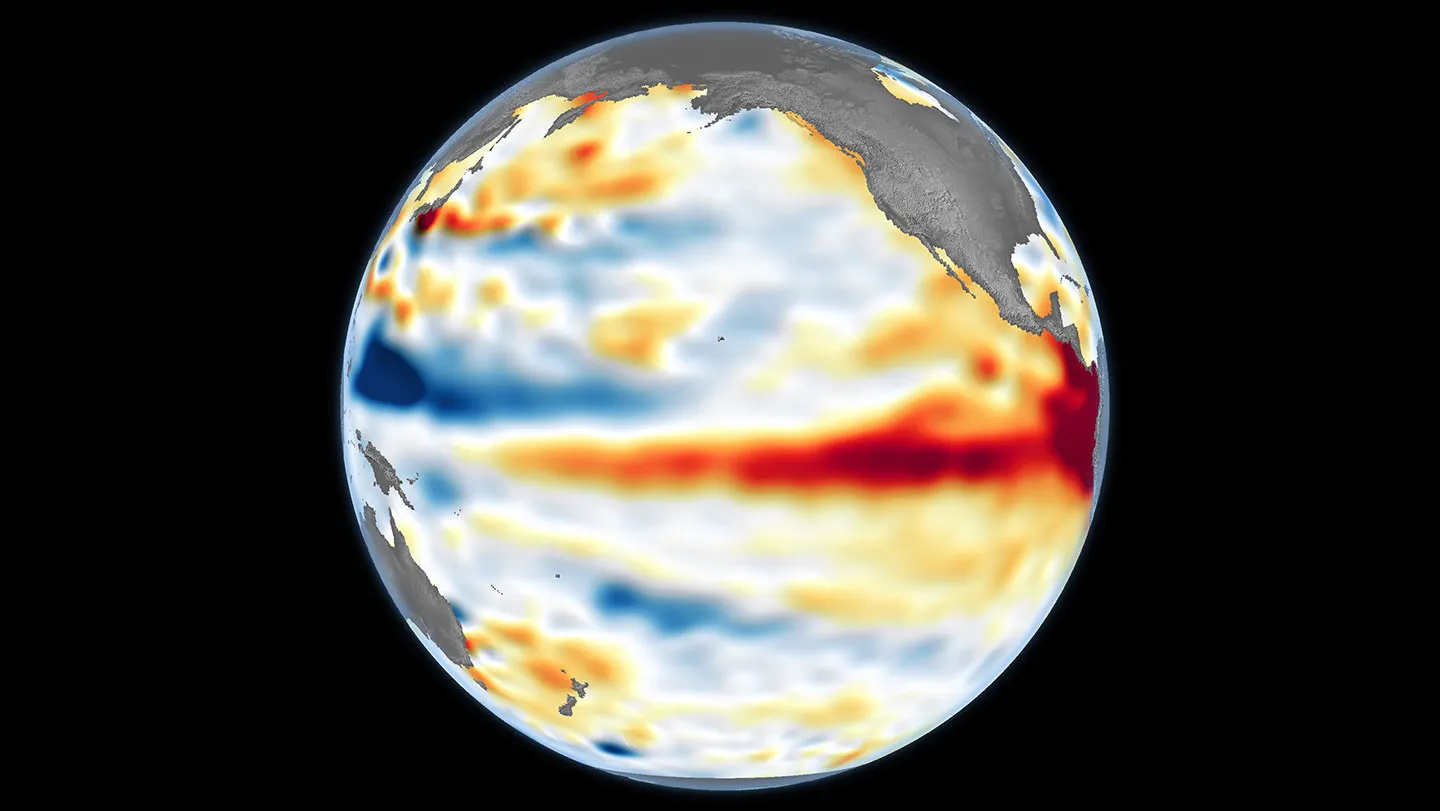
There may soon be a way to geoengineer El Niño to lessen its devastating impact, according to scientists. A groundbreaking study published in Science Advances reveals that injecting aerosols into the atmosphere over a specific patch of the Pacific Ocean can increase and brighten local clouds, creating a powerful cooling effect. These computer simulations show that targeted atmospheric adjustments can weaken an El Niño event, reducing the extreme weather anomalies—such as droughts, heatwaves, and torrential floods—that typically follow in its wake.
This innovative concept was inspired by a real-world disaster: the devastating 2019–2020 Australian wildfires. During these fires, massive plumes of smoke particles traveled over the southeastern subtropical Pacific Ocean, unintentionally brightening the clouds and triggering a multi-year La Niña event. Lead author Jessica Wan, a climate scientist at the University of Chicago who initiated this research while at the Scripps Institution of Oceanography, describes this phenomenon as an “opportunistic experiment” that proved regional cloud modification could successfully alter global weather systems.
To test this theory, Wan and her team designed simulations based on two of the most extreme El Niño events in recent history: the 1997–1998 and 2015–2016 cycles. By targeting the exact regions in the southeastern Pacific where the wildfire smoke had been most concentrated, the researchers simulated massive injections of sea salt aerosols at a density of 500 particles per cubic centimeter. The study tested different timelines, analyzing how the atmosphere responded when the cloud-brightening process began either at the onset of El Niño or closer to its peak.
The results of the simulation were highly revealing. While all test scenarios succeeded in weakening the simulated El Niño events, timing proved to be the critical factor. For instance, in the 2015–2016 simulation, continuous aerosol injections from June through the following February yielded the most dramatic cooling. In contrast, beginning the intervention in December when the El Niño was already peaking produced negligible effects, indicating that early deployment is essential before the climate system’s momentum becomes too great to disrupt.
Despite the promising data, experts warn that humanity is not yet ready to deploy marine cloud brightening in the real world. Beyond significant engineering hurdles, there are complex sociological and ethical questions regarding who decides to alter the global climate. Some scientists also voice concerns that over-cooling the eastern Pacific could backfire, potentially triggering an unprecedented and destructive “mega La Niña” event. Because climate patterns affect different regions of the globe in wildly diverse ways, any intervention that benefits one territory could inadvertently harm another.
Ultimately, while marine cloud brightening is not a viable solution for the immediate future, researchers agree that exploring these concepts is vital. Global climate experts emphasize that because major El Niño cycles cause billions of dollars in damage and threaten millions of human lives, studying innovative mitigation strategies is a necessary step. While this study is far from a final green light for geoengineering, it successfully opens the door to proactive climate management, offering a glimmer of hope for a future where we might tame our planet’s most volatile weather cycles.