



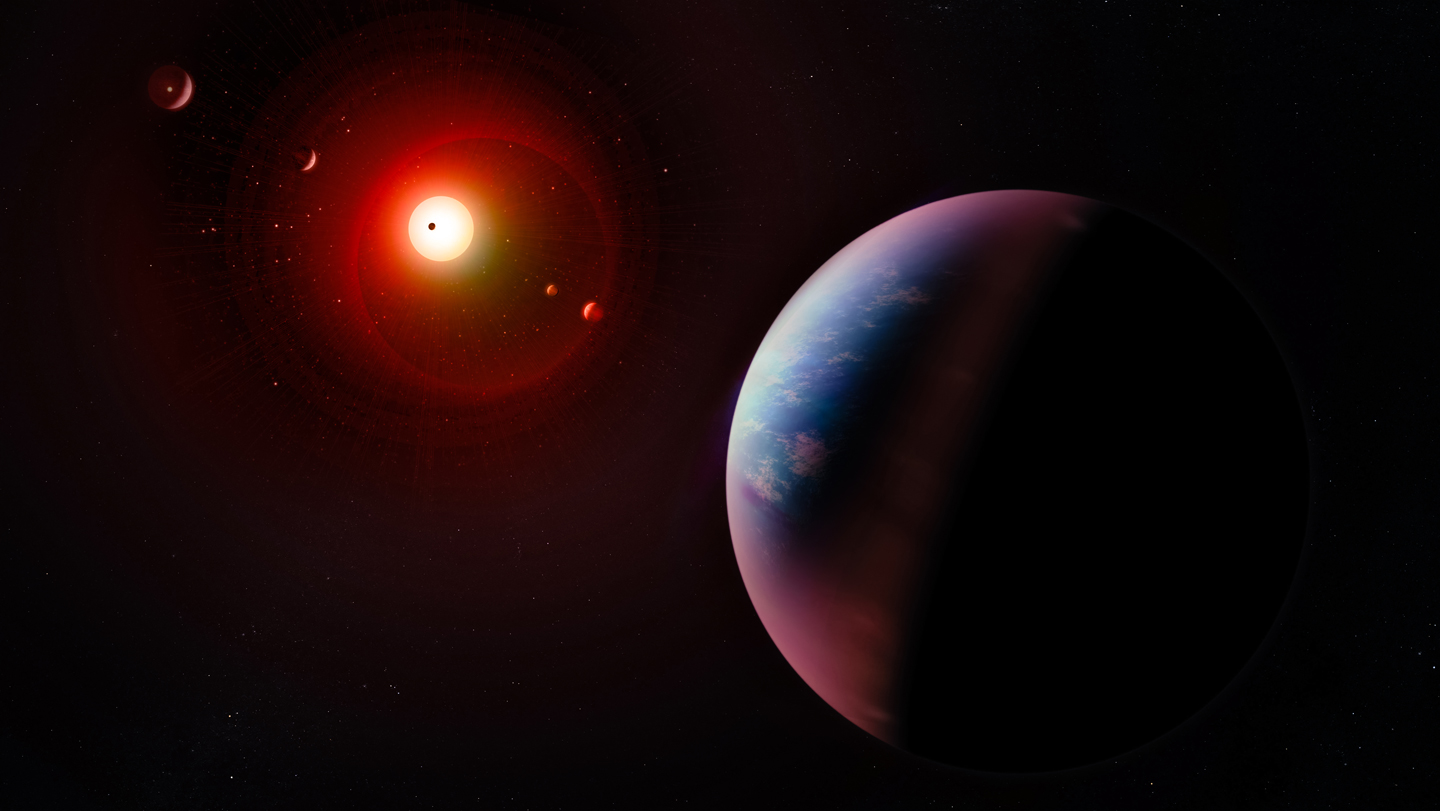
Picture this: you’re an astronomer peering into the endless cosmos, searching for worlds that might harbor life. For decades, the “Goldilocks zone” has been humanity’s guiding star—a sweet spot around a star where temperatures are just right for liquid water to exist on a planet’s surface. Without that water, life as we know it simply can’t thrive. But water alone isn’t enough to spark the magic of biology. What if a planet has oceans, rivers, and lakes, yet lacks the essential building blocks of life? Phosphorus for cell membranes, nitrogen for proteins and DNA? That’s where a fascinating new twist on the Goldilocks fable comes in.
Craig Walton, a planetary scientist at the University of Cambridge, and his colleagues have unearthed what they call the “chemical Goldilocks zone.” This isn’t about distance from the sun; it’s about the intricate chemistry inside a planet that ensures life’s crucial nutrients are readily available. Through sophisticated computer simulations, they’ve modeled tens of thousands of hypothetical exoplanets—worlds orbiting distant stars. The results? Shocking and sobering. Out of all these simulations, fewer than 1 in 10 planets ended up with Earthlike abundances of phosphorus and nitrogen. “This could explain why we haven’t encountered extraterrestrial life yet,” Walton muses, his voice laced with both excitement and caution. “We’re just beginning to scratch the surface of what makes a planet truly habitable.”
To understand the “why,” let’s dive into the planetary kitchen where these elements are cooked. Imagine a young planet forming from a swirling disk of gas and dust around a newborn star. Phosphorus and nitrogen are sprinkled into the mix from the local stellar neighborhood, their initial amounts varying based on the chemistry of nearby stars—data we’ve gathered from observations like those from the European Space Agency’s Gaia mission. But the real drama unfolds during the planet’s fiery infancy. As iron and other metals settle toward the core due to gravity’s relentless pull, phosphorus and nitrogen can hitch a ride if conditions allow.
That’s where oxygen enters the stage. It’s not just about breathable air for life; it’s a silent puppeteer in planetary formation. Laura Rogers, an astronomer at NOIRLab in Tucson, Arizona, explains it masterfully: “Oxygen is really what’s key.” When a planet’s mantle has plenty of reactive oxygen, phosphorus prefers to stay dissolved in the rocky layers, unbound from iron that sinks deeper. Nitrogen, however, binds readily with iron and gets dragged into the core, where it’s forever out of reach for surface-dwelling organisms. Flip the script with low oxygen levels, and you lose phosphorus while keeping more nitrogen. It’s a delicate balance—too much oxygen and you’re short on nitrogen; too little, and phosphorus slips away. The core, unlike the volcanic mantle that erupts and refreshes the surface, locks these nutrients away like buried treasure no one can dig up. Sebastiaan Krijt, an astrophysicist at the University of Exeter, puts it vividly: “It’s completely inaccessible to life.”
This push-pull tension led Walton and his team to hypothesize a “chemical Goldilocks zone”—a narrow band of oxygen abundance where both phosphorus and nitrogen linger in the mantle at levels akin to Earth’s. Drawing from stellar observations and theoretical models of planetary interiors, their simulations tested various scenarios. The sweet spot turned out to be oxygen at Earthlike levels or slightly higher, nurturing a blend of nutrients perfect for life’s sparks to ignite. In this zone, planets hold onto phosphorus without sacrificing nitrogen, creating an environment where cells could form, proteins could assemble, and DNA could encode evolutionary wonders.
Reflect on the implications for our place in the universe. With over 6,000 exoplanets confirmed and more discovered daily by telescopes like Kepler and TESS, we’re overwhelmed with candidates for habitability. Yet, this research shrinks the pool drastically. Many watery worlds might be barren wastelands, starved of the chemical keys to life. Walton reflects: “You’re gaining one, you’re losing another.” It forces us to rethink our cosmic census—how many truly “Earthlike” planets are out there? Enrico Fermi’s famous paradox—the question of where all the aliens are—suddenly gains a chemical layer. Perhaps the universe’s vastness hides not just distance, but hidden barriers we didn’t see before.
Ultimately, this discovery invites wonder and humility. As we gaze at exoplanets circling distant suns, we see not just dots in the sky but complex spheres of chemistry. Life, once thought possible anywhere with water, now demands a symphony of conditions: temperature, water, and yes, the right doses of oxygen-driven nutrients. And yet, curiosity persists. What weird chemical paths might alien life follow, without our familiar phosphorus or nitrogen? Walton chuckles: “It’s really hard to come up with what an alternative biology would look like.” For now, Earth remains our solitary beacon, a reminder that the Goldilocks zones—thermal and chemical—are miracles in and of themselves. As we refine our searches and simulations, who knows what stories the stars will tell next?