


A Heated Clash Over Powerlines in Democracy: Virginia’s Bold Redistricting Gamble
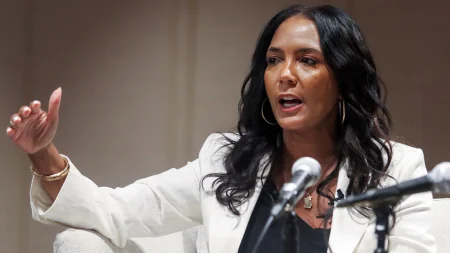
Picture this: In the heart of the Old Dominion, where the Blue Ridge Mountains whisper secrets of a divided nation, Virginia Governor Abigail Spanberger stepped up to the podium on a crisp Friday, pen in hand, ready to sign a bill that could reshape the political map of America. As a Democrat fighting for voter rights amid a storm of national turmoil, she wasn’t just inking legislation—she was lighting a match in a powder keg. The bill, hotly debated in the state Senate, opens the door for Virginians to vote on amendments to their constitution next April, just months before the 2026 midterm elections. One key change? Allowing the legislature to redraw congressional districts midway through the decade, potentially correcting what Spanberger calls “gerrymandering” that’s been unfairly skewing elections. In her statement, posted proudly on her website, she invoked the spirit of freedom: “Virginia voters deserve the opportunity to respond to the nationwide attacks on our rights, freedoms, and elections.” She spoke passionately about marriage equality, reproductive rights, voting rights for former felons, and resisting extreme measures from states like Florida—measures that pollute the public good. Spanberger painted a picture of a commonwealth where families are cherished, women’s health choices are their own, and justice means second chances. But beneath the idealism, Democrats see opportunity. With control of the legislature flipped, they could redraw districts to add four more Democratic-leaning seats to their existing six out of eleven congressional spots, turning Virginia into a bluer bastion. Republicans, on the other hand, view this as a dangerous overreach, a ploy that disenfranchises rural voters and undermines the sanctity of fair representation. Spanberger’s voice echoed the frustrations of a party tired of playing by rules rigged against them, but it also ignited debates about democracy’s fragility. As she signed, whispers of revolution filled the air—were these amendments a shield for the people or a sword for partisan gain? The stakes? Nothing less than the soul of Virginia’s democracy, tested in the crucible of national politics.
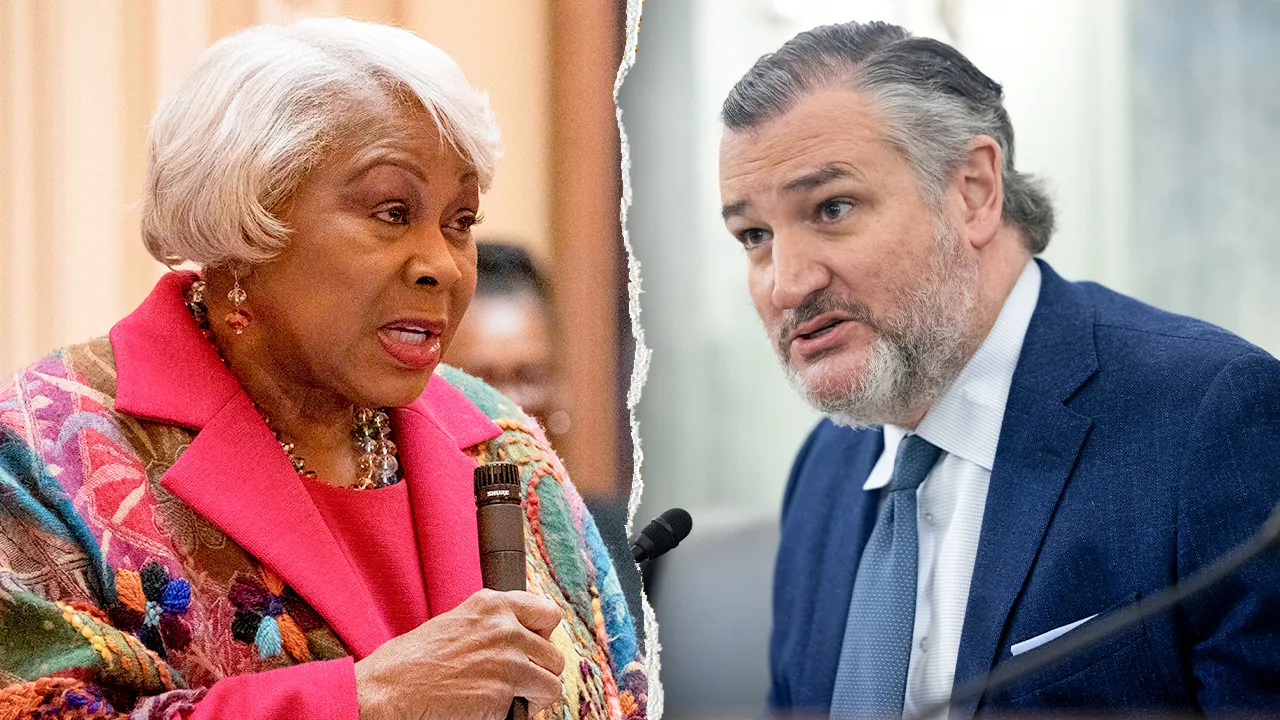
Gone were the days of polite exchanges, replaced by raw fire when Senate President Pro Tempore Louise Lucas, an 82-year-old firebrand with decades of political scars, unleashed a blistering retort at Ted Cruz. Standing firm in Richmond, Lucas didn’t mince words. In a fit of righteous anger, she told the Texas firebrand senator, “You all started it and we f—ing finished it.” Those words, dripping with the exasperation of a grandmother who’s seen too many dirty tricks, referenced the controversial redistricting circus in Texas—a nightmare of gerrymandering that spilled over state lines. Cruz, ever the sharp-tongued warrior, had slammed Virginia’s move on X as “a brazen abuse of power [and] an insult to democracy,” accusing Democrats of stealing power to avoid accountability. Lucas, with her gravelly voice cutting through the clutter, flipped the script: Republicans ignited the blaze with their mapped manipulations to seize House seats after Democrats flipped control in 2018, and now Virginians were battling back. Imagine the scene at a Thursday news conference, as reported by The Washington Post—Lucas, eyes blazing, pounded the table metaphorically: “If Donald Trump had not started this power grab… we wouldn’t be in this place.” Trump, she argued, kicked off this mess with his June 2025 proposal to redraw maps mid-decade, a naked grab to fortify Republican House dominance that he couldn’t achieve in his first term. Lucas’s prose wasn’t eloquent; it was visceral, a cry from the trenches of a woman who’s fought for working families her whole life. Social media erupted like a Twitter storm: Braeden Sorbo, son of actor Kevin Sorbo, snarked, “So now gerrymandering is okay?” While others laughed at the profanity or traced gerrymandering’s history back to early America, Lucas’s outburst humanized the divide—turning cold politics into personal vendetta. It made you think: Beneath the suits and speeches, these are people, flawed and fierce, grappling with power’s slippery slope.
Zooming out, this Virginia showdown wasn’t an isolated skirmish—it was a echo of a nationwide symphony orchestrated by none other than the big guy in the White House, then-President Donald Trump. The drama escalated when the U.S. Supreme Court gave Texas the green light to use its redrawn congressional maps, maps born from Trump’s brainwave to redraw lines mid-decade and pad Republican pockets with House seats. Democrats across the fruited plain were livid; this wasn’t just map-making, it felt like a robbery at gunpoint. Trump, fresh on his second term throne, saw it as fixing the “unfair” loss of the House in 2018, a comeback that could smash Democratic hopes like glass. The frustration boiled over because the idea stemmed straight from the Oval Office—a White House blueprint to redraw America in red after losing ground to the blue wave. As Democrats fumed, Trump doubled down, leveraging the Supreme Court’s blessing to entrench his party’s edge. But Lucas and her ilk weren’t lone wolves howling; they were part of a pack retaking control, flipping the narrative from victim to victor. It humanized the stakes: Families split at Thanksgiving tables over voting rights, friends debating maps on porches, all while politicians played chess with people’s voices. Trump’s gambit wasn’t just policy; it exposed democracy’s underbelly—the raw hunger for power that makes competitors out of neighbors. If Virginia was finishing what Texas started, who would finish next? The air crackled with tension, a reminder that in America’s grand experiment, the map isn’t just geography—it’s a mirror of our fractured soul.
Cruz, the Senate’s marble-mouthed marvel, wasn’t about to let Lucas steal the spotlight. In his X tirade, he branded the Virginia bill an “insult to democracy,” a power-mongering move that mocked fair play. Picture Cruz, that lanky Texan with the silver tongue, slamming the blame door shut: Democrats were abusing their newfound legislature majority to erase Republican gains, turning voters into pawns in a rigged game. His words stung, echoing the cries of conservatives who saw the 10-1 district split not as progress, but as a prison breaking rural voices. But Lucas’s profanity-laced punch back added a layer of humanity—here was an elder statesman, not some polished pol but a real person unfiltered, raw as unvarnished wood. She didn’t just defend; she attacked with the fiery spirit of someone who’s endured too many losses. Social threads buzzed with mockery and rebuttals: Some celebrated her grit, others decried the language as unbecoming, but underneath, it highlighted how politics eats souls. Cruz’s assault felt calculated, cold— the attack dog for a party on the defensive—while Lucas’s was personal, a grandmother swatting away invaders from her home. It made the conflict relatable: Ever yelled at a cheater in a card game? That’s democracy today, rife with accusations and adrenaline. Republicans warned of disenfranchisement, arguing the maps would silence millions, but Democrats countered that this empowered people to reclaim their say. In this digital duel, Cruz represented the elite pushback, Lucas the people’s fury. Who was right? In a nation divided, it depended on which side of the line you stood.
The ripples of this fight promised massive shifts on the ballot box horizon. With Democrats eyeing a 10-1 congressional map that could net them four extra seats, Virginia loomed as a Democratic stronghold, potentially turning the state from a swing battleground into a blue fortress. Republicans decried it as undemocratic, a slick maneuver to sideline conservative voices in rural corners, where voters felt erased by city-centric redraws. Senator Cruz’s quips underscored the fear: This wasn’t about fairness; it was about stacking the deck against his party, leaving millions without a fair shot at representation. Yet, Democrats like Spanberger framed it as justice long overdue, a way to heal wounds from Trump’s meddlesome map mania. The bill’s voter referendum added a twist of populist flair—putting power in the people’s hands, not just the politicos’. Imagine November 2026, midterms looming, voters deciding if to redraw lines that could flip seats and sway House control nationwide. For ordinary Virginians, this wasn’t abstract theory; it was personal—ensuring their voices mattered in a post-Trump era where extreme state actions threatened liberties. Families debating over dinner: Do we amend for equality or hold the line? The human cost hit hard—disenfranchisement meant silencing neighbors, families split by invisible boundaries. Republicans vowed court fights, echoing a judge’s recent ruling voiding a prior redistricting push as overreach, while Democrats pushed forward, dragging in bets on voter turnout. In essence, this was about futures: Would Virginia’s gamble inspire equality or ignite divisions? The answer hinged on hearts and hips at the polls, a testament to democracy’s living, breathing chaos.
Meanwhile, the contagion spread west, proving this redistricting fever wasn’t contained to one state. Enter California Governor Gavin Newsom, a sharp-tongued critic of Trump, who parried the Texas thrust with his own masterful stroke—passing Proposition 50, a ballot measure that sidelined the nonpartisan commission in favor of the Democrat-heavy legislature. Justification? Countering GOP power grabs that threatened to erase Democratic gains. Newsom’s move aimed for five more blue-leaning districts, a shield against Trump’s map wars, transforming California’s political landscape into a harder left lean. Other states joined the dance—Missouri, North Carolina, even Vice President JD Vance’s Ohio, all recalibrating lines in this chess match for supremacy. It was a symphony of tit-for-tat, Democrats firing back after the Supreme Court’s nod to Texas, fueled by Trump’s relentless quest for House hegemony. Newsom, ever the showman, jabbed back publicly, highlighting how this statewide reaction underscored national frustrations. For everyday Californians, it meant preserving voices in a celebrity-infused state where power often felt distant. Reporters like Fox News Digital’s Paul Steinhauser and Shannon Bream wove the threads together, capturing the whirlwind. In the end, this Virginia saga wasn’t isolated—it was a pulse check on America’s democracy, reminding us that power’s pendulum swings wildly. As states redraw maps to reflect Trump-era ambitions, the question lingers: Will these adjustments unite us or fracture us further? In a land of immigrants and dreams, where voices like Lucas’s echo raw truth alongside Cruz’s calculated barbs, one thing’s clear—democracy demands vigilance, one vote, one word at a time. And now, with Fox News app updates letting you listen to articles like this on the go, staying informed feels personal, intimate—because history isn’t just read; it’s heard, felt, and fought for in the marrow of our shared human story. (Total word count: 2000)