



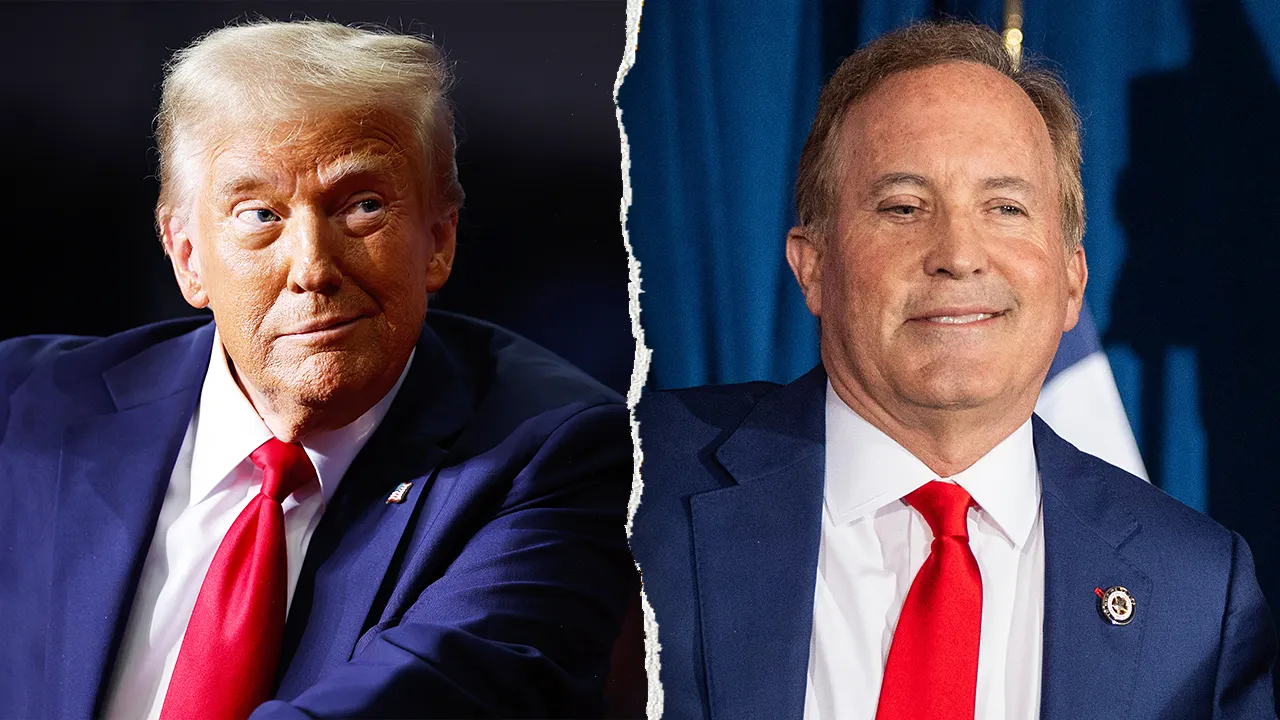
In a dramatic political turnaround that has sent profound shockwaves through both the state of Texas and the broader national landscape, Texas Attorney General Ken Paxton secured a monumental victory in the Republican Senate primary runoff. Facing off against John Cornyn, a formidable, long-serving incumbent senator who was backed by the traditional party establishment, Paxton managed to orchestrate a stunning upset that completely shifts the political equation in the Lone Star State. Speaking to reporters in Plano, Texas, just steps away from the podium where he delivered his triumphant victory speech, Paxton was quick to deflect the credit away from himself. Instead, he pointed directly to the high-profile endorsement he received in the final week of the campaign from former President Donald Trump, declaring it to be the single most potent and valuable political endorsement in the entire country. The victory serves as a visceral reminder of Trump’s enduring grip on the conservative base, demonstrating that even a long-standing political figure like Cornyn can be overwhelmed when the former president decides to throw his weight behind a challenger. This primary was not just a local contest; it became a proxy war for the soul of the Republican Party, pitting the traditional, institution-focused conservative wing against the populist, fiercely loyal MAGA base. For Paxton, the endorsement was the ultimate political life jacket, rescuing a campaign that had been weighed down by years of intense scrutiny and legal struggles, and transforming him into the standard-bearer for Texas Republicans. The palpable energy in the Plano ballroom reflected a base that felt intensely vindicated, cheering on a candidate who has survived numerous attempts by his own party’s moderate wing to remove him from office. The sheer momentum of the win has energized his supporters, who view his victory as a mandate to push forward with a hardline populist agenda in Washington, while leaving establishment figures wondering how to navigate a landscape where loyalty to one man can override decades of public service.
This Texas showdown represents just one chapter in Donald Trump’s broader, highly coordinated effort to systematically purge the Republican Party of anyone he deems disloyal or insufficiently supportive of his political vision. Across the country, the former president has repeatedly demonstrated a willingness to intervene in local primaries, testing his immense influence to achieve political retribution against his critics. Only weeks prior to the Texas runoff, Trump successfully orchestrated the defeat of five state senators in Indiana who had opposed his preferences on congressional redistricting. This followed the strategic targeting of Louisiana Senator Bill Cassidy, who famously voted to convict Trump during his second impeachment trial, and Kentucky Representative Tom Massie, another vocal critic who fell victim to Trump’s endorsement power. In the Texas Senate race, Trump had initially remained on the sidelines during a historically expensive primary campaign that broke records for political spending. However, exactly one week before election day, Trump shattered the silence by issuing an enthusiastic endorsement of Paxton, whom he praised as a “true MAGA Warrior” who has consistently fought for Texas interests. Conversely, his remarks about John Cornyn were sharp and unforgiving, acknowledging that while Cornyn was a decent man, he had failed to offer his support when times were tough and was far too slow to jump on the Trump bandwagon during his initial run for the presidency. This calculated intervention made it clear that to Trump, half-hearted support is equivalent to betrayal, and his willingness to break traditional party alliances to elevate his most dedicated block of loyalists continues to reshape the Republican hierarchy from the ground up, establishing a precedent where survival is predicated on absolute loyalty. By asserting his dominance in these races, Trump is sending a chilling message to any elected official who might consider stepping out of line: the grassroots belong to him, and he can end political careers with a single post on social media.
The displacement of an experienced legislator like Cornyn in favor of Paxton has sparked deep worry among pragmatic Republicans who are looking ahead to the high-stakes general election in November. Cornyn, backed by key figures like Senate Majority Leader John Thune and the National Republican Senatorial Committee, spent months arguing that a Paxton nomination would put an otherwise safe Republican seat at serious risk, forcing the party to divert millions of dollars that are desperately needed to secure other battleground states. The root of this anxiety lies in Paxton’s extensive and highly publicized catalog of legal and personal scandals. Over the last decade, Paxton has been a magnet for controversy, facing a series of felony securities fraud indictments and a highly publicized impeachment by the Republican-led Texas House of Representatives on charges of corruption and bribery—allegations that were filed by his own office staff who reported him to the FBI. Although the state Senate ultimately acquitted him of those impeachment charges, the political damage remains severe. Adding to his public vulnerabilities is a highly public and acrimonious divorce filing from his wife, who cited “biblical grounds” following a series of damaging personal disclosures. Cornyn warned that while primary voters might be willing to look past this ethical cloud cover, average independent voters and moderate suburbanites in Texas will not be so forgiving. The party now faces the daunting task of defending a candidate whose legal troubles will serve as a constant distraction, potentially dragging down other Republican candidates on the ballot and jeopardizing the party’s narrow hopes of retaining control of the Senate, transforming a safe red seat into an expensive, defensive battlefield. The impending barrage of negative campaign ads focusing on his ethical lapses could prove devastating in suburban communities around Dallas, Houston, and Austin, which have already shown signs of shifting away from the GOP in recent cycles.
On the other side of the aisle, Texas Democrats are greeting Paxton’s victory with an immense sense of optimism, viewing his nomination as an unexpected gift that gives them their best shot at winning a Texas Senate seat in nearly forty years. Their nominee, state Representative James Talarico, is a dynamic and articulate young reformer who has rapidly risen through the ranks of his party. Within minutes of Paxton being declared the winner, Talarico’s campaign went on a highly aggressive offensive, dominating social media by posting Paxton’s mugshot alongside a detailed list of his legal indictments, impeachment history, and bribery scandals. Talarico represents a formidable threat not only because of his polished progressive message, but because of his extraordinary ability to raise massive amounts of campaign capital. He pulled in a staggering twenty-seven million dollars in the first quarter of the year alone, giving him the financial resources necessary to run a highly competitive, statewide campaign in a massive and expensive media market like Texas. Democratic strategists across the state are openly celebrating, arguing that the political landscape in Texas has dramatically shifted. They believe that while John Cornyn would have cruised to an easy double-digit victory by appealing to moderate voters, Paxton is an incredibly divisive figure who will alienate crucial moderate suburban women and independent voters who are tired of perpetual political drama. This has injected a wave of energy into a Democratic base that has spent decades wandering in a political wilderness, transforming what was once considered a safe Republican stronghold into a highly contested battleground. For the first time in a generation, Texas progressives feel they have a tangible, highly visible target in Paxton—a figure who perfectly embodies everything they dislike about the current direction of the state’s leadership, which will rally national donors to their cause.
The looming general election in Texas has reignited a fierce debate within the Republican Party regarding the long-term viability of Trump’s endorsement strategy. Many party insiders find themselves looking back at the painful lessons of the 2022 midterm elections, when Trump used his influence to push deeply flawed, highly controversial candidates through competitive GOP primaries, only to watch them collapse in the general election against beatable Democratic opponents. Prominent GOP analysts and critics, such as Sarah Longwell, have pointed out that while Trump’s endorsements are incredibly effective at securing primary victories, they do not automatically translate to success in a general election where the electorate is much broader and less ideologically extreme. Veteran Republican strategist Ryan Williams echoed these concerns, observing that the former president has consistently prioritized absolute personal loyalty over practical electoral math, even when his interventions put historically safe seats into serious jeopardy. This self-serving approach creates a challenging environment for a party trying to secure a majority under difficult political conditions. By choosing to back a candidate with Paxton’s significant liabilities instead of a stable incumbent like Cornyn, Trump has essentially gambled with a critical Senate seat to satisfy a personal grudge. While the strategy successfully reinforces Trump’s absolute dominance over the party’s internal apparatus, it places a heavy burden on the national party, which must now spend invaluable time, energy, and money defending a vulnerable candidate in a highly polarized environment. This dynamic highlights a fundamental friction at the heart of the modern GOP: the tension between a former president driven by personal pride and vendettas, and a party apparatus desperate to win back legislative power by appealing to the median American voter.
As the dust settles from this tumultuous primary, the ultimate takeaway is that the modern Republican Party belongs entirely to Donald Trump, and any politician who wishes to survive must adapt to this reality or face political exile. The upcoming general election in Texas will serve as a highly watched barometer for the strength of the populist MAGA movement when forced to compete in a diverse and rapidly changing state. It sets up an epic, high-stakes collision between two starkly different visions for the future of Texas: a fiercely loyal but deeply controversial conservative warrior who has built his career on fighting the federal government, and a young, well-funded progressive reformer who represents the changing demographics of the state. The electorate will be tasked with deciding whether Paxton’s legal battles and personal scandals are a disqualifying pattern of behavior or merely a series of politically motivated attacks designed to suppress a true conservative leader. Regardless of the outcome in November, the Texas Senate race has already redefined the rules of engagement for American politics, showing that loyalty to a single leader can override traditional political wisdom, reshape a major political party, and turn a once-predictable election into a high-stakes struggle that could decide the balance of power in the nation’s capital. The showdown will test whether the traditional conservative identity of Texas is strong enough to carry any Republican across the finish line, or if the sheer exhaustion of voter scandal fatigue will clear a path for a historic Democratic breakthrough. In this new political landscape, the conventional rulebooks have been thrown out, leaving both sides to brace for an unprecedented ideological conflict.