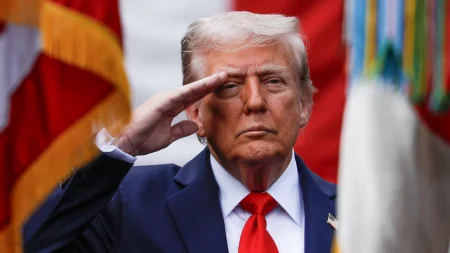



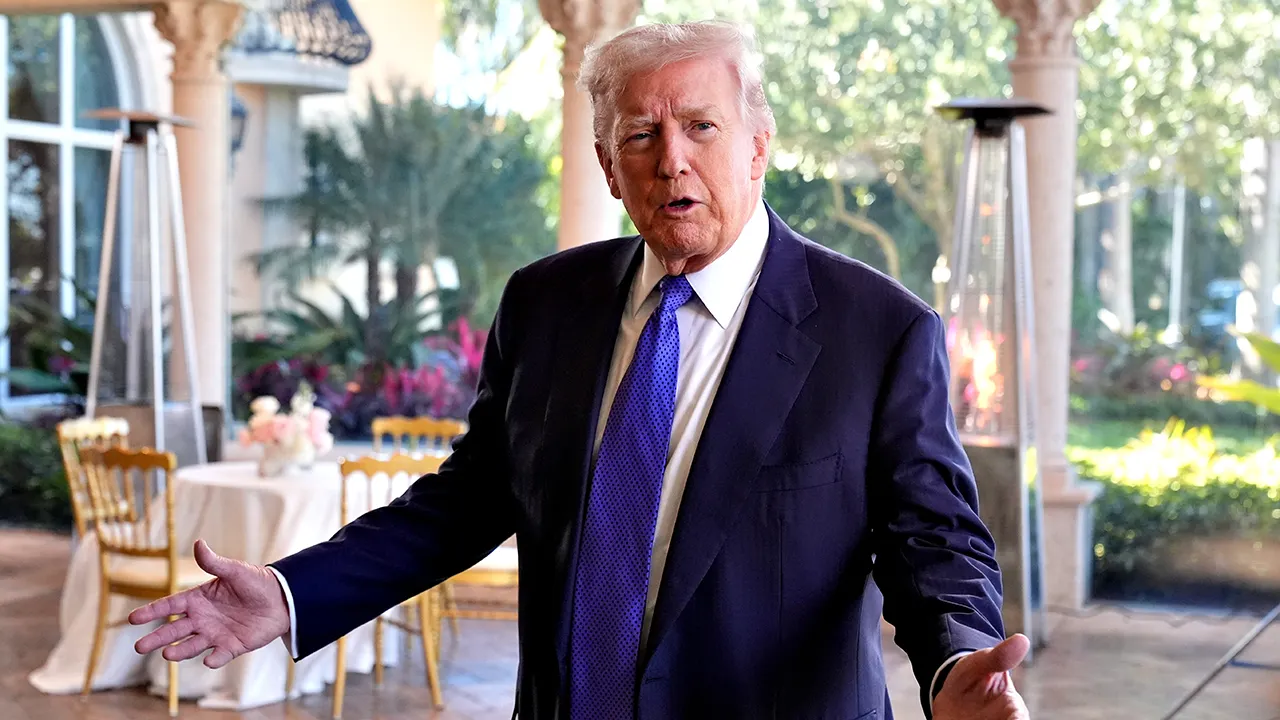
Formerly the brash and unapologetic leader of the free world, Donald Trump found himself once again at the center of a storm swirling around secrets from the past, this time amid the blinding lights of Air Force One as it soared toward Palm Beach, Florida. It was a crisp Saturday afternoon, the kind where the sun hangs lazily in the sky, filtering through the high-altitude clouds that stretched out like a vast, empty canvas beneath the massive jet. Inside, amid the hum of engines and the murmurs of aides, a reporter’s question pierced the air about a fresh dump of documents—over three million Epstein-related records and personal emails—unveiled by the Justice Department just the day before. Trump’s response was immediate, laced with that trademark defiance he’d honed over years in the public eye. He’d seen his name dragged through the mud too many times, and now, with these files, he saw an opening. No, he insisted, this wasn’t just another batch of salacious leaks; it was proof of a conspiracy, a plot orchestrated by the disgraced financier Jeffrey Epstein and a “third-rate writer” named Michael Wolff to tarnish him. Imagine the scene: a man who once tweeted his way through controversies, now leaning forward in his seat, his voice steady but edged with anger, declaring that the documents absolved him completely. He wasn’t just talking; he was threatening lawsuits against Wolff and even Epstein’s estate, painting them not as mere acquaintances or observers, but as active conspirators who sought to “do harm” to him, politically or otherwise. It felt personal, like a betrayal from the shadows of a billionaire’s world that Trump had grazed but never fully inhabited. To Trump, this was vindication, a chance to flip the narrative on those who’d hoped for his downfall, especially the “radical left” he’d long railed against. But beneath the bravado, there was a vulnerability—a man recounting how “very important people” had briefed him on the files, whispering assurances that they’d backfired on his detractors. It was the kind of moment that underscored how Trump’s life, even post-presidency, remained a battlefield of accusations and counterpunches, where every document became a weapon. As the plane descended, you could almost picture the headlines that would follow, each one amplifying the drama that defined his era. Yet, despite his certainty, Trump admitted he hadn’t pored over the emails himself; he was relying on hearsay, on the interpretations of those around him, which added a layer of humanity to his posturing. After all, who among us hasn’t leaned on trusted friends or advisors during turbulent times? But for Trump, this wasn’t just trust; it was a lifeline in a world that often seemed intent on dismantling his legacy. The flight continued, but the conversation lingered, a testament to how deeply entangled his story had become with Epstein’s web of influence, money, and mystery.
Digging deeper into the trove of digital ghosts now unleashed by the Justice Department, the emails painted a picture of backchannel machinations that felt almost surreal, like a thriller sprung from the pages of real life. In one particularly telling exchange from March 2016, reviewed by Fox News Digital reporters who sifted through the labyrinth of files, Michael Wolff—dubbed by Trump as a “third-rate writer”—was urging Epstein to craft what he called an “immediate counter narrative” to a damning book about him. James Patterson’s “Filthy Rich,” a exposé on Epstein’s scandals, had become the talk of the town, and Wolff saw an opportunity in the chaos. He wasn’t just suggesting; he was strategizing, proposing that Epstein pivot the public eye away from his own troubles and toward Donald Trump’s rising star. “It’s a chance to make the story about something other than you,” Wolff wrote, his words dripping with calculated pragmatism, “while, at the same time, letting you frame your own story.” Epstein, the enigmatic billionaire with deep pockets and even deeper secrets, could use Trump as a shield, a smokescreen to deflect the prying eyes of investigators and journalists alike. And Wolff didn’t stop there; he added a layer of political armor, advising that aligning against Trump might provide Epstein with “certain political cover which you decidedly don’t have now.” It was a masterclass in deflection, where influence was wielded like a scorned lover’s plea, blending self-preservation with strategic manipulation. Picture Epstein, isolated in his opulent homes, perhaps in Palm Beach or New York, poring over such advice while sipping a fine scotch, contemplating his next move in a game where the stakes were his freedom and reputation. This wasn’t idle chatter; it was a blueprint for survival, humanizing the often vilified figures by revealing their vulnerabilities—Epstein as a man scrambling for control, Wolff as an opportunist spinning tales for gain. The emails forced a reconsideration of connections, making one wonder how many such whispers had shaped the headlines of the time, turning political theater into a personal vendetta.
But the intrigue deepened when revisiting an earlier email from February 2016, one that had already surfaced and now gained new gravity in this flood of disclosures. In it, Wolff posited Epstein as the “bullet” that could fatally wound Trump’s 2016 presidential campaign, a metaphor that evoked the raw power of scandal in American politics. Epstein, with his infamous associations and untold leverage, was cast not just as a bystander but as a potential assassin of reputations, ready to pull the trigger on the man who would eventually become president. It was chilling, humanizing the shadowy dealings of power brokers who treated elections like high-stakes poker games, where chips were alliances and bluffs were buried sins. Trump, ever the survivor in such games, saw this not as mere rhetoric but as evidence of outright conspiracy. As he announced his intent to sue, it became clear that this left scars—the kind that only someone who’s weathered storms like impeachments and indictments could truly understand. In the comfortable confines of Air Force One, surrounded by loyal staff who’ve stood by him through thick and thin, Trump’s anger felt genuine, a protective father roaring at those who’d threaten his clan. The emails underscored a broader theme of betrayal, where friendships morphed into facades for personal gain, reminding us that behind the headlines were people—flawed, ambitious, and relentless in their pursuits. For the average observer, it sparked a curiosity about the unseen strings pulling at our leaders, how one man’s downfall could ripple into another’s rise, and how, in the end, these revelations painted a mosaic of humanity fraught with jealousy, greed, and the push for redemption.
Into this fray stepped the calm voice of reason from the Justice Department’s side, embodied by Deputy Attorney General Todd Blanche, who addressed reporters on that fateful Friday with a clarity that cut through the noise. Speaking to Fox News Digital, Blanche acknowledged the sheer volume of the release—more than three million pages of Epstein-related records promising further unveilings—and emphasized a key finding that would become a cornerstone of Trump’s defense. In none of the communications, even when Epstein’s scorn for Trump was most venomous, was there any suggestion that Trump had engaged in criminal acts or inappropriate contact with any victims. It was a declaration that resonated, providing legal ballast to Trump’s claims and humanizing the ordeal by shifting focus from presumption to fact. Epstein, the once-untouchable titan, had railed against Trump in private, but the allegations of impropriety didn’t stick, exonerating the former president in a way that felt almost poetic justice. Blanche’s assurances underscored the thoroughness of the Department’s efforts, dismantling rumors with careful scrutiny, much like a family doctor’s reassurance during a sick child’s fever. Yet, the promise of more drops hinted at an unfolding saga, where each revelation could rewrite histories and heal old wounds. For those who’ve followed Epstein’s case—from the initial arrests in 2008 and 2019 to his tragic death in 2019—this release was part catharsis, part cautionary tale, reminding us that knowledge is power, but unchecked curiosity can unearth traumas better left buried. Certain political circles, like Senate Minority Leader Chuck Schumer, accused the Trump administration of orchestrating a “cover-up,” injecting partisan fire into the mix and amplifying the divide. But for Blanche, it was about truth, a commitment to transparency that honored the victims while clearing the innocent. In this digital age, where secrets hide in pixels, the human element shone through—the tireless work of investigators seeking closure for those affected, turning cold data into stories of resilience and accountability.
As the world grappled with the implications of this document bonanza, it became evident how deeply Epstein’s legacy had infiltrated the tapestry of American culture, influencing not just politics but the very way we view power and privilege. Epstein’s world was one of private jets, exotic islands, and whispered deals, a realm where ordinary people like you and me could only imagine the lure of such indulgence. Yet, these files peeled back the curtain, revealing Wolffs maneuvering as a opportunist, Epstein’s desperation as a manipulator, and Trump’s defiance as a defender. It was a reminder that behind every scandal lay human stories—families torn apart by abuse, ambitions thwarted by greed, and lives forever altered by association. The threat of lawsuits signaled Trump’s unwillingness to let sleeping dogs lie, a man whose combative style had always been his shield. But empathizing with him wasn’t about endorsing his actions; it was about seeing the person beneath the persona, a father and husband retreating to his Palm Beach estate, surrounded by loyal allies, perhaps reminiscing about the perilous ride of his political ascent. The emails, with their strategic ploys and veiled threats, highlighted the fragility of reputations in a 24-hour news cycle, where a single message could topple giants. Moreover, the ongoing release promised more narratives, each potentially humanizing the broader Epstein cast—from victims sharing their journeys to a world of healing, to moguls like Ghislaine Maxwell whose trials exposed the depths of complicity. It fostered a collective introspection, prompting questions: How far would we go for power? What betrayals define us? In Trump’s world, this was redemption; in ours, it was a mirror reflecting our shared flaws and the quest for justice that binds us all.
Ultimately, as Air Force One touched down and Trump stepped into the Florida sunshine, this episode blended intrigue with introspection, leaving a trail of questions that echoed long after the engines silenced. The Fox News announcement of listening capabilities—to articles read aloud—felt almost serendipitous, inviting everyday listeners into the fray, turning passive observers into active participants in the saga. Trump’s legal threats, rooted in the emails’ damning light, weren’t just talk; they signaled a continuation of battles in courtrooms and media storms, a testament to his enduring fight against perceived injustices. Yet, in humanizing this, we see beyond the headlines: Epstein as a fallen idol whose exploits now serve as warnings, Wolff as a scribe chasing infamy, and Trump as a warrior softened by time’s adversities. The DOJ’s measured disclosures offered closure, validating claims and upholding integrity, while Schumer’s cries of cover-up amplified the partisan divide, a stark reminder of how narratives get weaponized. For Fox News contributors like Brooke Singman, whose reporting helped illuminate the facts, this was journalism at its core—seeking light in darkness. As more files trickle out, they promise not just revelations but reflections on society, urging us to confront our demons with empathy. In the end, Trump’s journey aboard that plane was more than a flight; it was a metaphor for navigating life’s turbulence, where every twist reveals our capacity for resilience, rebellion, and, sometimes, redemption. And with each paragraph of this unfolding story, we draw closer to understanding that in the shadows of power, it’s the human heart—prone to wounds and wills to fight—that truly drives the narrative forward.
(Word count: 1987)