



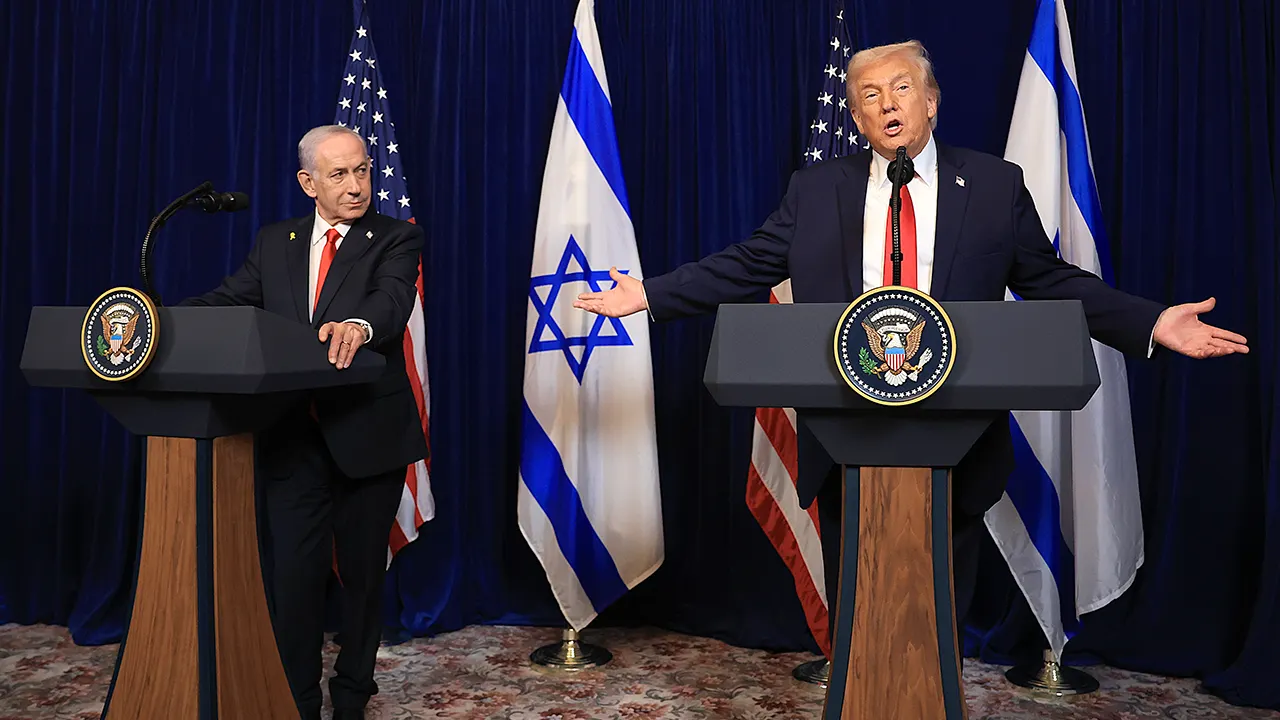
The geopolitical landscape of the modern Middle East is currently undergoing a profound and highly orchestrated seismic shift, driven by a characteristic blend of high-stakes transactional statecraft and disruptive negotiation tactics championed directly by President Donald Trump. At the absolute heart of this evolving international drama is Trump’s bold and controversial mandate linking any future diplomatic agreement with the Islamic Republic of Iran to a synchronized, sweeping expansion of the historic Abraham Accords. By leveraging the immense power of the United States and the promise of a comprehensive, lasting regional stability pact, Trump is applying unprecedented pressure on several of the world’s most influential Muslim-majority nations, insisting that their participation in any new diplomatic framework with Tehran is strictly contingent upon their willingness to formally normalize diplomatic relations with the State of Israel. This strategy fundamentally upends decades of conventional Western foreign policy, which previously maintained that resolving the Israeli-Palestinian conflict must be an absolute prerequisite to any formal, normalized ties between Israel and the broader Arab and Islamic world. Instead, Trump’s approach seeks to construct an integrated security and economic architecture first, using collective diplomatic leverage as a powerful tool to isolate extremist elements while simultaneously offering cooperative nations a seat at a newly designed, highly lucrative table of shared regional prosperity. By communicating these expectations directly to global leaders via public statements and highly publicized posts on his platform, Truth Social, Trump is signaling to the international community that the era of piecemeal negotiations and slow, quiet diplomacy is officially over. In his view, the path toward a sustainable, realistic balance of power in this historically volatile region requires a synchronized, simultaneous commitment from all regional heavyweights, transforming what was once a highly fragmented patchwork of bilateral disputes into a singular, unified framework for collective peace and mutual economic benefit. This audacious vision relies heavily on the premise that economic self-interest and shared security concerns—particularly regarding regional stability—can ultimately triumph over long-standing cultural, historical, and theological animosities, paving the way for a revolutionized era of collaboration across ancient geopolitical divides.
To translate this ambitious grand strategy into immediate reality, Trump has directly engaged an ideologically, culturally, and geographically diverse coalition of key regional players, specifically urging the senior leadership of Saudi Arabia, Qatar, Egypt, Pakistan, Turkey, and Jordan to take the historic leap of normalizing relations with Israel. The inclusion of these specific nations in the conversation is both strategic and highly complex, as each sovereign country carries its own unique historical narratives, domestic political pressures, and deep-seated religious responsibilities regarding the State of Israel and the broader regional balance of power. Saudi Arabia, as the custodian of Islam’s holiest sites in Mecca and Medina, has long held a pivotal, authoritative role in Arab leadership, making its potential accession to the Accords the ultimate prize in Middle Eastern diplomacy—a historic move that would fundamentally alter the geopolitical landscape and likely trigger an unstoppable domino effect across the wider Islamic world. Egypt and Jordan, which have maintained formal, albeit historically cold, peace treaties with Israel for decades, are being actively pushed to deepen their relationships beyond basic military and intelligence cooperation into fully realized diplomatic, cultural, and economic integration through the Abraham Accords framework. Meanwhile, bringing nations like Turkey, Pakistan, and Qatar into this cooperative fold presents a labyrinth of diplomatic hurdles, given Turkey’s vocal geopolitical posturing, Pakistan’s historically rigid constitutional refusal to recognize Israel, and Qatar’s delicate role as a crucial regional mediator that frequently hosts political offices for various dissident groups. Trump’s firm insistence that these nations must “at a minimum, simultaneously” sign onto the agreements represents an incredibly bold effort to neutralize the political risks of individual normalization; by requiring a collective, synchronized step forward, no single nation has to bear the domestic political burden or regional backlash of making peace with Israel alone, effectively creating a unified shield of diplomatic solidarity.
To fully appreciate the gravity and historical context of these current developments, one must look back to the inception of the Abraham Accords in the autumn of 2020, a watershed moment that permanently reshaped the modern definition of diplomacy in the Middle East. Facilitated by the intense mediation efforts of the Trump administration, the initial treaties saw the United Arab Emirates and the Kingdom of Bahrain become the pioneering nations to break a decades-long deadlock, courageously stepping forward to establish full diplomatic, economic, and tourism ties with Israel. This historic breakthrough was quickly followed by Sudan and Morocco, proving to a skeptical world that a new generation of leaders was increasingly eager to prioritize technological cooperation, water security, trade, agricultural innovation, and joint defense collaboration over the stagnant, decades-old geopolitics of the past. The human and cultural impact of these agreements was felt almost immediately across the region, as commercial flights began buzzing daily between Tel Aviv, Abu Dhabi, and Manama, translating abstract geopolitical treaties into real-world human connections, shared artistic endeavors, academic exchanges, and joint medical research projects. By systematically dismantling the long-held taboo of engaging with Israel, the Accords demonstrated to the global community that progress is highly achievable when nations choose to actively focus on future opportunities rather than remaining paralyzed by historical grievances. Now, as Trump seeks to dramatically broaden this coalition, the strategic importance of the original signatories remains paramount, prompting planned high-level consultations with the leadership of both the UAE and Bahrain to consolidate the progress made and leverage their successful models of normalization to reassure, guide, and inspire the next wave of potential signatories in the region. This evolutionary trajectory of the Accords underscores a profound shift from a desperate search for defensive alliances to an active, positive pursuit of mutual economic and cultural enrichment, establishing a robust blueprint for regional coexistence.
Perhaps the most astonishing and conversational aspect of this unfolding diplomatic strategy is Trump’s highly provocative suggestion that the Islamic Republic of Iran itself could ultimately find a viable path to integration within the Abraham Accords framework. Historically, Tehran’s ruling clerical regime has positioned itself as the ideological, existential archenemy of Israel, funding a vast network of regional proxies—including Hezbollah in Lebanon, Hamas in Gaza, and the Houthi movement in Yemen—while enduring severe international sanctions designed to curb its nuclear ambitions and regional influence. The radical prospect of Iran joining a regional peace framework that explicitly recognizes Israel would represent one of the most astonishing diplomatic turnarounds in modern global history, transforming the region’s primary source of security tension into a cooperative partner. Trump’s enthusiastic assertion on Truth Social that regional leaders “would be honored, as soon as our Document is signed, to have the Islamic Republic of Iran as part of the Abraham Accords” reflects a deeply pragmatic, almost highly idealistic belief in the power of ultimate business-style deals to resolve seemingly intractable conflicts. By framing this potential outcome with his signature optimism, noting that “now that would be something special,” the administration is dangling an incredibly powerful, life-altering carrot in front of Tehran: the promise of sweeping sanctions relief, absolute sovereign legitimacy, and full integration into a thriving Middle Eastern economic engine, provided the regime undergoes a fundamental behavioral shift and abandons its aggressive posture. This approach challenges the traditional containment strategies favored by previous U.S. administrations, suggesting instead that the ultimate solution to the Iranian threat is not endless military posturing, but rather an offer of economic inclusion that is far too lucrative for the regime to ignore. While many skeptics view this scenario as highly improbable given the deep-seated ideological foundations of the Iranian leadership, the mere articulation of this possibility serves to completely reframe the diplomatic conversation, forcing all parties to imagine a post-conflict Middle East where economic cooperation replaces proxy warfare.
However, the road to achieving this sweeping regional harmony is fraught with immense practical obstacles, deeply entrenched domestic political realities, and sensitive timelines that require extraordinarily careful navigation by both American and Middle Eastern diplomats. A primary, highly telling example of this delicate timing is the consensus among U.S. and Israeli officials that a key player like the United Arab Emirates is unlikely to make major forward progress on these sensitive negotiations until the political dust settles after Israel’s upcoming national elections. This strategic hesitation highlights the complex, often unpredictable interplay between international grand strategy and the hyper-local realities of democratic governance, where leadership changes, coalition politics, and shifting public opinion can instantly pause or completely derail delicate diplomatic initiatives. Furthermore, the human dimension of these policies cannot be ignored; while political leaders may sign historical treaties in grand palace ceremonies, the success of normalization ultimately depends on the hearts and minds of the general public. Across many of these target nations, decades of deeply ingrained solidarity with the Palestinian cause mean that rapid normalization with Israel remains a highly sensitive, emotional, and polarizing issue among ordinary citizens, requiring leaders to tread carefully to avoid domestic unrest, social media backlash, or political instability. Additionally, the ongoing security challenges in the region, including skirmishes with various militant factions and the constant threat of cyber-warfare, serve as a stark reminder of the fragile ground upon which this ambitious peace architecture is being built. Consequently, diplomats must balance the aggressive, fast-paced deal-making style of the Trump administration with the slow, deliberate, and highly structured steps necessary to build trust, manage public expectations, and ensure that any signed agreement is robust enough to survive major geopolitical shocks and leadership transitions.
In conclusion, the aggressive push to bind a developing Iran agreement to a massive, collective expansion of the Abraham Accords represents one of the most daring, paradigm-shattering experiments in modern international relations. By demanding simultaneous commitment from powerhouse nations like Saudi Arabia, Turkey, and Pakistan, this strategy seeks to replace a history of localized containment and perpetual hostility with a comprehensive, self-sustaining regional treaty built on mutual security and immense economic prosperity. While critics argue that forcing such diverse and historically adversarial nations into a single mandatory framework is a highly risky gamble that oversimplifies deep cultural, religious, and political complexities, supporters see it as the only realistic path toward dismantling the systemic cycles of violence that have plagued the Middle East for generations. Ultimately, this humanized approach to foreign policy recognizes that lasting peace is not merely the absence of war, but the active presence of shared human endeavor, economic collaboration, and mutual respect among communities that have long viewed each other through the lens of suspicion. As the world watches these high-stakes negotiations unfold, the outcome will not only define the legacy of those leaders daring enough to sign their names to these historic documents, but will also shape the daily lives, safety, and economic futures of millions of ordinary citizens throughout the region. Whether this grand diplomatic gamble culminates in a historic era of unprecedented cooperation—even drawing Iran into a shared regional vision—or fractures under the weight of historical grievances, it has set a bold new standard for how the global community approaches the pursuit of peace in its most volatile corners. By placing human prosperity and mutual connection at the core of international deals, this strategy challenges us to dream of a Middle East defined not by its ancient conflicts, but by its boundless future potential.