

The Reflecting Pool Controversy: A Tale of Justice, Politics, and Public Perception
The Lincoln Memorial Reflecting Pool, an iconic symbol of American democracy and reflection, has recently become the center of a contentious legal and political debate that reaches far beyond its tranquil waters. What began as a standard vandalism investigation has evolved into a complex narrative involving the Department of Justice, the White House, and questions about how we balance evidence with public expectations. The case has captured national attention, drawing in prominent political figures and raising important questions about the nature of justice in America’s capital city.
At the heart of this controversy is Olympic canoeist David Hearn, who was initially accused of causing significant damage to the newly renovated reflecting pool. The renovation project, which cost taxpayers approximately $14 million, was intended to restore this historic landmark to its former glory. However, when cracks appeared in the structure, algae began to grow unexpectedly, and the sealant started peeling away, investigators initially pointed fingers at Hearn, suggesting he had deliberately vandalized the property. The case seemed straightforward at first, but as prosecutors delved deeper into the evidence, complications began to emerge that would ultimately lead to a dramatic reversal in the case’s trajectory.
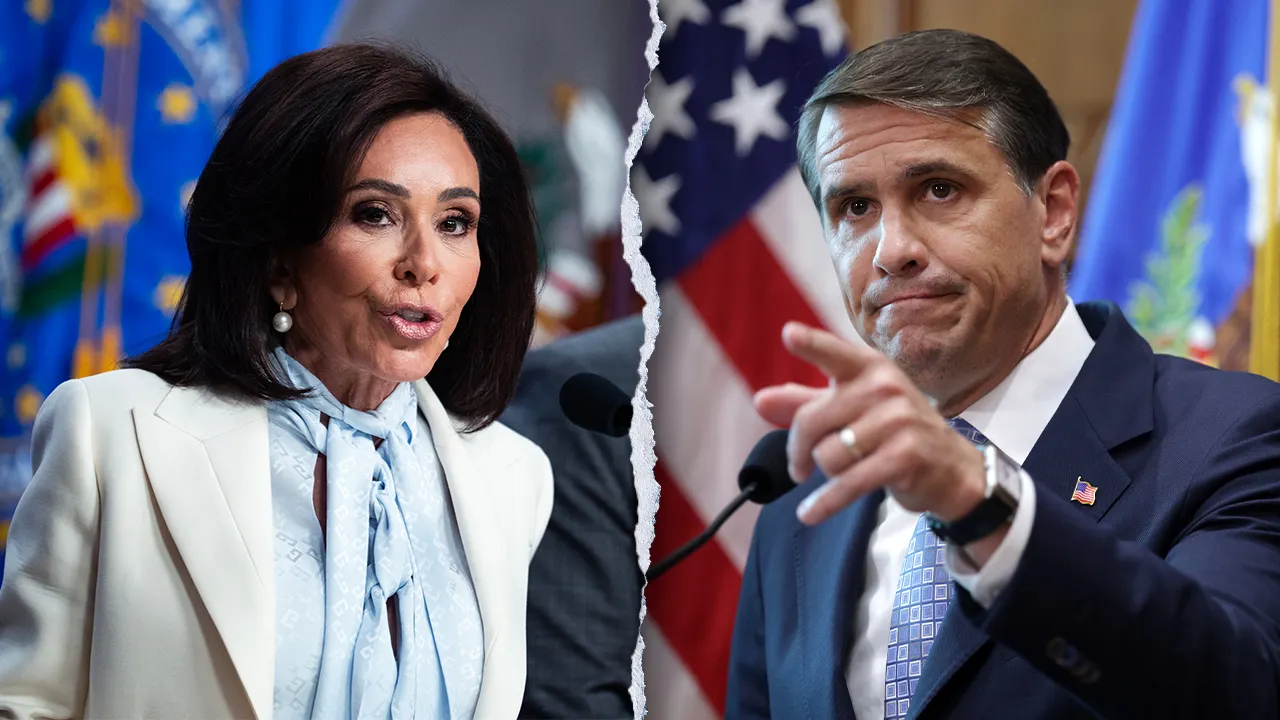
The turning point came when federal prosecutors, under the direction of U.S. Attorney Jeanine Pirro, made the difficult decision to drop the charges against Hearn on July 31st. This decision was not made lightly, nor was it a reflection of weakness in the prosecution’s resolve. Rather, it was based on a thorough examination of available evidence that suggested the damage to the reflecting pool may have actually resulted from a poorly executed renovation rather than intentional vandalism. This revelation threw the entire case into question and created a significant rift between legal reality and public perception, particularly in the corridors of political power where the case had attracted considerable attention.
Attorney General Todd Blanche has found himself navigating this politically charged landscape with careful precision, attempting to balance support for his prosecutor with understanding for the president’s frustration. In a recent appearance on NBC’s “Meet the Press,” Blanche addressed the situation with diplomatic nuance, expressing his unwavering support for Pirro while simultaneously acknowledging the president’s valid concerns about the case’s outcome. This delicate balancing act highlights the often-complicated relationship between the Department of Justice, political leadership, and the pursuit of justice in high-profile cases.
The case has raised fundamental questions about how we define justice and what constitutes sufficient evidence for prosecution. According to Blanche, there was indeed a witness who claimed to have observed Hearn engaging in what appeared to be vandalism of the reflecting pool. However, the attorney general was careful to distinguish between eyewitness testimony and the kind of conclusive proof necessary to secure a conviction. This distinction lies at the heart of the matter – while a witness’s account may suggest wrongdoing, the burden of proof in criminal cases requires more substantial evidence than might initially appear from external perspectives.
Hearn, for his part, has consistently maintained his innocence throughout the ordeal, adding another layer of complexity to an already intricate case. His position as an Olympic athlete, someone who has represented the United States on the international stage, has only intensified public interest in how the justice system handles the accusations against him. The contrast between his athletic achievements and the allegations against him creates a narrative tension that has captured the imagination of the American public.
President Trump’s reaction to the case’s dismissal has been notably forceful, going so far as to urge Pirro to revisit the dropped charges against Hearn. The White House’s involvement has introduced a political dimension to what would typically be considered a straightforward legal matter, raising questions about the appropriate boundaries between political leadership and judicial independence. This intervention has sparked debate about whether such involvement represents appropriate oversight or potential overreach into matters that should remain within the purview of the justice system.
The attorney general’s defense of Pirro extends beyond mere professional courtesy – he has emphasized her commitment to protecting America’s memorials and monuments, citing her office’s aggressive pursuit of those who would desecrate these important national symbols. Just last Thursday, Pirro’s office filed charges in a separate case involving the vandalism of a veterans memorial, where a female suspect allegedly sprayed pink paint and introduced bubble soap into the memorial’s fountain. This case serves as evidence of Pirro’s dedication to her role as protector of these sacred spaces, demonstrating that her decision in the Hearn case was based on the specific evidence available rather than any broader dereliction of duty.
Blanche’s remarks about the importance of not judging Pirro based on a single case highlight a fundamental principle of justice – that decisions must be made based on available evidence rather than external pressures or popular opinion. This principle becomes particularly crucial in high-profile cases where public sentiment and political considerations might otherwise influence legal proceedings. The attorney general’s position suggests a commitment to maintaining the integrity of the justice system even when doing so proves politically inconvenient.
The White House’s subsequent request that the Justice Department explore whether new misdemeanor charges could be brought against Hearn adds yet another layer of complexity to this situation. While the federal prosecutors’ decision to drop the original case was based on evidentiary concerns, the possibility of pursuing alternative charges represents an attempt to find some middle ground between complete dismissal and proceeding with a case that lacks sufficient evidence. This development demonstrates the ongoing tension between the desire for accountability and the practical limitations of the justice system.
Blanche’s willingness to consider the president’s views while maintaining the independence of the Justice Department illustrates the delicate balance required of those who hold positions at the intersection of law and politics. His acknowledgment that the president’s perspective warrants consideration, without compromising on the evidentiary standards that guide prosecutorial decisions, provides a model for how such situations might be handled. This approach acknowledges the legitimate role of executive oversight while preserving the professional independence that is essential to maintaining public trust in the justice system.
As the nation continues to grapple with the implications of this case, several broader questions emerge about the nature of justice, the role of evidence in criminal proceedings, and the appropriate relationship between political leadership and prosecutorial discretion. The reflecting pool controversy serves as a reminder that even the most straightforward-looking cases can become complicated when evidence fails to support initial assumptions, and that the pursuit of justice requires careful consideration of all available information rather than reflexive responses to public pressure.
The case also highlights the challenges faced by prosecutors who must navigate between public expectations for accountability and their professional obligation to only pursue cases supported by sufficient evidence. While the public may clamor for action in cases involving beloved national landmarks, prosecutors must maintain their commitment to evidentiary standards, even when doing so proves unpopular. This tension between public sentiment and legal professionalism represents one of the fundamental challenges of the American justice system.
For Pirro, the outcome of this case represents a significant test of her leadership and judgment, despite the attorney general’s vigorous defense of her performance. The decision to drop charges in a case that had attracted significant public and presidential attention demonstrates both courage and professional integrity, even as it may carry political consequences. Her continued prosecution of other vandalism cases suggests that she remains committed to protecting the nation’s memorials, even as questions linger about the Hearn case specifically.
The controversy has also sparked broader discussions about the maintenance and preservation of America’s public monuments and memorials. The $14 million renovation project that was intended to restore the reflecting pool to its former splendor has instead become the subject of scrutiny, with questions raised about the quality of workmanship and whether taxpayer money was appropriately spent. These concerns extend beyond the specific case of potential vandalism to encompass larger issues of government contracting, project oversight, and accountability for the maintenance of national treasures.
As the situation continues to develop, with potential new charges being explored and political tensions simmering just beneath the surface, the reflecting pool case serves as a compelling example of how justice operates in the modern American context. It demonstrates that justice is not always simple or straightforward, but rather requires careful consideration of evidence, respect for legal standards, and the courage to make difficult decisions even in the face of external pressure. The outcome of this case, both legally and politically, will likely have implications for how similar situations are handled in the future, shaping the relationship between prosecutors, political leadership, and the public they serve.
The controversy surrounding the Lincoln Memorial Reflecting Pool serves as a powerful reminder that justice in America is a complex and nuanced process, one that cannot be reduced to simple narratives of wrongdoing and punishment. It highlights the importance of evidence-based decision-making, even when such decisions prove controversial or politically inconvenient. As the nation moves forward, the lessons from this case will likely influence discussions about prosecutorial discretion, judicial independence, and the delicate balance between accountability and fairness that lies at the heart of the American legal system.