



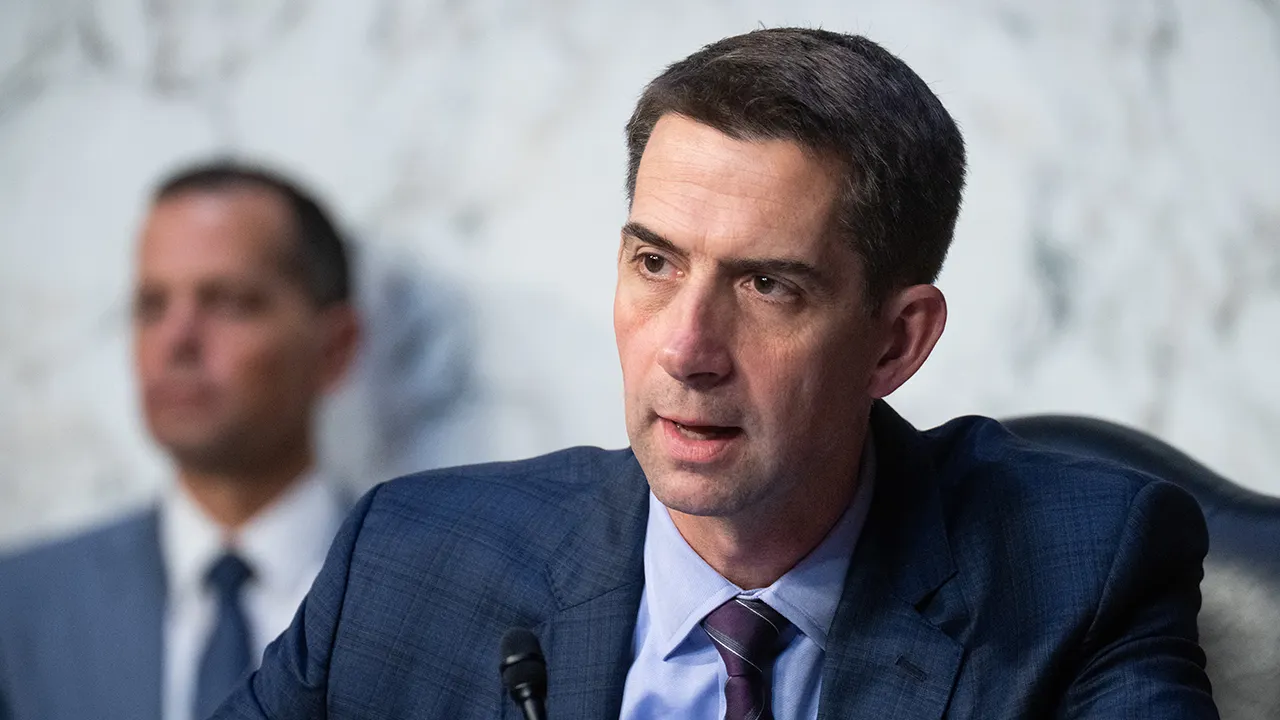
The global race for artificial intelligence dominance has officially transcended the sterile confines of Silicon Valley research laboratories, transforming into a high-stakes arena of national security, geopolitical posturing, and covert international influence. At the heart of this escalating technological Cold War is a direct and urgent plea from Senator Tom Cotton, a Republican representing Arkansas, who has formally called on the Department of Justice to launch a comprehensive investigation into what appears to be a highly coordinated, foreign-backed campaign aiming to undermine American progress. In an exclusive letter addressed to Acting Attorney General Todd Blanche, Cotton raised alarms over a stealth network of foreign actors manipulating U.S. public opinion and political policy to actively “kneecap” America’s expanding artificial intelligence systems and the physical data centers that act as their backbone. As Washington and Beijing battle for ultimate supremacy in AI capabilities, Cotton argues that this covert campaign is specifically designed to target the raw processing power of the United States. According to the senator, the strategy is as brilliant as it is insidious: rather than trying to out-innovate Western developers in a fair market, the Chinese Communist Party (CCP) is allegedly seeking to disrupt the physical infrastructure of its rival from within, turning local communities against the very technological installations required to keep the nation competitive. Cotton emphasizes that the future of American technological sovereignty is at stake, declaring that the American public must be allowed to debate and decide their own path forward free from the targeted influence of hostile communist propaganda designed specifically to induce self-sabotage under the guise of grassroots activism.
The complex financial pipeline and ideological framework fueling this campaign leads back to a highly controversial American tech tycoon turned Marxist activist, Neville Roy Singham. Singham, who amassed a massive fortune after selling his Chicago-based IT consulting firm Thoughtworks in 2017, currently resides in Shanghai, placed directly under the growing scrutiny of congressional investigators and federal intelligence agencies alike. Earlier this year, comprehensive investigative reporting detailed how Singham, following his marriage to Jodie Evans, the co-founder of the left-wing anti-war group CodePink, began systematically funneling an extraordinary $278 million into a variety of U.S.-based 501(c)(3) nonprofit organizations. This vast financial network connects seemingly disparate progressive entities, including the People’s Forum, Tricontinental, BreakThrough News, and CodePink itself. According to federal watchdogs and independent reports, these groups act as centralized command-and-control hubs that coordinate nationwide protests, print standardized activist materials, and actively propagate narratives that closely mirror the geopolitical interests of China. By forming strategic alliances with domestic Marxist organizations, such as the ANSWER Coalition and the Party for Socialism and Liberation, these Singham-funded entities have successfully mobilized street-level activists to protest and attempt to publicly shame major American technology, defense, and logistics corporations—including Palantir Technologies, Google, and Lockheed Martin—specifically aiming to disrupt their lucrative contracts with the U.S. government on critical defensive, intelligence, and border security priorities.
To maximize the impact of their disruption, these foreign-aligned activist networks have formed what geopolitical analysts categorize as a “red-green-green alliance.” This ideological intersection merges three distinct, historically separate political blocks: communist and Marxist movements (symbolized by the color red), Islamist progressive organizations (traditionally associated with green), and environmental activist groups (also represented by green). Despite having vastly different internal philosophies and ultimate objectives, these groups have found a powerful unifying element in their shared skepticism of American global influence, capitalized on by massive financial backing from sources tied to China. Rather than engaging in abstract debates about global hegemony, these groups bring their message directly to local communities by focusing on immediate, practical anxieties, heavily targeting the heavy energy footprint and vast water consumption essential for operating massive, state-of-the-art data centers. By linking the expansion of necessary computing infrastructure to rising consumer electricity bills and local environmental strains, these movements successfully recruit well-meaning local citizens who are entirely unaware that their neighborhood advocacy is being amplified by a foreign power. For Beijing, the calculation is highly effective: by encouraging a steady stream of domestic protests, legal challenges, and regulatory roadblocks over localized utility issues, they can successfully delay the rollout of the high-performance computers that the U.S. military and private sector desperately need to maintain their technological advantages.
The deep hypocrisy of this asymmetrical strategy is thoroughly documented in a report published by the Bitcoin Policy Institute, a Washington, D.C.-based think tank, titled “Foreign Influence in the Campaign Against American AI.” The report exposes a striking dual standard in how Beijing approaches the global development of computing power: while Chinese state-owned media and foreign-funded surrogates aggressively pump parallel narratives into the American media ecosystem warning that data centers are environmental and economic disasters, the official Chinese state does the exact opposite within its own borders. Domestically, the Chinese government heavily prioritizes artificial intelligence development, going so far as to subsidize up to half of the total energy and operating costs for its own domestic AI data center operators to supercharge their machine-learning capabilities. The Bitcoin Policy Institute’s findings identify three distinct streams of influence aligning in this anti-AI campaign, pointing directly to official Chinese state media, the Singham-funded network of domestic nonprofits, and various foreign-funded environmental advocacy organizations. Operating together, these groups generate continuous public relations campaigns designed to delay the buildout of the American energy grid and to push back against critical technology policies, such as advanced semiconductor export controls. By framing the United States as an inherently flawed and imperialist nation—frequently utilizing extreme rhetoric that labels the country as “AmeriKKKa” in their promotional and digital materials—these networks aim to weaken national resolve and split public consensus on technology policy.
In response to these escalating national security threats, lawmakers in Washington have begun pushing forward with both legislative and regulatory measures designed to secure America’s critical infrastructure from foreign interference. Senator Cotton recently introduced the “DATA Act of 2026,” a pioneering legislative proposal designed to lift heavy regulatory restrictions, thereby allowing advanced manufacturing plants, research labs, and next-generation data centers to build their own independent localized energy networks separate from the consumer grid. This legislative pivot is intended to disarm the activist narrative regarding consumer utility costs by ensuring that industrial computational expansion does not directly inflate the electricity bills of everyday citizens. At the same time, members of both the Senate and the House of Representatives are demanding a formal investigation into whether the various nonprofits tied to the Singham network should be forced to register as foreign agents under the Foreign Agents Registration Act (FARA), which requires anyone working on behalf of foreign governments to disclose their financing and operations. This push for structural transparency has gained backing from several high-profile business leaders, such as billionaire investor Kevin O’Leary, who has repeatedly warned that computational power and advanced energy infrastructure are sovereign strategic assets in the modern economy, and that excessive regulatory paralysis is currently allowing China to rapidly pace past American capabilities.
The complex debate over the domestic implementation of artificial intelligence has also revealed deep divisions within the American political landscape, demonstrating how easily foreign entities can sometimes gain access to influential policymaking spaces. Earlier this year, high-profile progressive leaders, including Senator Bernie Sanders and Representative Alexandria Ocasio-Cortez, held a major public event focusing on what they termed the “existential threat” of AI. The panel sparked immediate controversy when it was revealed that the featured speakers included prominent academic figures with close ties to the Chinese state apparatus, such as Zeng Yi of the Beijing Institute of AI Safety and Governance and Xue Lan, a counselor to China’s State Council. In his letter to the Department of Justice, Senator Cotton specifically highlighted Xue Lan’s deep involvement with Tsinghua University, an elite institution that has repeatedly come under intense scrutiny from U.S. intelligence officials due to its integral participation in China’s “military-civil fusion” strategy—a national program that weaponizes commercial technological advancements for direct use by the Chinese military. This controversial intersection underscores the delicate challenge facing the United States in the digital age: while striving to maintain an open, democratic society that encourages ethical debate and criticism of new tech, American leadership must simultaneously defend against a sophisticated, well-funded influence apparatus that seeks to weaponize those very democratic ideals to stall American technological progress. Ultimately, the struggle for artificial intelligence hegemony will not just be decided by writing lines of code, but by the physical capacity to build, the political will to protect national assets, and the strategic foresight to shield democratic institutions from foreign manipulation.