

House Republicans Block Venezuela War Powers Resolution in Narrow Vote
In a dramatic display of party unity, House Republicans successfully defeated a bipartisan war powers resolution that would have potentially limited President Donald Trump’s military authority in Venezuela. The measure failed in an extraordinarily close 215-215 vote, with only two Republicans—Representatives Thomas Massie of Kentucky and Don Bacon of Nebraska—breaking ranks to support the resolution. The vote became a nail-biter as Speaker Mike Johnson held the vote open for over 20 minutes until Republican Representative Wesley Hunt of Texas arrived to break the deadlock. The tension was palpable on the House floor, with Democratic Representative Pat Ryan of New York reportedly shouting, “Close the vote! This is serious s—!” as Republicans scrambled to secure their position.
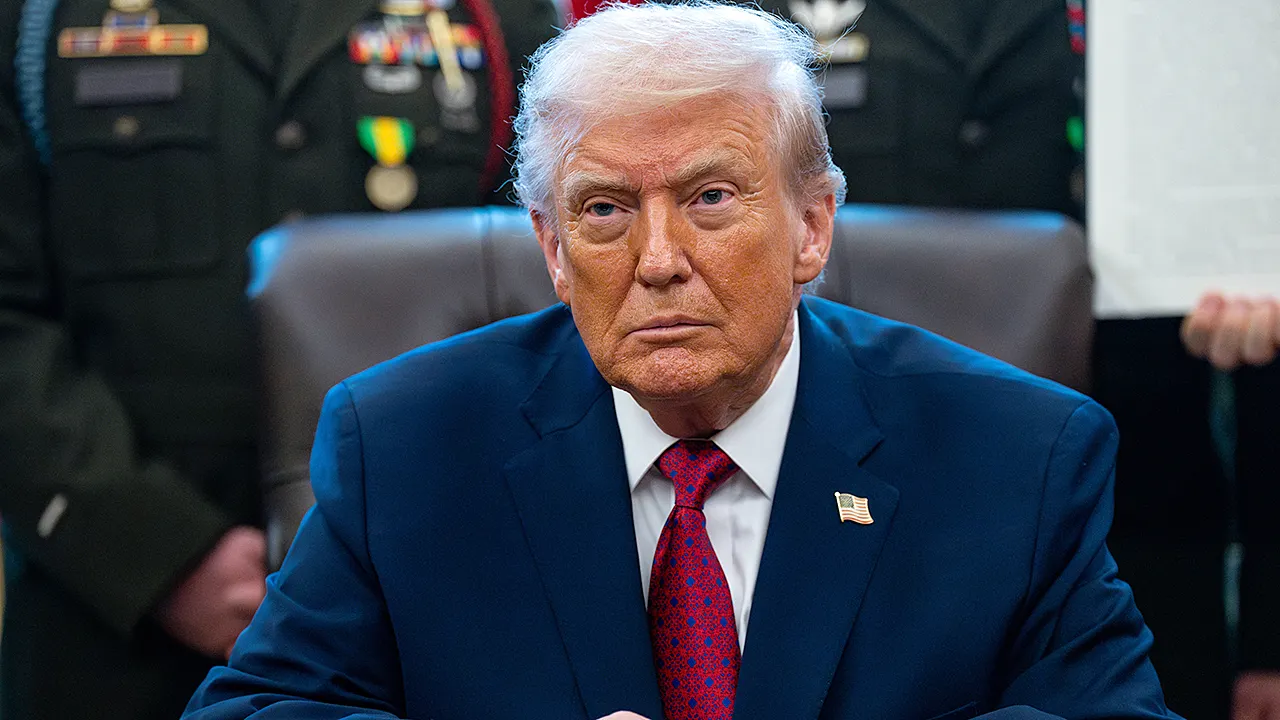
The resolution, sponsored by Democratic Representative Jim McGovern and Republican Representative Thomas Massie, would have directed President Trump to withdraw any troops deployed to Venezuela and sought to restrict future military operations in the country. This House measure paralleled similar efforts in the Senate aimed at curtailing presidential military authority in the region. The White House firmly opposed the resolution, with spokesperson Anna Kelly criticizing Congress members who “want to usurp the authority of the commander in chief to take vital actions to strengthen our national security and stop drugs and criminals from entering our homeland.” Speaker Johnson had expressed confidence before the vote that Republicans would remain united, emphasizing America’s position as “the last great superpower” and the need to respect the president’s constitutional authority as commander in chief.
The political standoff follows President Trump’s controversial order earlier this month to capture Venezuelan President Nicolás Maduro in what the administration has characterized as a targeted law enforcement operation rather than a military action. The White House maintains that the U.S. was simply apprehending an alleged criminal, noting that Maduro and his wife had been indicted in a New York court for allegedly facilitating drug trafficking into the United States. “The entire Trump administration coordinated to execute the arrest of Nicolás Maduro, who headed a major narco-trafficking foreign terrorist organization and was a fugitive of American justice,” Kelly stated. Democrats, however, have expressed concern that this action could presage further military operations in Venezuela, with McGovern leading the push for congressional oversight.
The House resolution differed somewhat from a similar measure introduced in the Senate by Democratic Senator Tim Kaine of Virginia. While both sought to address presidential war powers in Venezuela, the House version specifically called for the removal of any U.S. forces in the region—despite administration officials’ assurances to lawmakers that no American troops were on the ground in Venezuela following the surprise operation against Maduro. The resolution’s chances in the Senate had already been diminished after lawmakers in the upper chamber rejected Kaine’s effort to require congressional authorization for future military activities in Venezuela. Republican Senators Todd Young of Indiana and Josh Hawley of Missouri notably reversed their initial support for war powers limitations after receiving guarantees from administration officials, particularly Secretary of State Marco Rubio, that no U.S. troops were deployed in Venezuela.
The debate over war powers reflects broader tensions between Congress and the executive branch regarding the constitutional authority to conduct military operations. While the Constitution designates the president as commander in chief, it reserves to Congress the power to declare war—a distinction that has grown increasingly blurred in modern conflicts. The Trump administration insists its actions in Venezuela fall within the president’s authority to enforce U.S. law and protect national security interests, particularly regarding drug trafficking networks that impact American communities. Critics argue that operations like the attempted capture of a foreign head of state, regardless of the justification, represent precisely the kind of military action that should require congressional approval under the War Powers Resolution of 1973.
Secretary of State Rubio is scheduled to appear before the Senate Foreign Relations Committee next week to outline the administration’s strategy for Venezuela, a hearing that takes on added significance given the recent congressional debates. Rubio has already indicated that the administration is developing a three-part approach focusing on stabilization, recovery, and political transition in Venezuela. This upcoming testimony may provide greater clarity on the administration’s intentions and potentially address lingering concerns about the scope of U.S. involvement in the region. The narrowly defeated House resolution and the ongoing debates in both chambers of Congress highlight the continuing struggle to define the boundaries of presidential war powers in an era of complex international challenges—a tension likely to persist regardless of which party controls the White House or Congress.