



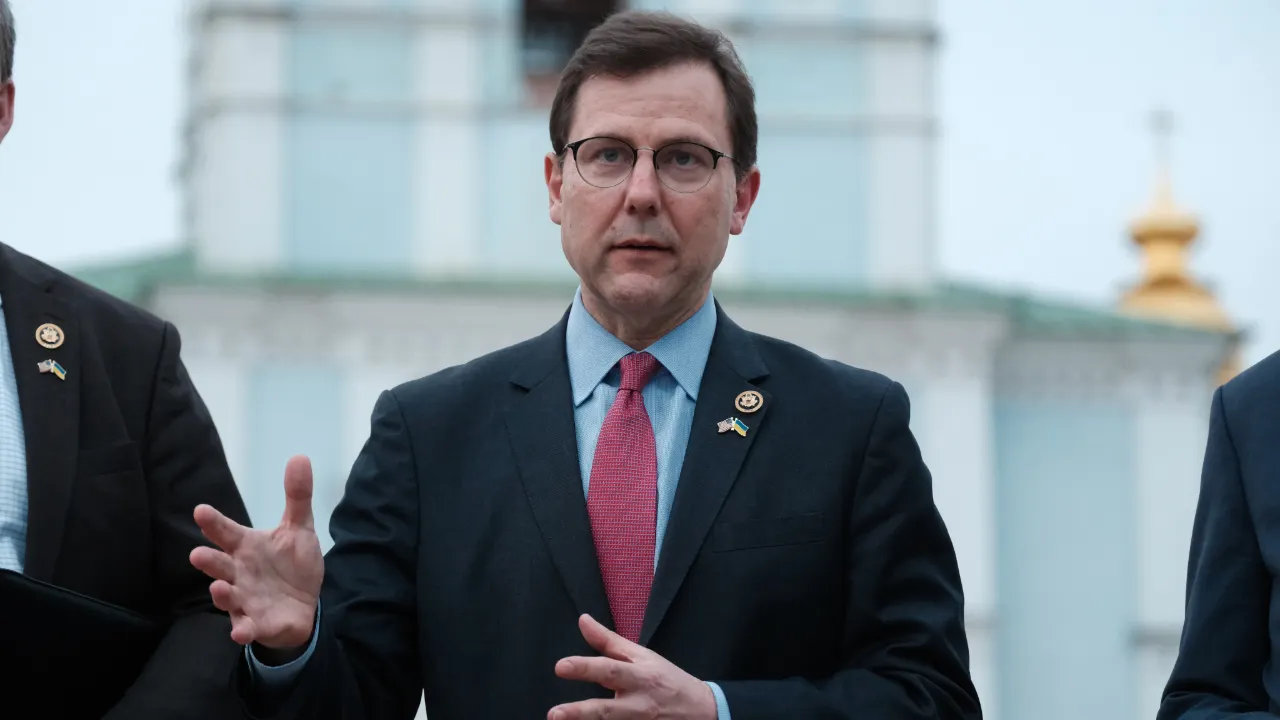
Behind the grand facades of Washington, D.C., where the relentless rhythm of legislative battles and partisan debates defines the daily routine, lies a deeply human reality that is often overlooked in political reporting. This vulnerability became the focal point of Capitol Hill recently when Representative Tom Kean Jr., a 57-year-old Republican representing New Jersey’s highly competitive 7th Congressional District, suddenly vanished from the House chamber. After missing 100 consecutive roll-call votes following his last appearance on March 5, rumors and anxieties began to swirl around his quiet departure. Breaking his silence in a heartfelt conversation with the New Jersey Globe, Kean offered the public his first direct update on a situation his staff had previously guarded with fierce confidentiality, describing it only as a “personal health matter.” Expressing a deep understanding of the delicate balance between his constituents’ right to know and his own physical limitations, the congressman shared that his medical team is entirely confident in his trajectory toward a full recovery. With a tone of quiet determination, Kean expressed his gratitude for the outpouring of warmth and support from his home state and announced his anticipation of returning to the House voting floor and the demanding campaign trail in the very near future.
The congressman’s prolonged absence has sent ripples through an already turbulent legislative landscape, emphasizing the high-stakes math of a razor-thin Republican majority in the House of Representatives. In a legislative body where every single vote can decide the fate of major national policies, the empty seat of one member is not merely a statistical footnote; it is a critical vulnerability that tests the strategic limits of leadership. This operational strain was made palpable by House Speaker Mike Johnson, who candidly admitted to reporters that while he had been in personal contact with Kean, he remained largely in the dark regarding the specific medical diagnoses. Johnson’s public expressions of concern and his urgent reminders for his conference to “stay healthy” highlight the fragile grip the GOP maintains over its narrow majority, where unexpected illnesses and retirements constantly threaten to shift the balance of power. For Kean, the pressure of this political reality must have weighed heavily alongside his physical recovery, illustrating the intense burden carried by public servants who find their personal health struggles transformed into pivotal variables in the national political arena.
This tension is magnified even further when viewed through the lens of local representation, particularly in a district as fiercely contested as New Jersey’s 7th. Serving as one of the country’s premium swing districts, Kean’s territory is a critical battleground that both parties view as essential for securing a majority in the upcoming 2026 midterm elections. While Kean remains unopposed in the Republican primary, a highly motivated field of Democratic contenders is actively campaigning to capture the seat, leveraging his absence to question the consistency of the district’s representation in Washington. The stark reality of representative democracy is that constituents require an active voice, and the silence of an empty voting record can easily be weaponized in the relentless cycle of modern political campaigns. By attempting to manage his recovery away from the flashing bulbs of press cameras—as noted by a senior aide who remarked that “there’s no cameras where Tom is”—Kean has had to navigate the immense challenge of defending his legislative record and political future while physically unable to stand before the voters he serves.
The silence surrounding the specific nature of Kean’s illness highlights a broader, deeply human debate regarding the boundaries of privacy for elected officials in the modern era. While public figures are often expected to surrender their personal lives to the scrutiny of the voters, the human body does not adhere to the demands of political transparency or the rigid scheduling of congressional sessions. Kean’s political consultant, Harrison Neely, sought to reassure the public by reaffirming the congressman’s unwavering commitment to his reelection campaign, emphasizing that his current focus must remain entirely on healing. This situation raises poignant questions about our societal expectations of leadership, illustrating how we often demand absolute accessibility and vulnerability from politicians while simultaneously expecting them to remain invincible. The protective shield of secrecy maintained by Kean’s office underscores a fundamental human desire to confront serious health challenges with dignity, surrounded by family rather than the invasive glare of the public eye.
In the midst of this political and medical drama, a touching perspective emerged from the congressman’s father, the legendary former New Jersey Governor Tom Kean Sr., who bridged the gap between public curiosity and private family anxiety. Speaking with a father’s protective warmth, the elder Kean confirmed to reporters that his son had been battling a “serious illness,” giving weight to the gravity of the situation while offering a realistic, grounded timeline for his return. The former governor’s candid acknowledgment that recovery from a major health crisis is a gradual process—rather than an overnight transformation—reminded an impatient public of the physical realities of healing. “You can’t be 100% the day you get back,” the elder Kean observed, describing the necessity of a measured, step-by-step return to the grueling demands of public office. His words provided a comforting touch of humanity, shifting the narrative away from partisan vote counts and back to the universal experience of a family supporting a loved one through a difficult recovery.
As Tom Kean Jr. prepares to make his transition from patient back to policymaker, his upcoming return to Washington represents more than just a critical vote restored to the Republican majority; it is a testament to personal resilience in the face of adversity. The journey back to the House floor will undoubtedly require immense physical and emotional stamina, as he will be stepping directly back into the crucible of a high-pressure legislative environment and a highly competitive reelection campaign. His experience serves as a powerful reminder that behind the titles, the political maneuvering, and the sterile statistics of missed votes, the individuals running our government are mortal human beings who experience the same physical vulnerabilities as the constituents they represent. As the doors of the House chamber prepare to open for his return, his recovery stands as a quiet victory, proving that even in the relentless storm of American politics, the human spirit and the support of family remain the ultimate foundations of strength.