


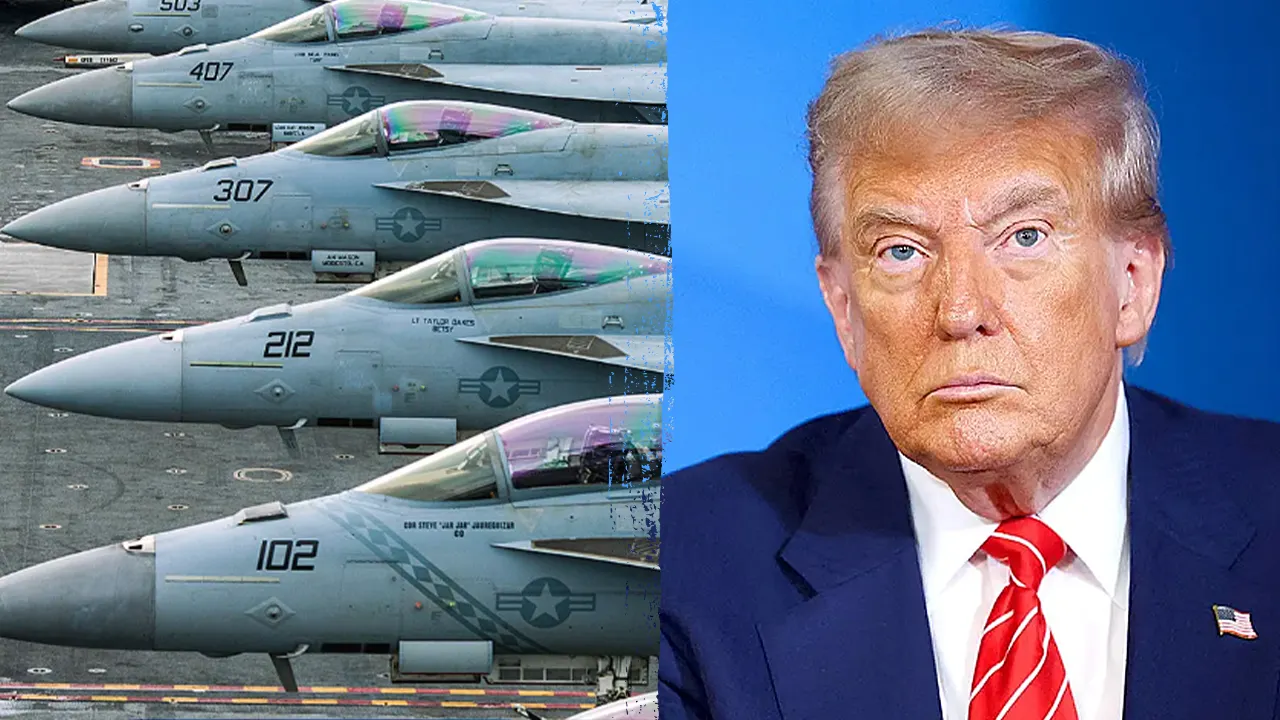
Behind the closed doors of a NATO Defense Policy Directors’ meeting in Brussels, a quiet but seismic shift occurred that has sent ripples of anxiety across the European continent. Pentagon official Alexander Velez-Green delivered a stark message to America’s closest allies: the United States plans to significantly scale back the military capabilities it earmarks for NATO during times of crisis. This is not a minor bureaucratic adjustment. Officials have confirmed that the Trump administration intends to slash these vital standby assets—including strategic bomber planes, state-of-the-art fighter jets, and crucial naval warships—by an astonishing one-third to one-half. For decades, Western Europe has operated under the comforting assumption of a permanent, near-limitless American security umbrella. This sudden announcement has shattered that illusion, forcing European leaders to confront a new reality where the conventional defense of their own borders must finally become their own responsibility. By reducing the pool of high-end military hardware readily available to the alliance, Washington is effectively pulling back its safety net, hoping that the sudden exposure to geopolitical gravity will force its partners to finally take their own defense seriously.
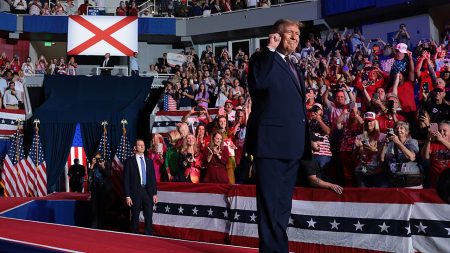
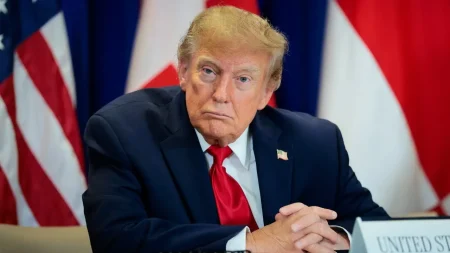
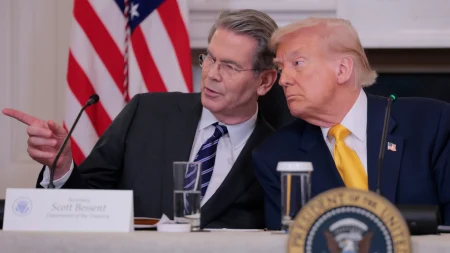
This dramatic gesture of tough love is the culmination of President Donald Trump’s long-standing frustration with what his administration views as European free-riding. Framing the decision as a catalyst for action rather than an act of abandonment, chief Pentagon spokesman Sean Parnell—speaking on behalf of a restructured “Department of War”—made it clear that the move is a deliberate strategy to pressure allies into fulfilling their historic obligations. Parnell emphasized that while spending more money on defense is a step in the right direction, particularly in light of the commitments made during the Hague Summit, the real test lies in what that money actually buys. The U.S. is no longer pacified by ledger books and promises of future defense budgets; it demands the immediate procurement of “combat-credible capabilities” designed to deter modern threats. As the alliance prepares for the upcoming high-stakes NATO leaders’ summit in Ankara, Turkey, this July, the administration’s message is loud and clear: Europe must build its own muscles. Washington is tired of being the continent’s primary protector, especially when its own strategic priorities are increasingly strained by the rising challenges in the Indo-Pacific region.
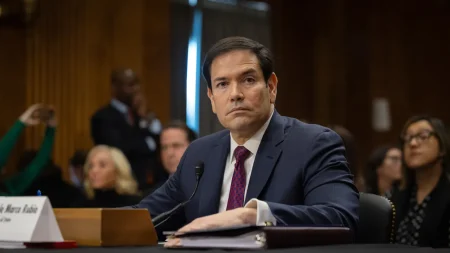
On the ground in European capitals, the reaction has been a volatile mix of polite public diplomacy and intense private panic. The sheer speed and lack of clarity surrounding the Trump administration’s evolving posture have left foreign ministers and defense officials scrambling for answers. During a recent gathering of NATO foreign ministers in the picturesque coastal city of Helsingborg, Sweden, the atmosphere was thick with uncertainty. Swedish Foreign Minister Maria Malmer Stenergard did not mince words, openly describing the rapidly changing situation as “confusing indeed.” Beside her, Secretary of State Marco Rubio offered a calm but uncompromising counterweight, noting that it has long been understood within the alliance that the American military footprint in Europe would have to be adjusted. This diplomatic friction has left regional leaders deeply unsettled. Behind the scenes, diplomats are anxiously seeking clarity on what these changes mean for daily operations, desperate to discern whether the shifting forces are part of a coordinated strategy or the opening salvos of a wider American withdrawal from European affairs altogether.
In the middle of this geopolitical storm stands NATO’s newly minted Secretary General, Mark Rutte, who has taken on the monumentally difficult task of acting as the alliance’s chief diplomatic shock absorber. Seeking to quiet the growing chorus of panic, Rutte has worked overtime to project an aura of calm stability, reassuring nervous member states that any American military adjustments will occur “over time, in a structured way.” He has repeatedly insisted to worried allies that the United States will remain deeply involved in Europe, even if the nature of that involvement looks vastly different than it did during the height of the Cold War. Yet, Rutte’s reassuring rhetoric is fighting an uphill battle against the hard mathematics of the Pentagon’s new vision. He must perform a delicate balancing act: acknowledging and validating Washington’s legitimate demands for European self-reliance to keep President Trump engaged, while simultaneously preventing Eastern European nations—who live in the immediate shadow of a hostile Russia—from succumbing to a paralyzing fear that their primary protector is leaving them to fend for themselves.
The physical reality of this pivot is already visible in the troop movements and bases scattered across the continent. Although the United States still maintains a massive military footprint in Europe—including approximately 36,000 troops in Germany, 12,000 in Italy, 10,000 in the United Kingdom, and 10,000 in Poland—the tides are clearly receding. The Pentagon has already begun chipping away at these numbers, withdrawing an armored brigade combat team from Romania that had been temporarily deployed in the wake of Russia’s invasion of Ukraine. Furthermore, the Trump administration has announced plans to pull an additional 5,000 U.S. troops out of Germany over the coming year. These withdrawals have created a vacuum of uncertainty on NATO’s eastern flank. In countries like Poland, defense officials are anxiously trying to decipher whether future U.S. troop rotations will actually expand the American footprint, merely replace paused deployments, or simply involve moving existing soldiers from Western Europe closer to the Russian border, leaving allies to guess the true strength of the American shield.
Ultimately, this painful transition represents the definitive end of the post-Cold War era and the birth of a more transactional, multipolar global order. The Pentagon’s decision to claw back its conventional forces is not merely about trimming budgets; it is a profound recognition that the United States can no longer afford to police the entire globe simultaneously. With the theater of future conflict shifting rapidly toward Asia and the defense of the Indo-Pacific against a rising China, Washington is forced to make hard choices about where to concentrate its most sophisticated military assets. For Europe, this represents a difficult but overdue moment of reckoning. The continent can no longer afford to outsource its security to a distant superpower while enjoying the benefits of a generous social safety net. If the NATO alliance is to survive the turbulent decades ahead, European nations must step out from the shadow of the American colossus, revitalize their own defense industries, and prove that they are capable of defending their own soil—not just as dependent protégés, but as equal, self-reliant partners in a changing world.