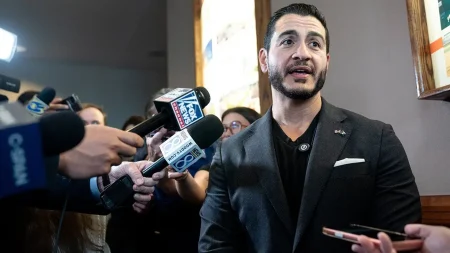



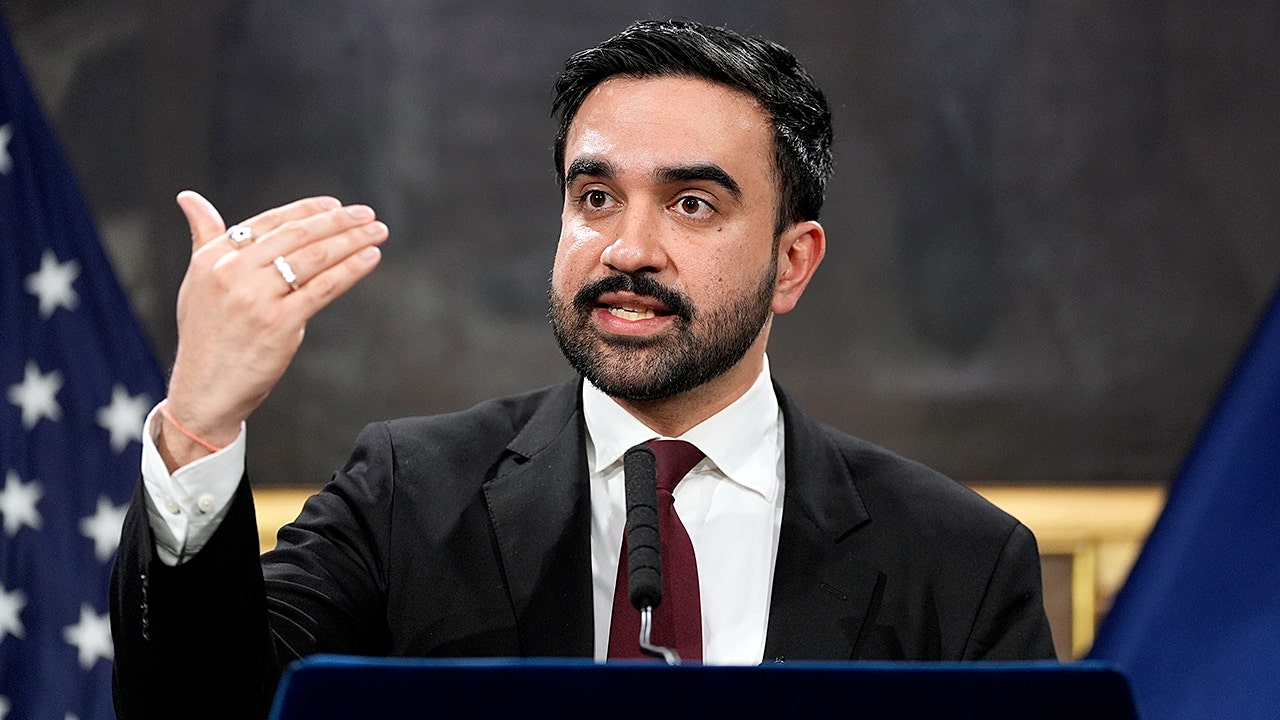
In the heart of one of the world’s most bustling cities, New York, where dreams are forged in skyscrapers and streets pulse with the energy of millions, a story unfolded that reminded us all of the fragile line between peace and conflict. Imagine waking up on a Saturday morning, maybe grabbing a coffee from a corner bodega run by an Iranian family, only to hear on the news that the United States and Israel had launched a strike on Iran, ending the life of its supreme leader, Ayatollah Ali Khamenei. For many New Yorkers, especially those with ties to the Middle East, this wasn’t just another headline—it tugged at their loyalties, fears, and hopes. Mayor Zohran Mamdani, a socialist figure leading this vibrant metropolis, decided to weigh in on the unfolding drama. With his post on X (formerly Twitter), viewed by roughly 20 million people, he painted a picture of concern and solidarity that resonated with some while igniting fury in others. As an American official in a divided nation, Mamdani’s voice emerged as a bridge, or perhaps a wall, in these turbulent times. He spoke not from the halls of Washington, but from the gritty, beautiful streets of NYC, where people from every corner of the globe come together. You could almost picture him—a dedicated public servant, perhaps pacing his office overlooking the Hudson River, grappling with how to address such a global crisis that directly impacts his constituents. His post wasn’t just words on a screen; it was a reflection of the human faces behind the flags, the ordinary folks who live, work, and dream in New York. By condemning the strikes as an “illegal war of aggression,” he tapped into a weary sentiment among Americans who’ve seen too many conflicts abroad while grappling with domestic challenges like rising living costs. It was as if he was saying, “Hey, folks, let’s not let go of our core values in the name of some distant crusade.” For Iranians in the city, his message was reassuring: you’re safe here, you’re part of us, neighbors and friends. It humanized the mayor, showing a side that’s empathetic and protective, the kind of leader who sees the faces of the people he serves. But in this digital age, where thoughts travel faster than bullets, his words traveled far and wide, sparking conversations that echoed through homes, subways, and coffee shops across the country.
Now, let’s dive into what Mayor Mamdani wrote, because words, especially in times of crisis, carry the weight of worlds. Picture a man at his desk, fingers flying across his keyboard at dawn on that fateful Saturday, the TV flickering with live feeds from Tehran as reports of the joint U.S.-Israel operation poured in. “Today’s military strikes on Iran — carried out by the United States and Israel — mark a catastrophic escalation in an illegal war of aggression,” he tweeted, his voice clear and resolute through the text. He painted vivid images of bombs falling on cities, civilians lost in the chaos, and a new front opening in an already scarred world. As a human being, you might sympathize—doesn’t every parent worry about their kids when wars erupt? Mamdani channeled that universal dread, arguing that Americans don’t want this; they crave relief from the “affordability crisis,” from the struggles of making ends meet in an expensive city like New York. He then turned his gaze inward, addressing the Iranian community directly, like a friend offering a hug in tough times. “You are part of the fabric of this city — you are our neighbors, small business owners, students, artists, workers, and community leaders,” he wrote. It was poignant, almost intimate, making you feel the warmth of community in a place where diversity is the norm. He promised safety, a sanctuary for those who’ve fled turmoil abroad, turning his post into a beacon of hope amid fear. Imagine the relief for a student from Tehran studying at NYU, or an artist selling paintings in SoHo, hearing their mayor say, “You’ll be safe here.” It wasn’t just politics; it was humanity reaching out, a reminder that leaders can be protectors, not just policymakers. Yet, in sharing this, Mamdani exposed himself to scrutiny, inviting a flood of responses that revealed the divisions tearing at America’s soul. People across the nation, glued to their phones, reacted—some with cheers for empathy, others with outrage that simmered like a long-simmered debate in a family dinner gone wrong. From conservative voices who saw sympathy where they craved vengeance, to Iranians cheering freedom’s breath, his tweet became a mirror to society’s fractures.
The backlash hit like a storm, swift and unrelenting, as conservatives on social media leaped into the fray, their fingers typing rebuttals that flowed like rivers fed by anger and patriotism. GOP Sen. Ted Cruz, a Texan powerhouse with a knack for sharp wit, posted on X: “Comrade Mayor is rooting for the Ayatollah. They can chant together.” It was biting, like calling out a friend who’s sided with the wrong team in a backyard game—implying Mamdani’s socialism aligned him more with Iran’s regime than with American ideals. You could almost hear the eye-rolling frustration in Cruz’s words, the kind felt by many who view politics as a battle of good versus evil. Fox News host Brian Kilmeade chimed in, his voice booming through the tweet: “Do u say anything pro American? do u know any Iranians – ? they hate @fr_Khamenei they celebrate his death, you should be celebrating his death! hes killed thousands of American’s and just killed 30k Iranians, did u even say a word about that? You are an embarrassment!! Please quit.” Kilmeade’s words stung with personal outrage, painting a picture of betrayal—why wasn’t the mayor celebrating a “victory” against a foe who struck at America’s heart? For ordinary viewers scrolling through their feeds while sipping morning brew, it fueled debates: is Mamdani out of touch, or is he bravely standing for peace? Iranian American journalist Masih Alinejad added her fierce voice, recounting the horrors witnessed: “I don’t feel safe in New York listening to someone like you, Mamdani, who sympathizes with the regime that killed more than 30,000 unarmed Iranians in less than 24 hours.” She questioned his silence on street protests where schoolgirls were shot and protesters blinded, contrasting it with his defense of the regime now. It was raw, a mother’s cry for justice, humanizing the pain of a people yearning for freedom. Alinejad accused him of celebrating hijabs while women were jailed and raped, her words a damning indictment that made readers reflect on hypocrisy. In this digital echo chamber, reactions piled up, each tweet a story of lived experience, fear, and longing—making the conflict not just geopolitical, but deeply personal, as if every user was weighing in on their own family table.
As the social media storm raged, more voices joined, each adding layers to this tale of division and humanity’s complexities. Billionaire hedge fund manager Bill Ackman, known for his razor-sharp insights into markets and morality, tweeted, “How is it that you can’t differentiate between good and evil? Why is this so hard for you?” His question hung in the air like a philosopher’s ponder, forcing us to grapple with moral clarity in murky waters. Rep. Nancy Mace, a GOP firebrand, skewered Mamdani’s stance: “It takes a particular kind of audacity, or ignorance, for a city mayor to appoint himself the conscience of American foreign policy while his constituents step over garbage on their way to work. History will not remember his bravery. It will not remember him at all.” It was a brutal takedown, evoking the irony of a leader preaching global ideals while local streets bore the scars of neglect—garbage piling like unspoken grievances. New York City Councilwoman Vickie Paladino echoed the sentiment: “Iranian New Yorkers are thrilled today and see right through you.” Her words highlighted joy among those who saw Khamenei’s death as liberation, a collective exhale. Councilwoman Inna Vernikov pointed to allies in the region: “When Kuwait, Saudi Arabia, Qatar, Turkey, UAE, Bahrain all support today’s operation eliminating world’s #1 sponsor of terror, but New York City’s Mayor @ZohranMamdani is shilling for Iran.” It was strategic, questioning isolation in a sea of support. These reactions weren’t mere opinions; they were heartfelt expressions of pride, betrayal, and hope, painting a portrait of America as a patchwork quilt of perspectives. Fox News reached out to Mamdani’s office for comment, but in the meantime, the posts buzzed on, each retweet amplifying the human drama—friends arguing in comments sections, strangers bonding over shared outrage or empathy, revealing how one man’s tweet had ignited a national conversation on foreign policy, regime change, and the right to dissent.
Amid this avalanche of opinions, the reality of the strike unfolded, grounding the saga in cold facts that underscored its human toll. Shortly after Mamdani’s post, confirmations came: President Trump and Israeli officials announced that the operation had succeeded, resulting in Khamenei’s death. Imagine the scenes in Tehran—Israel’s leaders declaring their targeted strike had reduced the supreme leader’s compound and offices to rubble in downtown Tehran early that Saturday morning. It was precise, clinical in description, yet profoundly unsettling to contemplate the lives entangled in such actions. Khamenei, the Middle East’s longest-reigning autocrat, was no caricature; he was a master strategist, an ideologue who navigated tides of power with cunning, advancing his vision while retreating when needed to survive. Behnam Ben Taleblu, senior director of FDD’s Iran program, provided insight to Fox News Digital: “Khamenei was the contemporary Middle East’s longest-serving autocrat. He did not get to be that way by being a gambler. Khamenei was an ideologue, but one who ruthlessly pursued the preservation and protection of his ideology, often taking two steps forward and one step back.” His analysis humanized the fallen leader—not as a monster, but as a man shaped by beliefs, power, and survival instincts, much like any figure in history who’s clung to control. For Iranians worldwide, celebrating in parks or on social media, this was a turning point, a glimmer of hope after years of oppression. You could envision families gathered around screens, toasting to freedom, while others mourned the end of an era. The strike echoed echoes of past conflicts, reminding us that in the game of nations, every move ripples through human lives—mothers losing sons, daughters gaining voices, neighbors turning to strangers for solace or confrontation.
In wrapping up this whirlwind of a story, one can’t help but reflect on the broader tapestry it’s woven into our collective consciousness. Mayor Mamdani’s post, intended as a call for peace and domestic focus, spotlighted the deep rifts in American society at a time when global tensions demand unity. As we navigate these choppy waters, from the mayor’s empathetic outreach to the explosive conservative rebukes, and the factual aftermath of the strike, we’re reminded of our shared humanity—the capacity for compassion amid calls for vicious victory. The Iranian diaspora’s voices, raw with pain and dreams of liberty, urge us to listen beyond borders. And Khamenei’s end, while heralded by some and lamented by others, foreshadows shifts in the Middle East’s volatile landscape. In New York, a city of immigrants, this saga isn’t just about politics; it’s about how we treat our neighbors when the world feels on fire. As social media continues to buzz and opinions swirl, perhaps Mamdani’s promise of safety stands as a quiet hope—that in the heart of America, even amidst war’s shadows, communities can still be shields for the vulnerable. History will judge the actions in Iran, but in the meantime, let’s not forget the humans behind the headlines, charting paths toward a world where bombs give way to bridges, and divisions heal through understanding. It’s a tall order, but in stories like this, hope persists, urging us to step back, breathe, and connect with the threads that bind us all.