


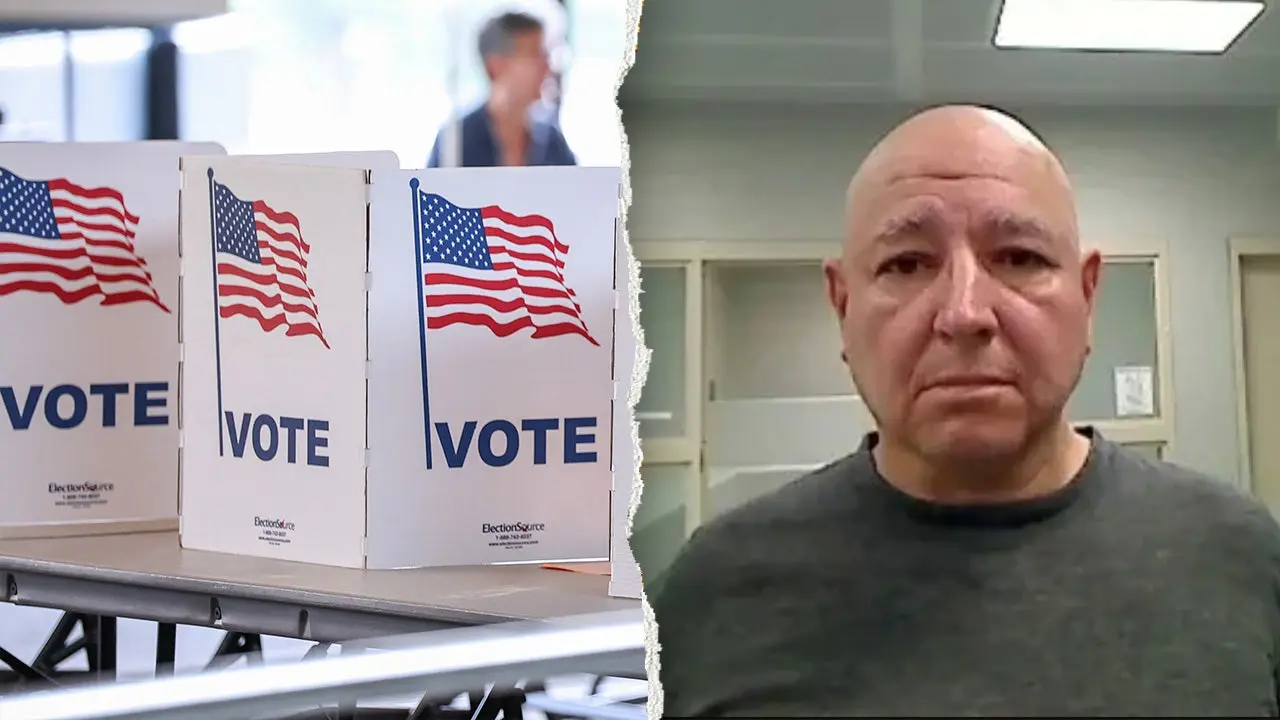
Here is the story of a man who slipped through the system for two decades, and what it reveals about the fragile trust at the heart of American democracy. Carlos Felipe Jaramillo-Grajales, a native of Colombia living in the United States without legal status, was not a high-profile criminal. He did not rob a bank or commit a violent act. Instead, he committed a quieter but profound betrayal: he borrowed another person’s identity for years, used it to obtain government documents, and, according to federal officials, illegally cast ballots in American elections. This week, a Florida courtroom brought that long-running deception to an end. Jaramillo-Grajales was sentenced to three years in federal prison for identity theft and for lying about his citizenship status. The Department of Homeland Security, which investigated the case, framed it as far more than one man’s fraud. It was an attack on the credibility of elections and a reminder that the system meant to verify voters remains vulnerable to abuse.
The details of the scheme are as unsettling as they are methodical. In March 2003, Jaramillo-Grajales took a name, a date of birth, and a Social Security number that did not belong to him. These were not random numbers from a dark web marketplace; they belonged to a real U.S. citizen whose identity would be quietly hijacked. With that stolen information, he obtained a U.S. passport. Once he held that powerful document, the rest became easier. He used the false identity to get a Florida driver’s license, and with that license, he registered to vote. Over the years that followed, he did not simply file paperwork for its own sake. DHS says he voted in the 2020 election and in others, meaning this man participated in choosing American leaders for a country he was never legally a part of. His actions were not accidental or confused. They were deliberate, layered, and designed to pass under the radar. For more than 20 years, he lived as someone else in official government records, all while the real person whose identity he stole had no idea their name was being used in polling places and government offices across state lines.
Homeland Security Secretary Markwayne Mullin did not mince words when discussing the case. “Because of his fraud, he was able to obtain a driver’s license and vote in our elections,” Mullin said. He went on to make a simple but important argument: “DHS will always fight to protect the integrity of our elections, because election security is national security. Only Americans should be electing American leaders.” That statement speaks to a concern that has grown louder in Washington in recent years. Lawmakers have struggled over whether new legislation is necessary to require stronger voter identification and verification. The debate is deeply political, but cases like Jaramillo-Grajales’s are the kind of real-world examples that cut through the partisan arguments. Here was a man who managed to register and vote without being a citizen, not through some sophisticated cyberattack, but by using a stolen identity and government documents built on lies. The fact that this was possible for so long raises uncomfortable questions about how many other people might be doing the same thing right now, quietly and undetected.
Mullin has been particularly focused on this issue. Earlier this year, he sent a letter to the secretaries of state in California, New Jersey, Nevada, and Pennsylvania, highlighting findings about noncitizen voter registration. According to his office’s investigation, as many as 190,830 noncitizens may have been registered to vote in California alone. That number, whether exact or approximate, is staggering. It suggests that Jaramillo-Grajales is not necessarily an isolated anomaly, but perhaps part of a broader pattern of abuse. The political response in Washington has been complicated. Senate Majority Leader Chuck Schumer at one point said that “Democrats support voter ID,” yet when a Republican-backed voter ID bill came to the floor, every Senate Democrat voted against it. This contradiction has not gone unnoticed by those who worry about election integrity. If citizens are told that voter ID is a reasonable and supported safeguard, why would lawmakers refuse to approve it when given the chance? For many voters, the answer feels like a failure of leadership. The case of Jaramillo-Grajales gives that fear a face and a name—someone who voted illegally, over and over, without being stopped until after the fact.
The fraud did not stop at voting. Investigators discovered that Jaramillo-Grajales used the stolen identity for other significant benefits. In June 2017, he used his false name to secure lawful permanent residence, commonly known as a green card, for his fiancée, who later became his wife. In other words, the same stolen identity that let him vote was used to build a family life with government approval, all built on the foundation of another American’s personal information. Tim Hemker, a special agent with Homeland Security Investigations, described the scope of the deception plainly. “This criminal illegal alien spent years exploiting a stolen identity of a United States citizen to obtain government documents [and] claim benefits,” Hemker said. He also noted the case was a victory for the agents and federal partners who worked to untangle the web of false records. The real victim in all of this is difficult to quantify. The U.S. citizen whose Social Security number and name were used may have faced bureaucratic nightmares for years—problems with taxes, employment records, credit, or even criminal history. And then there is the damage done to public trust, which is far harder to repair.
DHS pointed to other cases that reinforce the same theme. Marian Chariton, a Slovakian national, illegally voted in the 2022 election in New Jersey after falsely claiming to be a U.S. citizen. Jose Ceballos, a Mexican national, pleaded guilty to three counts of disorderly election for falsely claiming citizenship in Kansas. These are not hypothetical scenarios or theoretical risks. They are real people who broke the law and found ways to participate in American elections without the right to do so. In Jaramillo-Grajales’s case, he will serve his three-year sentence, and according to Mullin, he will eventually be removed from the country. “Thanks to the hard work of the men and women of HSI, along with our federal partners, this criminal is out of our communities and, at the end of his sentence, will be removed from our country,” Mullin said. The investigation involved Homeland Security Investigations, the State Department’s Diplomatic Security Service, and the Social Security Administration’s Office of the Inspector General, and the case was prosecuted by Assistant U.S. Attorney Arnold B. Corsmeier. But for all the coordination, the deeper lesson is that trust can be stolen as easily as a wallet. The justice system did its part, but the story is a stark reminder that election security is not just about machines and paper ballots. It is about knowing who is allowed to have a voice. In a democracy, that voice belongs to citizens. When someone like Jaramillo-Grajales steals it, he doesn’t just break the law—he violates something more fragile. He reminds us that the right to vote is precious, and if it is not protected, it can be quietly taken by those who have no rightful claim to it.