


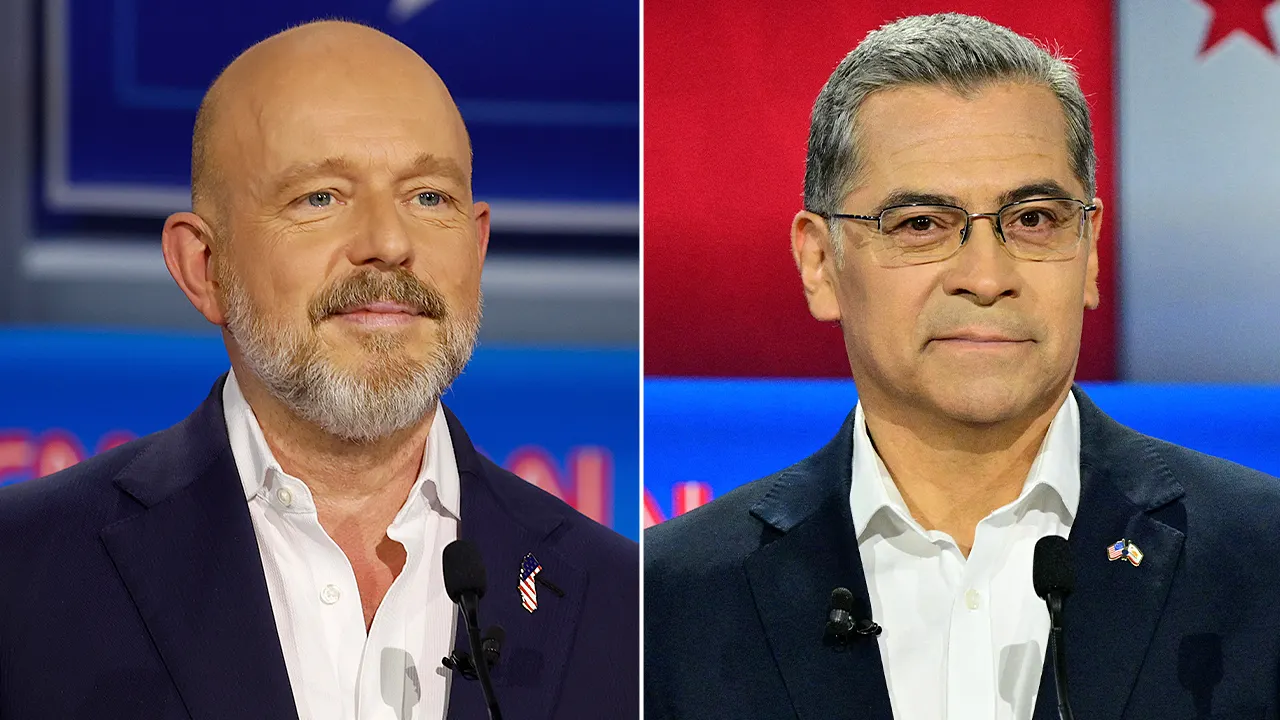
The sun rose over the Pacific on a crisp Wednesday morning, casting a warm golden light across Huntington Beach and the rest of a restless California, a state that serves as both a cultural beacon and a massive economic engine for the entire globe. As the early, unofficial primary election returns began to trickle in, a sense of high drama enveloped the state’s political landscape, signaling the dawn of an entirely new era. With the charismatic yet polarizing Democratic Governor Gavin Newsom reaching the absolute limit of his constitutional terms, the seat of power in Sacramento was suddenly up for grabs, igniting a fierce, crowded battle to steer the nation’s most populous state. Amidst a dizzying and historically chaotic field of sixty-one ambitious candidates, two distinctly different figures emerged from the political fog to claim the lead, poised to advance to a high-stakes, head-to-head showdown in the upcoming November general election. On one side stood Steve Hilton, a British-born commentator who traded the halls of London’s Westminster for the sunny shores of Southern California, rallying conservative voters with a message of rebellion and rescue. Facing him from the progressive left was Xavier Becerra, a deeply experienced political veteran who has spent decades climbing the ranks of state and federal government to become a cornerstone of the modern Democratic establishment. As election officials continued the painstaking process of tallying mail-in and provisional ballots across fifty-eight vast and diverse counties, the initial results made one thing abundantly clear: California was preparing to choose between two vastly different destinies, setting the stage for a spectacular clash of ideologies that would capture the attention of the entire nation.
For Steve Hilton, the journey to the top of California’s Republican ticket is a remarkable tale of personal reinvention, bridging the world of high-level European political strategy with the boisterous arena of American conservative commentary. Once a chief strategist to British Prime Minister David Cameron, Hilton crossed the Atlantic and eventually found a massive platform as a popular Fox News Channel host, where his sharp intellect and populist leanings endeared him to millions of viewers. Securing a coveted and highly influential endorsement from former President Donald Trump, Hilton managed to turn his outsider status into a potent political weapon, speaking directly to a deep-seated frustration among millions of Californians who feel left behind by the state’s dominant political class. At his high-energy primary night watch party in Orange County, surrounded by cheering supporters wearing campaign gear and waving American flags, Hilton projected an aura of absolute confidence, declaring that a long-overdue wave of systemic change was finally washing over the Golden State. In an intimate and reflective moment backstage during an exclusive interview, Hilton explained that his surge in the polls was fueled by a commitment to speaking honest, simple, and direct truths to everyday working families who are drowning under the crushing, everyday cost of living. Pledging to wage a relentless war against inflation, high taxes, and soaring utility bills, Hilton sought to connect with the legacy of the state’s last great Republican leader, playfully showing off the custom-tailored lining of his blazer—adorned with the flags of both the United States and California—which he revealed was a personal style and political tip given to him years ago by former Governor Arnold Schwarzenegger.
On the other side of this historic political divide, Democrat Xavier Becerra stood before a jubilant crowd of supporters, his voice thick with emotion as he contemplated the profound weight of the moment and the path that brought him here. Becerra’s campaign is fueled by a narrative of deep-seated community representation and resilience, carrying the aspirations of millions of residents who see themselves reflected in his lifetime of public service. Having served with distinction as California’s Attorney General before answering the call of the Biden administration to serve as the Secretary of Health and Human Services, Becerra represents a steady, experienced hand capable of navigating the complex machinery of state government. If he triumphs in the looming November election, Becerra will etch his name permanently into the history books as California’s very first Latino governor since Romualdo Pacheco briefly held the office way back in 1875, a milestone that carries immense symbolic power in a state where Latinos now make up the largest demographic group. Addressing his ecstatic campaign workers and volunteers, Becerra rejected the idea that his political ascent was merely a polished, Hollywood-style narrative, framing it instead as a testament to the quiet, everyday miracles that define the California dream. He praised the state as a unique incubator of human potential where the utterly improbable routinely becomes inevitable, expressing profound and humble gratitude to the grassroots network of voters who propelled his campaign past a field of incredibly wealthy and politically connected rivals.
The mechanics of California’s unique “jungle primary” system—a brutal political gauntlet where all candidates, regardless of their political party affiliation, appear on a single, massive ballot—created an environment of unparalleled unpredictability and high-stakes financial warfare. Under these rules, only the top two vote-getters advance to the general election, a dynamic that often leads to friendly fire among allies and unlikely strategic alliances across party lines. This system was put to the ultimate test by Tom Steyer, a billionaire hedge fund founder turned prominent environmental activist, who utilized his vast personal fortune to launch a relentless, omnipresent campaign of political ads. Steyer, who previously sought the 2020 Democratic presidential nomination, shattered campaign spending records by pouring over two hundred million dollars of his own money into the race, flooding television screens, radio airwaves, and digital platforms in an attempt to capture the hearts of voters. Despite this unprecedented financial blitz, which was augmented by an additional eighty million dollars in aggressive outside spending, Steyer found himself stranded in a frustrating third place as the early returns were tabulated. This outcome highlighted a fascinating and humanizing truth about the electorate: that even in an era dominated by high-priced political consulting and media saturation, deep-pocketed self-funding cannot always guarantee victory over candidates who possess genuine, long-standing political relationships or a highly resonant, authentic grassroots message.
Beyond the leading trio of Hilton, Becerra, and Steyer, the primary ballot read like a star-studded directory of California’s diverse and highly competitive political ecosystem, reflecting a state of nearly forty million people with wildly different priorities. Among the prominent contenders was Riverside County Sheriff Chad Bianco, a tough-talking, law-and-order Republican who initially enjoyed immense momentum among conservative voters alienated by the state’s progressive criminal justice reforms. Bianco’s campaign was a formidable force on the trail until Donald Trump’s sudden and decisive public endorsement of Steve Hilton in early April effectively blunted the Sheriff’s rise, shifting the state’s conservative base behind the former television host. Joining them in the crowded arena were several influential Democratic figures, including the fiercely articulate former Representative Katie Porter, who built a national reputation for her sharp-witted interrogations on Capitol Hill, as well as pragmatist San Jose Mayor Matt Mahan, former Los Angeles Mayor Antonio Villaraigosa, and state Superintendent of Public Instruction Tony Thurmond. This historic logjam of talent was largely created because the state’s most powerful national political heavyweights, including Vice President Kamala Harris and Senator Alex Padilla, carefully weighed the options before officially deciding to pass on the race. Their collective decisions to remain on the national stage left the local field entirely wide open, denying the state a clear, pre-ordained frontrunner for the first time in over a quarter of a century and inviting an incredibly diverse array of dreamers to enter the arena.
While the current race has captivated the public, the path to this moment was heavily shaped by a series of dramatic crises, personal scandals, and institutional shakeups that kept California’s electorate on a roller coaster of emotion for over a year. For much of the previous year, the political conversation was pushed to the background as the state grappled with devastating, terrifying wildfires in the Los Angeles area and raw, emotional community tension surrounding federal immigration enforcement raids. The political landscape was further rocked when Representative Eric Swalwell, once considered a highly formidable frontrunner for the governorship, was forced to suddenly drop out of the race and subsequently resign from his seat in Congress after facing a barrage of intense allegations regarding sexual abuse and misconduct, which he continues to vehemently deny. Swalwell’s shocking and sudden fall from grace completely upended the race, creating a massive vacuum that allowed both the self-funded Steyer and the highly experienced Becerra to surge forward in public opinion polls. Now, as the dust from the primary night begins to settle and the reality of the upcoming campaign sets in, the people of California find themselves standing at a historic crossroads. The choice before them in November could not be starker: they can embrace Steve Hilton’s promise of tax cuts, economic deregulation, and a cultural break from the status quo, or they can trust Xavier Becerra to protect and advance the progressive, inclusive legacy that has come to define modern California.