


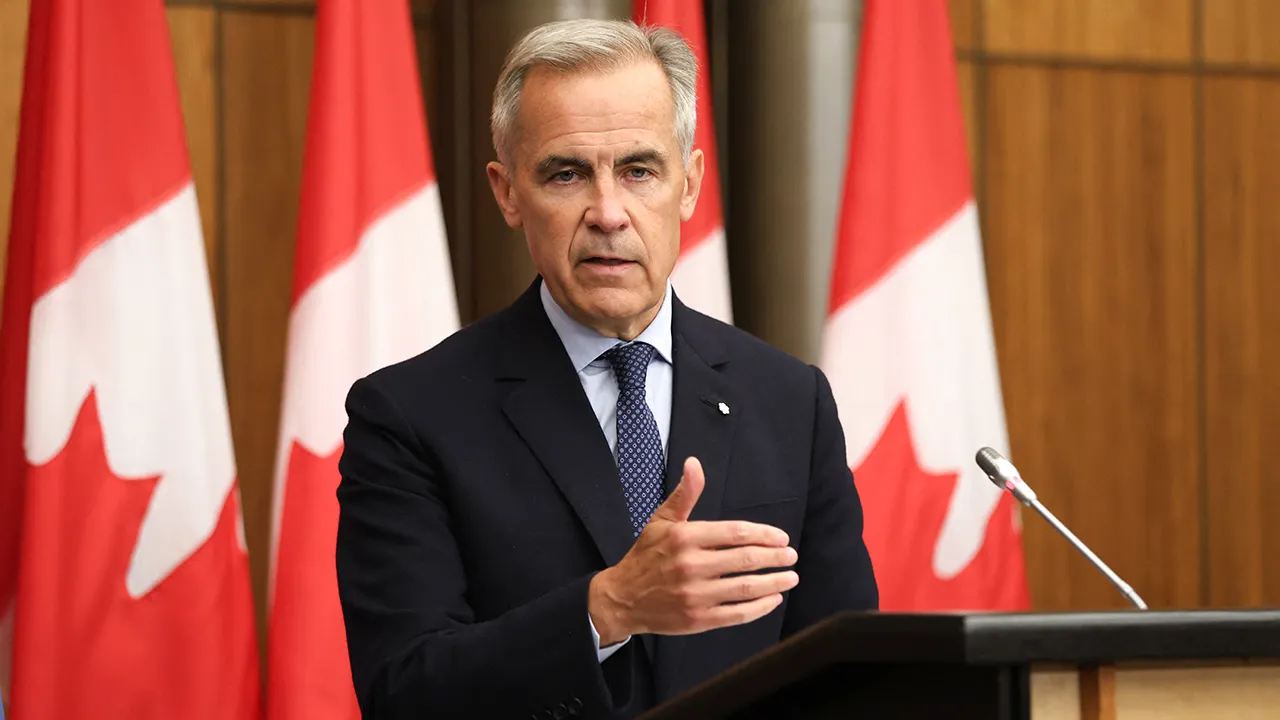
At the latest NATO summit in Ankara, Turkey, Canadian Prime Minister Mark Carney delivered a striking admission: President Donald Trump has officially “won the argument” when it comes to defense spending. For years, Washington has pressured its partners to carry more of the alliance’s collective security burden, and Carney acknowledged that this relentless campaigning has finally broken through. In a pre-summit phone call, the Canadian leader personally told Trump that member states now fully grasp the urgency of upgrading their militaries, especially with the persistent threat of Russian aggression looming near. This concession marks a pivotal moment in transatlantic relations, signaling that the era of relying almost exclusively on American taxpayer dollars for defense is drawing to a close.
This change of heart is particularly remarkable given Carney’s historically turbulent relationship with Trump. Since taking office, the Canadian Prime Minister has rarely hesitated to clash with the White House over trade disputes, heavy-handed tariffs, and Trump’s provocative jokes about Canada becoming America’s 51st state. Just recently, during his March 2025 victory speech, Carney fiercely denounced Trump’s “unjustified tariffs” as a direct attack on Canadian workers and pledged to hold the line until Washington showed proper respect. This bitter economic rivalry, however, did not prevent Carney from giving credit where it was due on the world stage. He observed that Trump arrived at the summit in a noticeably good mood, legacy secured by a visible shift in how allies view their own national security responsibilities.
The summit followed a landmark agreement established in The Hague, where member nations pledged to hit a staggering new defense spending target of 5% of their GDP by the year 2035—more than doubling the long-standing 2% benchmark. This ambitious guideline was born directly from Trump’s repeated warnings that the United States might withdraw its protection from nations that failed to pay their fair share. Because NATO lacks a formal legal mechanism to force compliance, Trump has shifted to using America’s immense economic leverage to whip allies into line. The high-stakes nature of this strategy was on full display in Ankara, where Trump publicly blasted Spain as a “terrible partner” for resisting the 5% target, even suggesting the U.S. should retaliate by cutting off bilateral trade and tourism.
While heavyweights like Great Britain and France have officially committed to marching toward the 5% objective, both nations remain far below that threshold, leaving many to wonder how aggressively Washington will penalize its closest traditional allies. The administration’s rhetoric suggests they are playing for keeps; U.S. NATO Ambassador Matthew Whitaker confirmed that the White House is actively drawing up economic countermeasures for allies who drag their feet. Striking a unifying chord, NATO Secretary-General Mark Rutte warmly validated Carney’s perspective on the matter. Rutte pointed out that Trump has successfully achieved a goal that has eluded every American commander-in-chief since Dwight D. Eisenhower: finally equalizing the historic imbalance of defense spending between Europe and North America.
Determined not to be left behind, Canada used the summit to showcase its own substantial leap forward in defense investments. Ottawa unveiled a series of high-profile military upgrades, including a brand-new submarine procurement project, a massive satellite communications deal with Telesat to secure military operations in the Arctic, and an $800 million contract to arm its future fighter jets with cutting-edge Joint Strike Missiles. Carney proudly contrasted these modern investments with the state of Canada’s military when his government first took control, noting that defense spending has climbed from a meager 1.4% of GDP and is now firmly on track to hit an impressive 4% before the end of the decade.
Ultimately, the Ankara summit proved that the geopolitical landscape has undergone a permanent transformation. Trump’s aggressive, transaction-based approach to foreign policy—once dismissed by critics as deeply divisive—has forced a total rewrite of the transatlantic security playbook. By successfully tying mutual defense to economic survival and national self-reliance, the U.S. has prompted its allies to fast-track their military budgets in ways that seemed unimaginable just a decade ago. As Canada and Europe scramble to buy missiles, upgrade satellite networks, and rebuild their navies, they are no longer just reacting to American pressure—they are actively preparing for a more dangerous, self-reliant future.