


A Courtroom Reckoning for a Sweeping Visa Ban
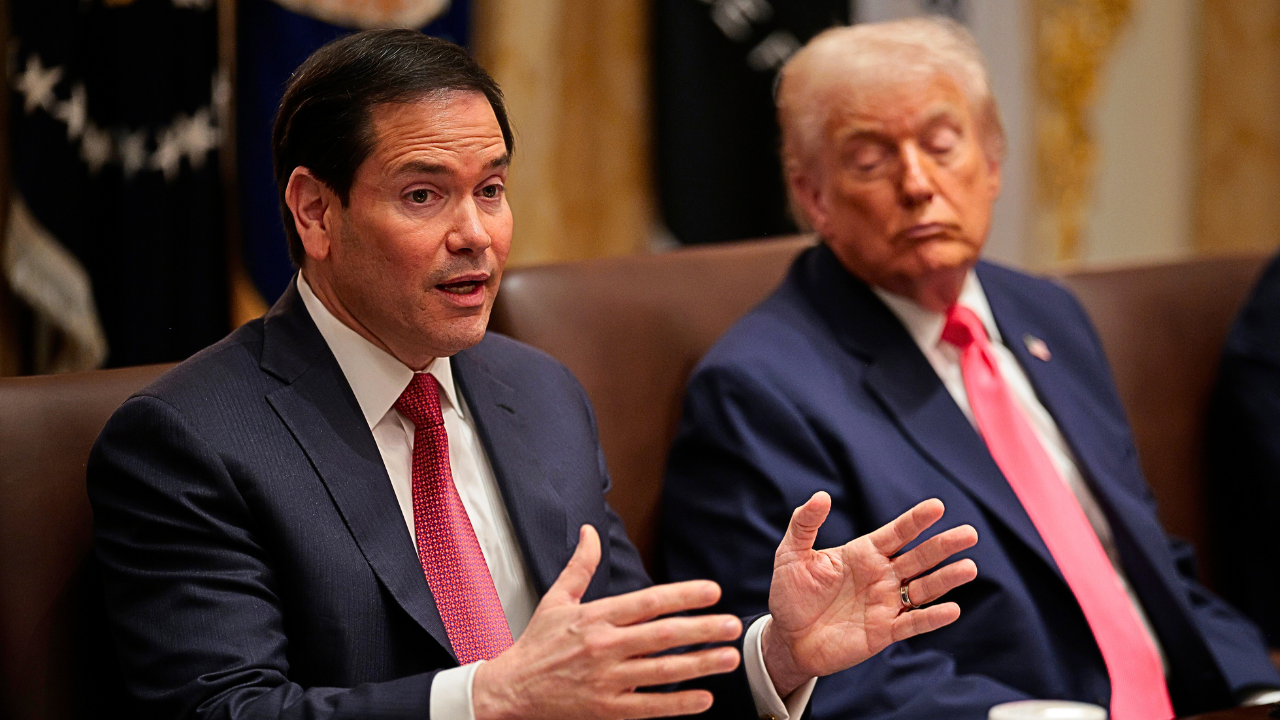
In a significant legal setback for the Trump administration’s immigration agenda, a federal judge in Manhattan has struck down a controversial State Department policy that had effectively barred immigrant visa applications from citizens of 75 countries. The decision, handed down by U.S. District Judge Jeannette Vargas, is a powerful rebuke of the administration’s attempt to reshape immigration policy through executive action, finding that Secretary of State Marco Rubio overstepped his legal bounds. At its core, the ruling cuts through the bureaucratic language to a simple, fundamental idea: the government cannot pre-determine a person’s future or set a blanket refusal based solely on their country of origin, essentially rendering the role of consular officers meaningless and bypassing the will of Congress. The case arose from a policy enacted in January, which had branded nationals from a diverse group of nations across Africa, Latin America, the Caribbean, Eastern Europe, Southeast Asia, and the Middle East as “high risk” for becoming dependent on public benefits. This designation triggered an automatic and predetermined refusal of their immigrant visa applications, regardless of any demonstrated potential or opposition to their eligibility.
The Human Cost Behind a Legal Term
To truly understand the judge’s ruling, it’s essential to consider the real-life impact this policy was having on thousands of families and individuals. What the judge struck down wasn’t just an abstract legal principle, but a very human registry. These were not clicking on a list of countries, but people. The “75-country freeze” was more than a policy; it was a denial of hope for dreamers and hardworking individuals who had navigated the complicated U.S. immigration system. It cut down not just individuals seeking a better life but also people on specific paths, from employer-sponsored professionals to citizens seeking to reunite with close family members. The specific names on the list were blacklisted, and their dreams and plans were halted. The six U.S. citizens and five prospective immigrants who challenged this policy were not just a generic cohort; they were parents, children, and spouses, who were effectively being told by their own government that their family members were unwelcome, without basis—a seemingly systematic and cruel deportation of hope. The very existence of this policy created an atmosphere of anxiety, a prevailing notion that even if you did everything right, you could be locked out simply because of where you were born. This isn’t a matter of policy disagreements; it’s the story of lives put on hold, and crisis being a very personal affair. Judge Vargas’s ruling is a triumph for the rule of law, but it’s also a recognition of the simple fact that these weren’t merely statistics or problems to be managed, but a globe of connected families.
A Legal and Moral Dilemma
Judge Vargas’s 61-page opinion dismantled the secretary of state’s policy as not just administratively flawed but as a violation of existing law and a distortion of the entire purpose of the immigration system. She pointed to a fundamental, commonsense problem: the policy was a blanket ban, ignoring the work Congress has assigned to consular officers. The law, she explained, requires that each applicant be reviewed individually, with their personal circumstances and specific evidence. But under the secretary’s policy, the outcome was predetermined before an officer even opened the file, described by the judge as having “consular officers review applicants individually,” but their determinations were ultimately “irrelevant,” because in the end, they had no real choice. The visa had to be refused. This meant that even if an applicant successfully demonstrated responsible choices, and was judged to be admissable, they were still filtered through a lens of a national stereotype. This approach, she concluded, effectively rendered those individual assessments pointless, sidelining the very people Congress had empowered with the authority—and the discretion—to make these crucial decisions about visa issuance.
The judge’s determination strikes at the heart of the argument made by the Trump administration that this was a legal use of agency authority. They countered that the refusals were formally done under Section 221(g) of the Immigration and Nationality Act (INA), which is a general provision governing visa denials. Additionally, they tried to frame the ban as a “streamlined” processing measure, leaving the consular doctors’ power to deny legally permissible. Yet, like a headline of an “Orwellian” twist, she dismissed this entire line of argument. Section 221(g) is intended for a concrete finding that an applicant is ineligible, not a procedural shortcut for a blanket predicate nationality. The State Department’s attempt to fit this policy into the legal framework was directly contrary to the INA’s strict prohibition on discrimination based on nationality in the issuance of immigrant visas. The judge noted the government was essentially forcing a harm by racial and solving the problem by creating a new one, arguing that the policy was a backdoor attempt to bestow a power that the President had not been granted by Congress in this specific form. She drew a key distinction from the Supreme Court’s 2018 travel ban case that legitimized a different approach—in that case, the President was exercising his authority over who can enter the country. This was different; it was about the State Department’s authority to decline to issue visas to those found eligible. It was a matter of authority, and she ruled that Rubio and his team had none.
A Political and a Rebuttal
The State Department’s policy was created with an intent to act on what they deemed a serious risk—the potential for immigrants to become a “public charge”—the underlying principle being that those seeking entry should not be a burden to the state. They had gone through the usual time-honored doctrine of studying case-by-case assessments before electing to go with a different strategy: a “predictive” ban based on a country’s overall economic standing. The intent, and the results, were to stop the application of a legal immigration system’s process. But the government’s argument, that this displacement of consular officers was a minor procedural shift, proved to be a deeply problematic legal reckoning. Vargas was unwilling to accept the government’s executive order over a process that the law clearly establishes, and her decision and its language treated the policy as a complete subversion of the law’s intent. The government’s approach not only contradicted the “national and specific” mandate, but it threatened to turn legal immigration into a matter of geopolitical favoritism, where an applicant is allowed or denied based solely on the passport they hold.
The U.S. immigration system is a complex one, filled with many standards and requirements, but the cornerstone is that a person is examined for who they are and what they offer. The common basis must be free of a arbitrary and stigmatizing racial and economic and ethnic definitions. She pointedly rejected the government’s suggestion that the policy is a harmless discretion given to a reviewing officer, anymore than a “fist” being held to the head is a decision. The court sees no competition: a consular officer’s decision is not his or her own when the outcome is predetermined before the process begins. The judge correctly saw the policy for what it was: an infringement on the legislative domain, blanketing a group based on statistics, thus undercutting the U.S. system’s core integrity. The policy had used a tool meant to exclude an individual who is individually identified as dangerous, and converted it to allow for a de facto blanket ban that the law does not sanction.
The Aftermath and Future of American Immigration
The ruling’s wake is a subtle but important call for the actions of the U.S. to align with the law and due process. The decision doesn’t order a citizenship for anyone, and it certainly doesn’t change the underlying bars in the law for many, nor does it grant any blanket amnesty. What it does is restore the process as it was designed. Refusals based solely on the 75-country list have been wiped out, and the case is sent for more careful review. Natives of those affected nations are now no longer stuck in a predetermined legal dead end. They will have the opportunity to actually be judged on their own circumstances—their careers, their education, their relationships—and be treated as individuals, not as badges. It blunts the promise of a more humane and rule-based approach, implying that the immigration system isn’t to be driven by a certain ideological agenda but by an individual’s place in the process. The judge’s order will force the State Department to revisit denials, and this goes to impact the families who were blocked in their process through proper channels. This will be a monumental moment for those with an application in the air. This is done to immediate harm, but it also is a signal that an administration cannot try to bypass the system by creating a class of individuals all defined by a certain risk.
This ruling also acts as a clear legal and a political omen for the current administration’s wider agenda. It establishes a guiding rule that executive power has limits; particularly when it comes to a process that Congress has defined. The attempt to internationalize the issue with a macro-level foreign policy that doesn’t respect a system of laws has been halted. This decision acts as a benchmark against which to judge further inefficiencies and elevated actions. The judge made it clear what the law is: The country’s outcomes are not meant to be guided by the bias of the Secretary of State, but rather by a carefully crafted process where an officer of the U.S. government weighs all the factors. This victory for the plaintiffs is a testament to the vital resiliency of the legal system—a system that can, if given the chance, rise to the moment to protect the rights of individuals against an overreaching federal office. In a time, when many immigrations are a time of intense policy fights, this judicial reminder means the system can still function as the ultimate and fair arbiter, sending a powerful message that the banners, bans, justifications, and the shortcuts the executive may want to keep in such matters cannot trump the law. When the rules are set by statute, the executive cannot simply change the game, especially when the game affects thousands of lives. The impact of Judge Vargas’s finding is a tide of relief for those in the halls of isolation, and a stern reminder for those who are in power. It compels the administration back to the rule of law—a space where we invoke the rules, not the beliefs, to judge the immigrants, but the spirit of the nation’s promise of a fair and open system. Her and strengthens the principle that the U.S. remains a nation of forward-looking individuals, who are not just a country but a process of human beings.