



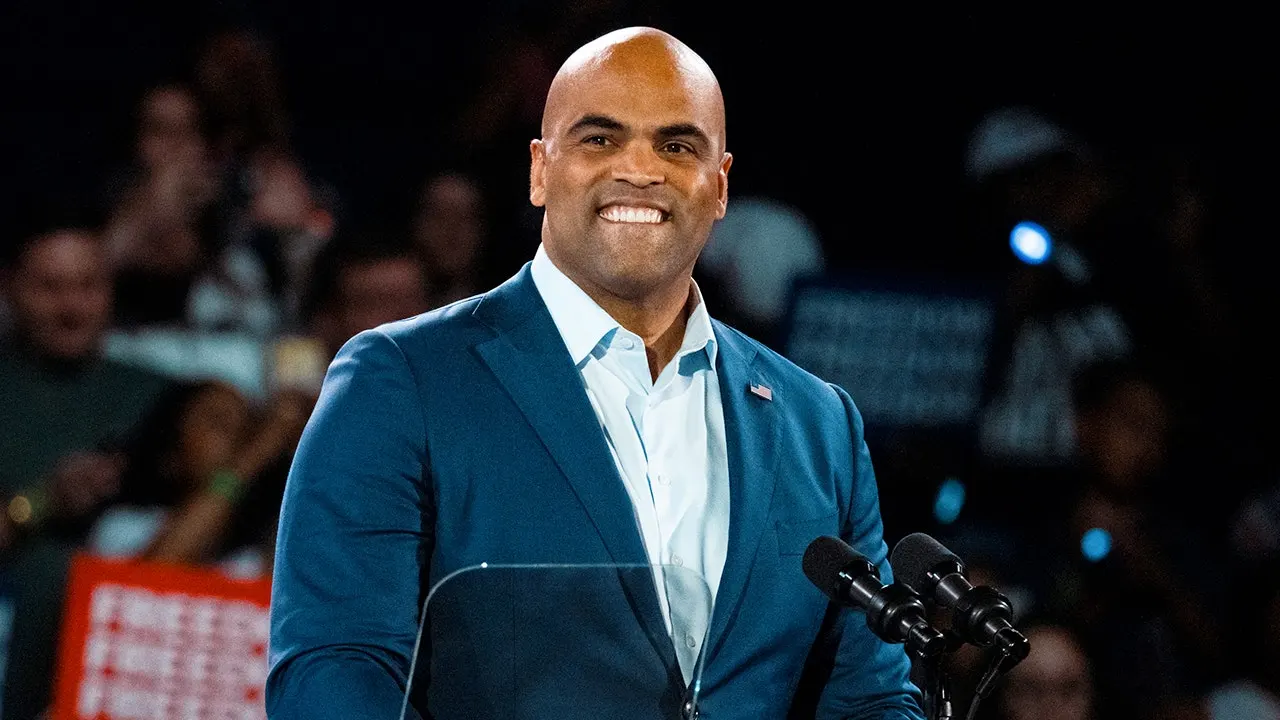
Politics, at its core, is a deeply human drama of ambition, resilience, and the relentless pursuit of redemption. For former NFL linebacker and Democratic Representative Colin Allred, the journey back to the political spotlight culminated on a tense Tuesday evening in Texas, where he successfully engineered a high-stakes resurrection of his career. Emerging victorious from a bruising Dallas-based Democratic primary runoff, Allred has secured a clear path to return to the chambers of the United States House of Representatives, a place he once left in pursuit of higher office. In the theater of American democracy, a comeback of this nature is never simple; it demands an intense psychological shift from the grand, idealized visions of statewide leadership down to the gritty, block-by-block labor of localized campaigning. By defeating state Representative Julie Johnson, Allred did not merely win an election; he salvaged a political life that many commentators had prematurely written off after his previous high-profile setbacks. This victory serves as a profound testament to the sheer psychological grit required to survive in the modern political ecosystem, where a single defeat can easily relegate a promising leader to the sidelines of history. In this deep-blue Dallas district, where the primary election is effectively the deciding battle of the entire cycle, the stakes could not have been higher for either candidate, creating an atmosphere charged with desperate energy. Both campaigns understood from the outset that this was a zero-sum game—a grueling fight where the runner-up would face a sudden and quiet return to private life, while the victor would claim a practically guaranteed ticket to Washington in November.
The battleground for this intense intra-party rivalry was not forged in a vacuum of voluntary choice, but was instead meticulously molded by the calculated strokes of Republican cartographers during the state’s chaotic redistricting battle. In a concerted effort to expand their control over the broader Texas delegation, GOP lawmakers had redrawn the state’s congressional boundaries, concentrating Democratic voters into a few heavily packed urban enclaves while making surrounding districts vastly easier for Republicans to flip. This strategic gerrymandering essentially transformed the Dallas-based seat into an impregnable progressive fortress, an ironic safe haven that simultaneously intensified the focus and ferocity of any Democratic primary held within its shifting borders. When the incumbent of this newly redrawn district, Representative Marc Veasey, chose to step aside rather than seek re-election, it created a massive political vacuum that acted as an irresistible magnet for ambitious leaders seeking shelter from the changing winds of Texas politics. Among those drawn to the open seat was Julie Johnson, a trailblazing freshman lawmaker who had found herself effectively drawn out of her own legislative home by the new maps. For Johnson, entering the race was not just a career advancement but a matter of political survival—a crucial bid to protect her hard-earned voice in public service and continue her legal and legislative advocacy work. As she stepped forward to claim the open seat, she found herself walking directly into a high-speed collision course with a returning heavyweight who was determined to reclaim his former political home at all costs.
To fully appreciate the human tension underlying this campaign, one must trace the winding, often agonizing path Colin Allred took to arrive back at this familiar starting point. Only a short time prior, Allred had made the monumental decision to vacate his congressional seat, risking his entire political capital on a highly visible but ultimately unsuccessful campaign to unseat conservative juggernaut Senator Ted Cruz in 2024. The defeat was a bitter pill to swallow, leaving Allred temporarily without an office and prompting him to launch a subsequent Senate bid for the 2026 cycle in a desperate attempt to maintain his momentum. However, as the months dragged on and the immense financial and emotional demands of a statewide race began to take their toll, Allred realized his second Senate campaign was stalling out, failing to find the crucial traction and national interest it desperately needed. Facing the grim prospect of political obsolescence, he made the difficult decision in late 2025 to suspend his Senate aspirations and pivot his focus back home to Dallas. This decision was met with immediate friction; Julie Johnson had already stepped into the space he left behind, establishing herself as a formidable candidate for the vacant House seat. This set the stage for a classic Greek tragedy of politics: two talented, driven public servants from the same party, both forced by circumstances beyond their control to fight to the death for a single, narrow lifeline. The race ceased to be about policy differences and instead became a raw, emotional struggle over territory, entitlement, and the right to representation.
As the campaign matured throughout the spring, the atmosphere grew toxic, poisoned by deeply personal animosities and racially charged allegations that tore at the very fabric of the local Democratic coalition. The underlying tension exploded into public view when Allred threw his support behind Representative Jasmine Crockett, accusing state Representative James Talarico—Crockett’s opponent and a close ally of Julie Johnson—of making a highly offensive, racially disparaging remark about him. According to Allred, Talarico had privately referred to him as a “mediocre Black man” during a confidential telephone conversation with a prominent party activist. The accusation send shockwaves through the Texas political community, threatening to derail campaigns and alienate key voting blocs in a district where diversity is a deeply sensitive issue. Talarico fiercely defended his character, flatly denying that he had ever used such derogatory language and insisting that his private criticisms were strictly aimed at Allred’s cautious, centrist campaign style rather than his identity. Despite Talarico’s vigorous denials, the political damage was done, and the incident galvanized voters along factions, with Crockett publicly endorsing Allred in April and appearing alongside him at rallies, while Talarico remained a steadfast champion of Johnson’s candidacy. This bitter dispute laid bare the raw, often hidden wounds of identity and class that rumble beneath the surface of progressive politics, illustrating how quickly allyship can dissolve when the stakes of personal survival are raised.
Behind the candidates stood two vastly different networks of support, representing a classic clash between institutional power and individual brand recognition. Julie Johnson ran a campaign backed by an enviable coalition of national progressive organizations and elite Democratic leadership, securing endorsements from powerhouses like the Planned Parenthood Action Fund, EMILY’s List, and even the pragmatic U.S. Chamber of Commerce. These endorsements were not merely symbolic badges of honor; they represented a massive apparatus of volunteers, policy experts, and institutional credibility designed to appeal to both the passionate left wing and the business-minded moderates of the Dallas suburbs. Despite this formidable wall of establishment backing, Allred possessed two assets that prove notoriously difficult to defeat in any election: widespread name recognition from his previous statewide runs and a massive war chest built from a national donor network. For years, ordinary voters had watched Allred stand toe-to-toe with the state’s most powerful figures, and that familiarity created a reservoir of trust that no amount of organizational endorsements could easily erode. When the initial primary votes were counted in early March, Allred’s strengths were obvious as he jumped out to an impressive eleven-point lead over Johnson, though he agonizingly fell just short of the simple majority needed to avoid a grueling and expensive runoff.
Ultimately, the runoff election served as the final, decisive chapter in this exhausting saga, proving that in the end, personal connection and name brand-equity often trump organizational endorsements in low-turnout summer contests. When the final ballots were tallied on Tuesday night, the voters of Dallas delivered a clear verdict, lifting Colin Allred to a decisive victory and solidifying his remarkable political comeback. The victory brings an end to a painful and divisive chapter for local Democrats, though the emotional scars of this negative campaign will undoubtedly take time to heal. As Allred prepares for a virtually guaranteed victory in the upcoming November general election, he must now turn his attention toward unifying a fractured local party and healing the rifts exposed by the bitter primary fight. For Julie Johnson, the loss is a painful reminder of the cruelty of the political map, a reality where a dedicated public servant can be drawn out of a job and forced into an unwinnable situation despite having the backing of the national establishment. For the people of this newly drawn Dallas district, the election represents a return to a familiar leader, a man who has played on the biggest stages and who now returns to Washington with a renewed sense of purpose and a deep understanding of the high cost of survival.