



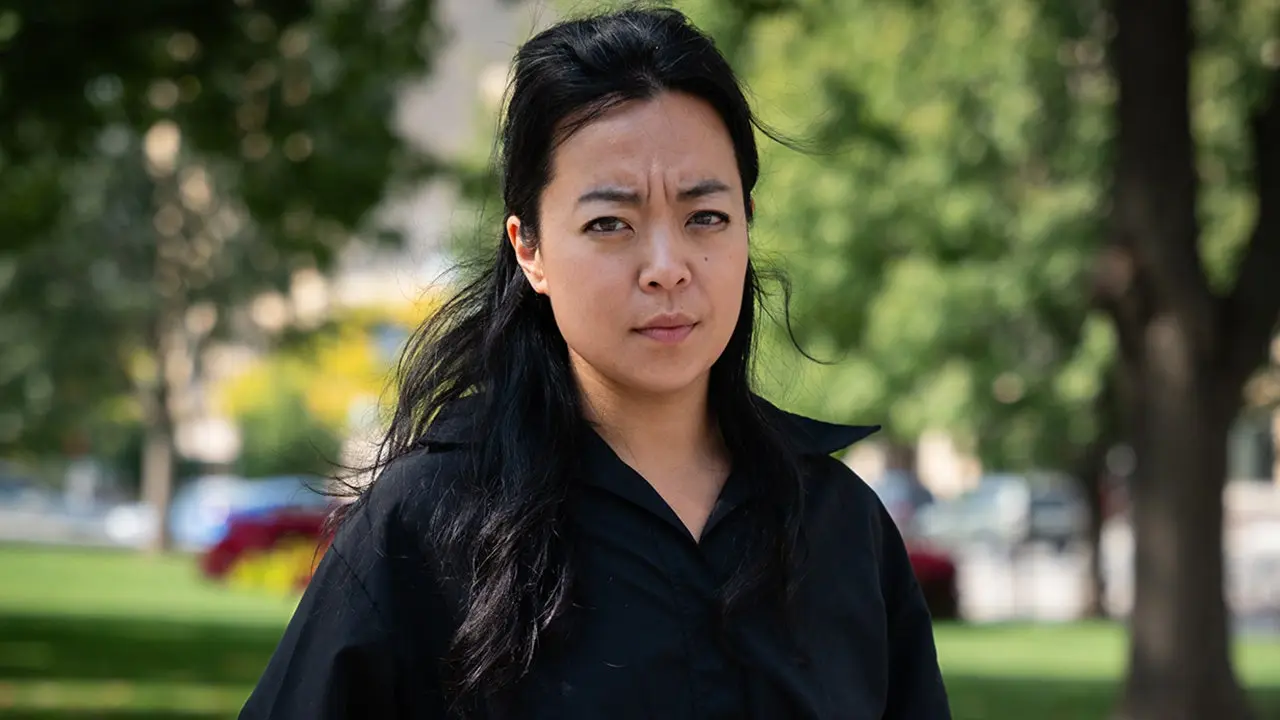
The quest for public office in America has increasingly become a delicate tightrope walk between the idealistic, firebrand rhetoric of grassroots activism and the sobering, pragmatic demands of governance. This political reality is currently playing out in Wisconsin, where State Representative Francesca Hong, a self-described Democratic socialist, is navigating her campaign for the governor’s mansion. In a highly polarized political climate, Hong has found herself under intense scrutiny for a series of impassioned social media posts she made prior to and during her early legislative career, where she forcefully championed the slogan “defund, then abolish” the police. For many voters, this digital archive represents a profound ideological commitment to dismantling traditional law enforcement, while for others, it is seen as a raw, emotional response to a period of intense national pain. Today, as she transitions from a local advocate representing her Madison-centric legislative district to a candidate seeking to lead an entire, politically diverse swing state, Hong faces the daunting task of reconciling her past activist declarations with the immediate, everyday anxieties of ordinary citizens who worry about both crime and systemic injustice.
To understand the intensity of Hong’s earlier statements, one must look back to the turbulent summer of 2020, a时期 when the state of Wisconsin, and indeed the entire nation, was reeling from profound racial trauma. The catalyst for Hong’s most fiercely debated posts was the August 2020 shooting of Jacob Blake, a Black man who was shot seven times in the back by a Kenosha police officer during a chaotic response to a domestic disturbance. The confrontation, which left Blake partially paralyzed and led to days of destructive protests and civil unrest, quickly became a flashpoint for conversations about systemic racism and police brutality. In the heat of this tragedy, Hong took to social media to express her profound grief and anger, declaring that Blake was fighting for his life against what she characterized as state-sanctioned violence. Later, in October 2021, when federal prosecutors announced they would not file civil rights charges against the officer involved, Hong reiterated her stance with even greater urgency, questioning how seven bullets in the back could not be considered excessive force, and stating flatly that “police exist to uphold white supremacy” while concluding that reform was no longer a viable option.
Yet, the transition from the shouting matches of social media activism to the deliberative halls of state leadership inevitably demands a recalibration of tone and policy. When recently confronted with her past anti-police statements, Hong offered a starkly different, far more moderate perspective that sought to bridge the gap between activist passion and the practical realities of community safety. She emphasized that she has no desire to strip resources from public safety initiatives, stating clearly that she dislikes crime and unsafe streets just as much as anyone else, but remains deeply concerned about the abuse of power within law enforcement. This evolution highlights a complex human struggle: the effort to acknowledge the genuine fear of citizens who live in neighborhoods plagued by violence, while simultaneously addressing the historical trauma of communities of color that have long felt targeted by the state. Hong now promotes a more holistic vision of safety, arguing that true security is not achieved merely through policing, but by investing heavily in the foundational pillars of healthy communities—such as affordable housing, family-supporting jobs, mental health resources, and localized support networks.
This nuanced positioning is set to face a fierce trial in a crowded and highly competitive Democratic primary, where the battle for the progressive soul of Wisconsin is unfolding. Hong is locked in a tight race against Mandela Barnes, the state’s former Lieutenant Governor and the party’s 2022 nominee for the U.S. Senate, whose own political identity has been heavily shaped by the debate over criminal justice reform. Backed by high-profile national progressives like Representatives Ilhan Omar and Ro Khanna, Hong is trying to carve out a path that appeals to reform-minded voters without alienating more moderate Democrats who are wary of radical structural changes. At the same time, Barnes brings his own political baggage, having previously advocated for cutting the state’s prison population in half and authoring legislation to end the state’s cash bail system. This primary battle serves as a micro-level reflection of a national Democratic dilemma: how to embrace the urgent call for racial justice and systemic reform championed by younger, more progressive activists while convincing nervous, working-class swing voters that the party can still guarantee their physical safety and maintain public order.
Unsurprisingly, the ideological vulnerabilities of the Democratic candidates have become prime targets for Wisconsin’s conservative leadership, who view these criminal justice platforms as dangerous and out of touch. Representative Tom Tiffany, a prominent member of the House Freedom Caucus and a leading candidate for the Republican gubernatorial nomination, has wasted no time in seizing upon these past statements to draw a sharp contrast with his own platform. Tiffany has framed both Hong and Barnes as radical leftists whose policies would ultimately codify lawlessness and prioritize the rights of criminals over the protection of innocent families. By highlighting Hong’s calls to abolish the police alongside Barnes’ past proposals to end cash bail, the Republican strategy aims to tap into a very real, human fear of rising crime and societal instability. This line of criticism speaks directly to a segment of the electorate that views the traditional police force as the thin line separating civilized society from chaos, making it clear that the upcoming election will be less about abstract policy details and more about a fundamental clash of worldviews regarding the nature of authority, justice, and order.
Ultimately, the unfolding political drama in Wisconsin is not just an isolated partisan dispute; it is a mirrors of a profound, collective searching that is occurring across the American landscape. It raises deeply human questions about whether leaders can grow and evolve past the reactive rhetoric of a highly charged moment, or if they are permanently defined by the digital footprints they leave behind. As voters prepare for the primary election on August 11, they are being asked to weigh Hong’s current, more holistic vision of public safety against her past activist demands to dismantle the police system entirely. In a state that has been repeatedly torn apart by high-profile tragedies and political division, the ultimate victor will be the candidate who can most convincingly articulate a path forward that honors the human desire for safety in one’s neighborhood, without sacrificing the equally vital human demand for fairness, accountability, and justice under the law.