


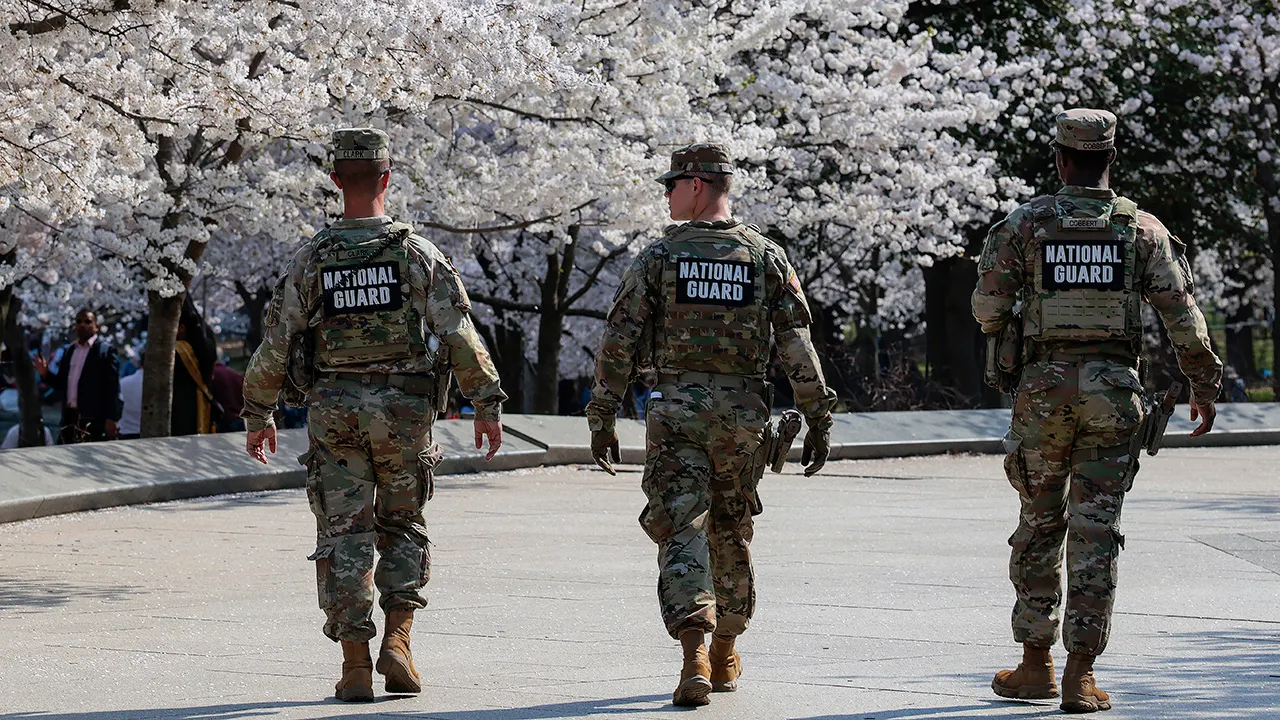
In the heart of Washington, D.C., a legal showdown is unfolding that pits the city against its own roots, reminding us how complicated it gets when a place that’s technically federal territory tries to stand up for its autonomy. Picture this: Last year, amid heated debates over immigration and safety, President Trump deployed National Guard troops to help out in the capital and other cities. The goal was to make D.C. “safe and beautiful,” but D.C.’s Attorney General Brian Schwalb wasn’t having it. He sued, claiming Trump overstepped by brushing aside Congress’s 1973 decision to give D.C. residents a slice of local self-rule. Now, a conservative group called the Oversight Project has stepped in, urging a federal appeals court to throw out the whole lawsuit. Their take? D.C. can’t sue itself—because the city is basically an extension of the federal government. It’s like suing your own hand for something your brain decided. One of their lawyers, Sam Dewey, told Fox News it could reset things, making D.C. fully subordinate to the feds and pushing disputes into political arenas, not courtrooms. It’s a fascinating twist, showing how power dynamics in the nation’s capital aren’t just bureaucratic; they’re deeply personal for residents who feel their voice is being overshadowed.
What kicked this off wasn’t just a whim; it was part of Trump’s broader effort to beef up immigration enforcement against rising protests and riots in places like Portland and Chicago. He invoked a law to send troops in, but the Supreme Court eventually ruled those moves unlawful everywhere except D.C., thanks to the district’s unique, hybrid federal-municipal status. In D.C., Trump extended the National Guard’s stay—initially about 2,600 soldiers— all the way through 2026, and he hinted at keeping them longer, even training them for the long haul. “This is actually training. I never want to take them out of D.C.,” he said in a recent Cabinet meeting, practically winking at future presidents. D.C.’s Democratic leaders, though, are furious, seeing it as an unwelcome intrusion that crimsons their home rule. The lawsuit started last September, arguing Trump ignored that half-century-old congressional nod to local power. It’s evolved into a bigger debate: Can D.C. really challenge federal actions in court, or is it forever playing second fiddle? For everyday folks in D.C., this feels like a fight over who gets to decide what “home” means in a city that’s both a symbol of democracy and a federal stronghold.
At the core of the Oversight Project’s brief is a bedrock legal principle: You can’t sue your creator. D.C. is a municipal corporation birthed by the federal government, they argue, so it lacks the sovereignty to file suits against its own parent. Echoing that, two Trump-appointed judges on the appeals panel concurred in a late opinion, saying they’d never recognized D.C. as having “independent sovereignty” that lets it claim injury from federal deeds. This pause on a lower court’s injunction against the deployment feels like a breath of fresh air for supporters of keeping the troops, but it’s got critics crying foul. Schwalb’s side sees it as the start of a slide toward losing more rights, while the Oversight folks say it’s about restoring the status quo—where the D.C. Council begs to the president or Congress, not judges. It’s a reminder that law isn’t always about right and wrong; sometimes, it’s about who’s in charge. Imagine being a D.C. resident watching your city’s fate hang on such technicalities—it must feel like the game is rigged against you.
Delving deeper, this case intersects with D.C.’s century-long quest for more independence, a story rich with symbolism. Since 1973, when Congress granted the district some self-governance, people here have been pushing for full statehood, seeing it as emancipation from federal oversight. The National Guard deployment, meant to curb crime and protests, has only intensified that push. Opposition from D.C. officials isn’t just legal grandstanding; it’s a real-people issue. Under Republican Bill James, the mayor’s office decried it as overreach, and now, with pro-statehood vibes running high, winning in court could bolster that drive. Judge Jeanine Pirro recently touted crime stats, claiming prosecutions are at all-time highs—possibly due to the troops—but skeptics wonder if that’s cause or coincidence. For those who’ve lived through D.C.’s ups and downs, from Watergate to modern flare-ups, this lawsuit is personal. It’s not abstract; it’s about safety, identity, and the dream of controlling your city’s destiny without Washington, D.C., muscling in.
Looking ahead, the implications could ripple outwards, potentially reshaping how the federal government interacts with the capital. Sam Dewey from the Oversight Project stressed that if the appellate judges side with them, it might block D.C. from ever suing over similar issues, funneling everything into political negotiations. That could mean more horse-trading in Congress, where D.C. delegates have limited say, or direct appeals to the president. But if D.C. wins its day, it might embolden other localities to challenge federal actions, complicating national policy in areas like emergency deployments or public safety. The Supreme Court’s prior involvement—curbing deployments elsewhere but exempting D.C.—already hints at the delicate balance. As a human story, this is about ordinary citizens in a bustling city grappling with big questions: Who protects us, and how do we protect our way of life? It’s not just lawyers and judges; it’s parents, workers, and voters feeling the weight of decisions made far above.
With oral arguments potentially slated for after May, the case is still bubbling. Fox News reached out to Schwalb’s office for his take, but as of now, it’s quiet on that front—perhaps they’re strategizing behind closed doors. Meanwhile, the troops remain, training and assisting, a constant presence that some see as helpful and others as a signal of distrust. In the grand scheme, this isn’t just about soldiers in green; it’s about the experiment that is America, where a nation’s capital wrestles with its own place in the union. For anyone invested in D.C.’s future, the outcome will feel monumental, a chapter in the ongoing narrative of self-determination. As we wait, one thing’s clear: In our complex world, even entities like D.C. have their limits, and this lawsuit is testing just how far they can push back against their creators. It’s a tale of power, pride, and the pursuit of fairness in the shadow of the Capitol.