



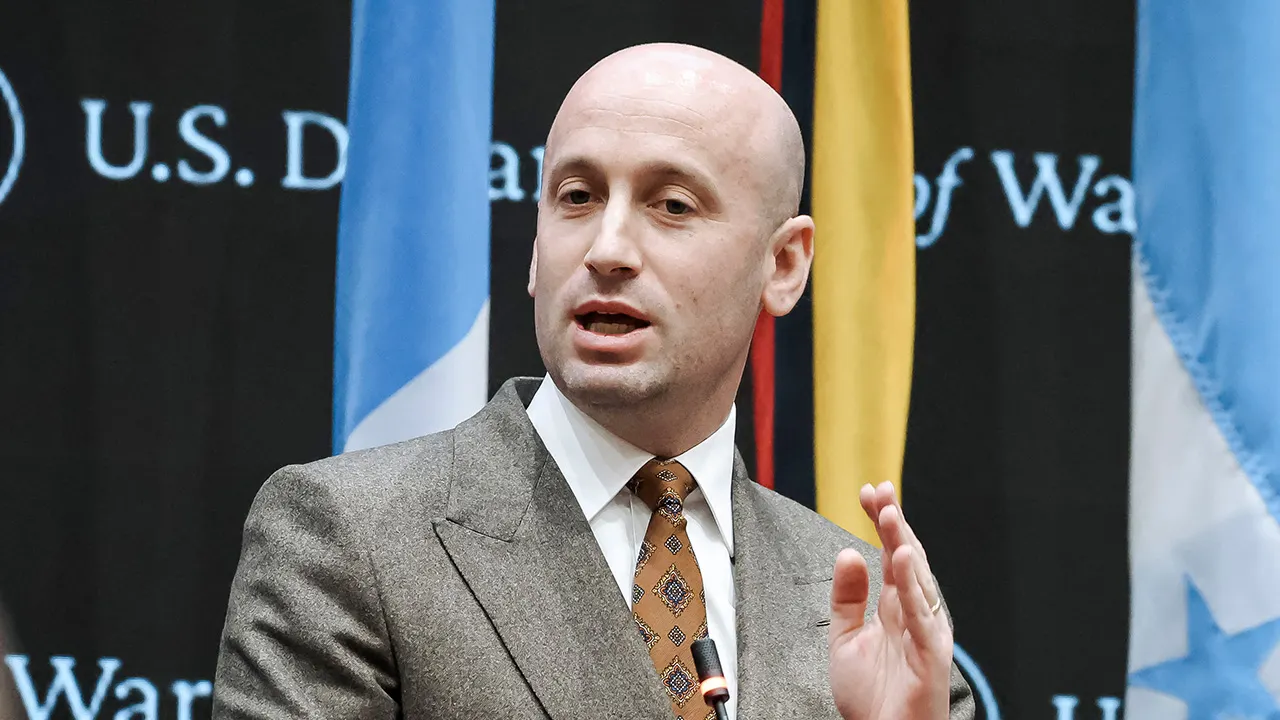
For decades, the standard playbook of American political communication demanded a certain level of carefully curated decorum. Behind-the-scenes speechwriters, communications directors, and press secretaries labored tirelessly to present an image of poised authority, regardless of how intense the behind-closed-doors animosity might have been. Today, however, that polished facade has completely collapsed, replaced by a digital Roman Colosseum where political operations are run much like internet troll farms, and the traditional boundaries of professional conduct have been utterly erased. A striking and highly controversial illustration of this cultural shift occurred on the social media platform X, formerly known as Twitter, when the official account of the Democratic National Committee (DNC) engaged in a raw, profanity-laced public screaming match with Stephen Miller, a prominent architect of conservative policy and a chief advisor to President Donald Trump. Rather than utilizing policy-driven counterarguments or structured political critiques, the party of the sitting president chose to respond to Miller’s online baiting with a blunt, vulgar insult: “Shut up, you ugly f—.” This explosive moment was not just an isolated gaffe by an overworked social media manager; it represents a profound, systemic shift in how the nation’s most powerful institutions communicate with the public. It reflects a modern political ecosystem where human empathy and traditional rules of engagement have been discarded in favor of raw shock value, algorithmic engagement, and the visceral thrill of online bloodsports. In this transformed landscape, the goal is no longer to persuade swing voters or articulate a coherent vision for the country, but rather to humiliate the opponent at any cost. This dynamic transforms our shared political space into an endlessly hostile, high-pressure digital vacuum where participants are constantly pushed toward their worst, most reactive impulses just to stay visible.
The fuel that ignited this particular digital firestorm was a characteristically provocative social media post by Stephen Miller targeting James Talarico, a rising star in Texas politics and a candidate for the United States Senate. Miller, well-known for his aggressive, sharp-tongued communication style, shared a photograph of Talarico and sarcastically wrote, “The Democrats made history in Texas by nominating their first transgender senate candidate.” The comment was a deliberate, mocking jab aimed at Talarico’s physical appearance, attempting to weaponize gender identity as an insulting political label. Ironically, Miller’s assertion was entirely factually incorrect. Talarico is a cisgender, heterosexual Christian man who has been highly public about his faith and his loving relationship with his girlfriend. This fundamental inaccuracy, however, mattered very little in the hyper-fast arena of online political discourse, where nuance is routinely sacrificed for a quick laugh or a devastating put-down. The real shockwave emerged when the DNC’s official social media account, apparently abandoning all institutional restraint, took the bait. Their profanity-laced defense of Talarico bypassed any attempt to correct the record intellectually or defend the LGBTQ+ community with dignity. Instead, they dove headfirst into the mud, reducing their official messaging to schoolyard name-calling. This knee-jerk, emotionally charged retaliation highlighted the immense psychological pressure under which modern political staffers operate—an environment where the protective instinct to defend one’s allies from cruel personal attacks is constantly warped by the toxic, reactionary nature of the social media platforms they inhabit.
The battle lines quickly shifted from a dispute over physical appearance to a deeply personal, targeted campaign against the individual behind the DNC’s keyboard, revealing the terrifyingly human consequences of online political warfare. Katie Miller, a former administration official and the wife of Stephen Miller, wasted no time in identifying and publicly calling out the specific DNC staffer her team believed was responsible for the profane post: Paulina Mangubat, a 30-year-old communication specialist. Rather than focusing on the institutional failure of the DNC as an organization, Katie Miller launched a highly personal critique of Mangubat herself, tweeting, “She’s 30, unmarried with no kids. Put your name on it next time.” She followed this up by declaring, “This is what a sad, unhappy female liberal looks like,” and weaponized statistics from the Pew Research Center to claim that half of such women suffer from diagnosed mental conditions. This retaliatory strike laid bare the brutal nature of modern political warfare, where the relative anonymity of staff work is stripped away to expose real, vulnerable human beings to the collective wrath of the internet. By targeting Mangubat’s age, marital status, and personal life choices, the response shifted the conversation from a debate over political civility to a harsh, gendered referendum on lifestyle choices. It illustrated a dark reality of our current era: when the institutions we rely on lose their composure, the individual humans within them become collateral damage, their private lives dissected and weaponized to score cheap points in a never-ending culture war.
Unsurprisingly, the incident triggered an immediate and highly coordinated wave of condemnation from conservative media figures, influencers, and political commentators, many of whom seized on the opportunity to highlight what they viewed as staggering Democratic hypocrisy. Prominent conservative voice Benny Johnson led the charge, reminding his massive audience that the Democrats are the very party that spent the last decade lecturing the American electorate about the necessity of civility, unity, empathy, and national healing. Johnson argued that the party which famously wept over Donald Trump’s aggressive and unorthodox style on Twitter had now revealed its true, unvarnished nature, suggesting that their moral superiority was merely a political shield to hide their own capacity for vulgarity. This sentiment was echoed across the conservative digital landscape: Libs of TikTok highlighted the exchange to their millions of followers, radio host Dana Loesch mockingly questioned if such behavior would win over the moderate voters the Democrats desperately need, and cultural commentator Caleb Hull pointed out the supreme irony of the DNC crying foul over conservative “meanness” while actively employing the exact same tactics. This collective outrage underscores a deep-seated frustration felt by many voters who watch political elites from both sides of the aisle operate under dual standards of morality—ruthlessly prosecuting their opponents for stylistic violations while eagerly excusing, or even celebrating, the very same transgressions within their own ranks, leading to a profound erosion of trust.
Behind the closed doors of the Democratic establishment, the incident caused a palpable sense of anxiety and deep division over the direction of the party’s communication strategy. While external progressive advocacy groups like Occupy Democrats rushed to defend Talarico—stressing that his identity should not matter and that his policies are what truly count—internal voices expressed profound concern over the DNC’s descent into overt vulgarity. Jack Appleby, a seasoned Democratic strategist who has provided consulting services to congressional staffs, spoke out publicly, calling the post “so, so embarrassing” and pleading with his party to “do better.” This internal hand-wringing highlights a growing philosophical civil war within progressive communications circles: a fierce debate between traditionalists who believe the party must maintain a posture of moral decency, and a younger, more combative generation of digital operatives who argue that polite politics are dead. This edgier, aggressive strategy is not accidental; it matches the online behavior of other high-profile Democrats, such as California Governor Gavin Newsom’s aggressive rapid-response team, which has previously told critics to “f— off” on public forums. As the party pushes to connect with younger, chronically online voters, they face the delicate and risky task of balancing the need to appear strong and defiant against the very real danger of alienating moderate Americans who are thoroughly exhausted by the toxicity, vulgarity, and endless conflict of the modern digital public square.
Ultimately, this dramatic online clash serves as a sobering warning about the current state and future trajectory of democratic and civic discourse in America. When the official communication channel of one of the nation’s two major political parties resorts to profane insults to defend against a personal attack, it signals that the guardrails of public debasement have not just drifted, but have been completely dismantled. Humanizing this conflict requires us to look past the political labels and recognize the toll this constant escalation takes on the psychological well-being of the electorate, which is left to navigate a public square devoid of grace, patience, or mutual respect. The gamification of political communication—driven by platform algorithms that reward outrage, hate-clicks, and divisiveness—has successfully turned our national conversation into a zero-sum game of mutual destruction where nobody wins. As long as political organizations prioritize the short-term thrill of a viral “dunk” over the long-term health of our democratic culture, the division in our country will only widen. If we are to reclaim a sense of collective dignity, we must begin to value human decency over strategic dominance, demanding that our leaders and their representatives speak not to our basest, angriest impulses, but to our shared capacity for understanding, civility, and constructive debate.