


Behind the sterile bureaucracy of immigration policy, there exists a fragile, often invisible population of unaccompanied migrant children who have crossed borders alone, fleeing violence, poverty, and desperation. These young people, stripped of their familiar surroundings, settle into quiet, unfamiliar neighborhoods like those in El Cajon, California, where their safety and well-being remain precariously uncertain. In this suburban landscape, a deeply human crisis has unfolded, transforming a fundamental act of neighborly compassion—checking on a vulnerable child—into a legal and political battleground. Municipal leaders in El Cajon find themselves wrestling with state policies that they argue prioritize political messaging over the visceral safety of children, highlighting a gaping chasm between ideological sanctuary ideals and the practical, day-to-day duty of protecting the endangered. At its core, the dispute asks a profound ethical question: have state laws designed to shield immigrants from federal deportation gone so far that they now prevent local authorities from ensuring that the most vulnerable children among them are not falling prey to exploitation, abuse, or human trafficking?
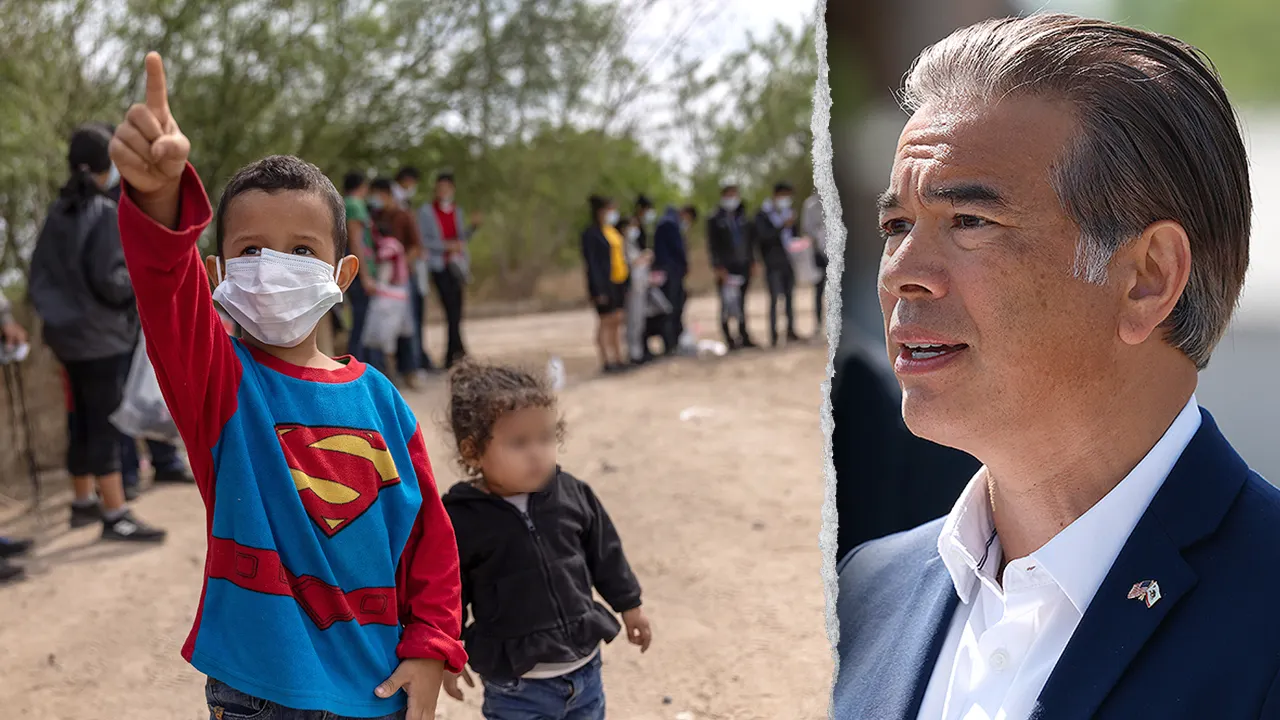
The quiet friction erupted into a public reckoning in early 2025 when El Cajon City Councilman Steve Goble attended a meeting with San Diego-area Homeland Security officials. It was here that federal authorities revealed they possessed a list of unaccompanied migrant children residing within his city’s borders, specifically identifying fifty-two children living at local addresses. Recognizing that these minors had entered the country without parental guidance and were at a vastly elevated risk of falling into forced labor, modern-day slavery, or sexual exploitation, federal officials asked if local law enforcement could assist by conducting routine wellness checks to confirm their safety. Eager to help but wary of California’s strict sanctuary landscape, Goble penned a letter in March 2025 to California Attorney General Rob Bonta, seeking official guidance on whether local police could utilize this federal contact information. Goble’s plea was explicitly humanitarian, emphasizing that the city desired only to ensure the safety of these children regardless of their resident or citizenship status. However, Bonta’s office responded in June 2025 with a sobering warning: conducting wellness checks utilizing information provided by federal immigration authorities could constitute a direct violation of Senate Bill 54, the landmark California Values Act, which strictly prohibits local police from acting as or assisting federal immigration agents.
This rigid legal barrier left local officials and law enforcement officers in an agonising catch-22, unable to act on direct tips about vulnerable children without risking severe state penalties. Mayor Bill Wells expressed deep moral outrage at this administrative blockade, describing the state’s stance as an incredibly insensitive choosing of a political hill to die on. For Wells and his colleagues, the state’s narrative of sanctuary seemed to blind policymakers to the immediate, physical dangers of child exploitation, effectively suggesting that the protection of an immigration status took precedence over protecting a living, breathing child from predators. The state’s warning put beat officers in an impossible ethical and legal position where every shift became a structural minefield; a knock on a door to save a child could be deemed an unlawful enforcement of federal immigration policy under state guidelines, while ignoring the federal tip could leave a young person in a state of ongoing abuse. This paradox forced police to engage in what city leaders decried as exhausting legal hairsplitting rather than executing the basic, rapid public safety responses that communities expect from their first responders.
Faced with this systemic paralysis, El Cajon took the extraordinary step of filing a comprehensive lawsuit against Attorney General Bonta on April 28, 2026, in a San Diego County court, seeking to dismantle or temporarily halt the state’s restrictive sanctuary policies. In a follow-up motion for a preliminary injunction on May 20, the city argued that California’s legislative trio—the California Values Act (SB 54), the TRUST Act, and the TRUTH Act—unconstitutionally preempt federal immigration obligations and fundamentally obstruct local law enforcement from performing basic public safety duties. The city’s legal filing directly cited the communication between Goble and Bonta as a primary example of how these sanctuary mandates actively harm the community by stripping officers of their capacity to protect children. Mayor Wells emphasized that the lawsuit is not an attempt to turn local police officers into active immigration enforcement agents, but rather a desperate bid to rescue them from a legal system that forces them to choose between violating federal law by ignoring human trafficking indicators or violating state law by acting on federal data.
In defense of the state’s policies, Attorney General Bonta’s office argued that it genuinely shared El Cajon’s concerns for child safety, but suggested that municipal police were not the appropriate tool for these wellness checks, proposing instead that county social service agencies handle the outreach. However, this bureaucratic alternative ignored a stark political reality on the ground: in December 2024, San Diego County had voted to restrict its own resources and personnel from assisting federal immigration agencies in any capacity. This county-level restriction meant that social welfare workers were just as prohibited from utilizing federal lists of unaccompanied minors as the local police were, effectively closing Bonta’s suggested path of relief. By restricting both law enforcement and social services from acting on federal databases, the state and county created a tragic, absolute vacuum of oversight, leaving these fifty-two children in an institutional limbo where no official sat empowered to knock on their doors and verify their safety, rendering them functionally invisible to the protective custody of the state.
This conflict reflects a deeply polarized national debate where immigrant rights advocates and local leaders hold fundamentally contrasting views on what constitutes genuine safety. Advocacy groups like the Young Center for Immigrant Children’s Rights argue that federally initiated wellness checks are often wolf-in-sheep’s-clothing tactics, acting as thinly veiled immigration enforcement operations designed to terrorize undocumented sponsors and expose vulnerable families to deportation. El Cajon’s leaders strongly reject this cynical framing, arguing that a wellness check is a universal gesture of human empathy, not a deportation raid, and that local officers have always been capable of helping a child in distress without reporting minor immigration issues to federal authorities. As the legal battle winds through the courts, Councilman Goble remains focused on the human simplification of the crisis: a simple knock on the door, a friendly face, and the uncomplicated question of “Are you okay?” In a world increasingly dominated by abstract political battle lines, the plight of El Cajon’s fifty-two children stands as a poignant reminder that policies built on high-minded ideals can sometimes lose sight of the very human lives they claim to protect.