



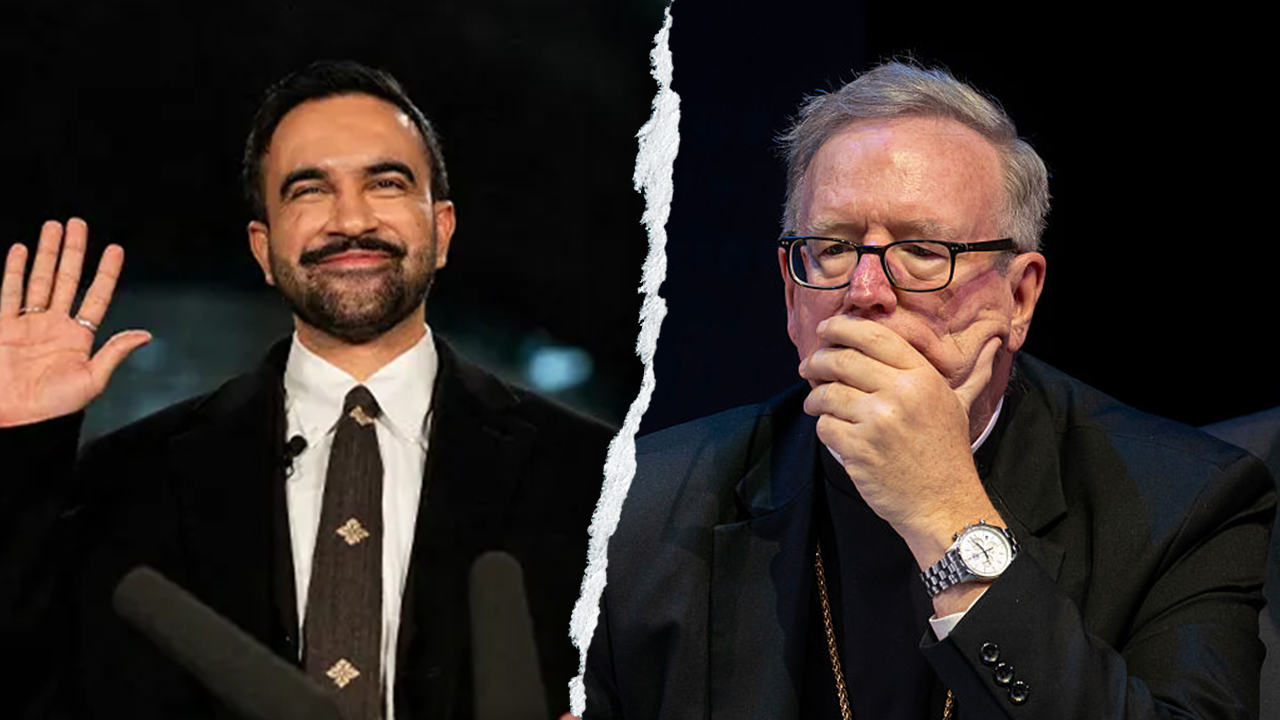
Catholic Leader Criticizes NYC Mayor’s “Warmth of Collectivism” Comment
Bishop Robert Barron, a prominent Catholic leader and founder of “Word on Fire,” has strongly criticized New York City Mayor Zohran Mamdani’s recent inaugural statement about replacing “the frigidity of rugged individualism with the warmth of collectivism.” Barron’s reaction was immediate and forceful, stating that the comment “took my breath away” and reminding his followers that “collectivism in its various forms is responsible for the deaths of at least one hundred million people in the last century.” The bishop’s criticism highlights a fundamental ideological divide that has emerged with the election of Mamdani, New York’s first Muslim mayor and an avowed socialist, whose early policy decisions and statements have already generated significant controversy.
Barron’s critique went beyond mere political disagreement, delving into religious and philosophical objections to collectivist ideologies. “For God’s sake, spare me the ‘warmth of collectivism,'” he wrote on social media, pointing to what he sees as the historical failures of socialist governments around the world. “Socialist and Communist forms of government around the world today — Venezuela, Cuba, North Korea, etc. — are disastrous,” Barron explained, adding that “Catholic social teaching has consistently condemned socialism and has embraced the market economy.” This perspective reflects long-standing Catholic social teaching that, while critical of unfettered capitalism, has historically rejected collectivist solutions as incompatible with human dignity and freedom. Barron argues that market economies, rather than representing “rugged individualism” as Mamdani suggests, are actually “the economic system that is based upon the rights, freedom, and dignity of the human person.”
Barron wasn’t alone in his criticism of Mamdani’s collectivist declaration. Florida Governor Ron DeSantis questioned the “warmth” of collectivism, stating it “always requires coercion and force” and asking rhetorically how many deaths collectivist ideologies have caused over the past century. Senator Ted Cruz of Texas similarly warned, “When communists rule, individual rights — invariably — are taken away.” These responses from prominent Republican leaders underscore the ideological battle lines being drawn around Mamdani’s administration, with conservatives viewing his embrace of socialist principles as a concerning development for America’s largest city. The backlash highlights how Mamdani’s rhetoric has quickly escalated existing tensions between progressive and conservative visions for urban governance.
Since his midnight swearing-in on New Year’s Day, Mamdani has wasted no time implementing his progressive agenda through executive action. He has already issued three housing-related executive orders aimed at protecting tenants and accelerating housing development. The first revives the Mayor’s Office to Protect Tenants to address complaints and hold landlords accountable for hazardous conditions. The second creates a Land Inventory for Tomorrow (LIFT) task force to leverage city-owned land for housing development. The third establishes a Streamlining Procedures to Expedite Equitable Development (SPEED) task force to remove permitting barriers that slow housing construction. These immediate actions reflect Mamdani’s campaign promises to prioritize housing affordability and tenant rights, core issues for his progressive base.
In another controversial move, Mamdani has revoked all orders issued by his predecessor, Mayor Eric Adams, including policies that were important to many in the Jewish community. Among the rescinded orders was one that barred city agencies from boycotting or divesting from Israel, and another that directed the NYPD to establish protest-free buffer zones near religious sites including churches, synagogues, and mosques. These decisions have fueled criticism from the city’s right-leaning Jewish leaders, adding to existing concerns about Mamdani’s positions on Israel. The new mayor has repeatedly described Israel as an “apartheid state,” accused it of committing genocide in Gaza, and stated that Prime Minister Benjamin Netanyahu should be arrested. These positions have led some critics, including Representative Elise Stefanik, to accuse him of being a “terrorist sympathizer.”
Despite the controversy surrounding his early days in office, Mamdani has attempted to balance his progressive agenda with assurances about combating hate crimes. He has stated that he will not tolerate antisemitism in New York and has pledged to increase funding to combat hate crimes across the city. However, the revocation of his predecessor’s protective orders has raised questions about how these commitments will manifest in policy. As Mamdani navigates his first weeks in office, the tension between his socialist principles and the diverse needs of New York’s population will likely continue to generate both passionate support from progressives and fierce criticism from conservatives. The debate sparked by his “warmth of collectivism” comment may prove to be just the first of many ideological battles that define his administration as he seeks to implement his vision for America’s largest city.