



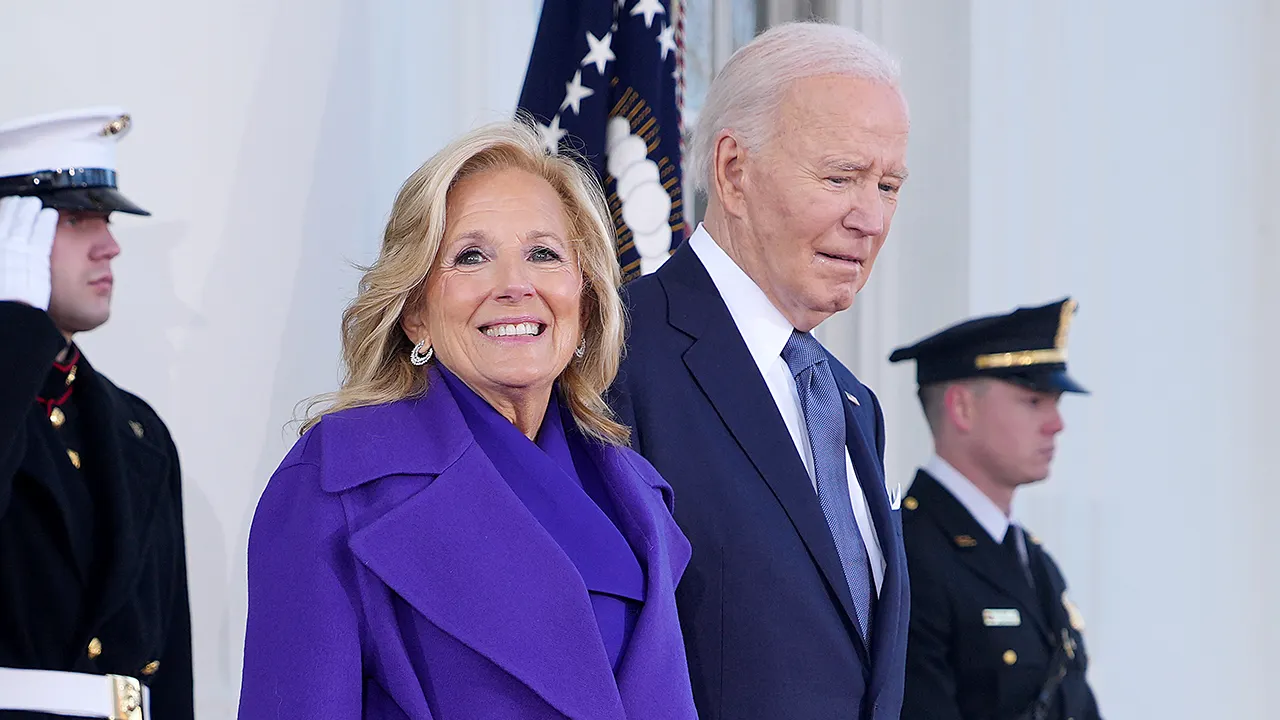
The journey out of the high-stakes, hyper-scrutinized world of the White House and back into the rhythms of private citizenship is a transition few human beings will ever truly comprehend, yet it is this deeply personal transition that former First Lady Jill Biden is currently navigating before the eyes of the nation. Promoting her new memoir, View from the East Wing, Jill has embarked on a nationwide book tour designed not just to chronicle her historic tenure, but to offer a rare, unvarnished window into the complex emotional landscape of a political partnership that has endured for decades. During a recent promotional stop in the heart of New York City, a setting known for its vibrant energy and unforgiving glare, the former First Lady sought to connect with an audience eager to hear the human side of history. Moderated by the seasoned and charismatic Whoopi Goldberg, the event was intended to be an intimate discussion about the quiet support, the silent sacrifices, and the unique challenges faced by a modern presidential spouse. As Jill spoke of the heavy mantle of leadership and the balancing act of maintaining an independent identity while standing beside the leader of the free world, the atmosphere in the room was charged with a mixture of nostalgia, curiosity, and the unspoken acknowledgment of the tumultuous political climate the country had so recently weathered. This tour represents more than a standard literary promotional campaign; it is an act of reclaiming one’s own narrative after years of being defined by headlines, soundbites, and the relentlessly partisan interpretations of a polarized public. By choosing to lay bare her personal fears, triumphs, and the daily reality of her marriage, Jill Biden invited her audience to look past the political theater and see the fragile human beings who occupied the highest offices in the land, setting the stage for an evening that would soon blur the line between highly coordinated public relations and messy, spontaneous human emotion.
The carefully curated flow of the evening took a sudden, unscripted turn when former President Joe Biden made a surprise appearance, stepping out from his seat in the audience to join his wife on stage, an unexpected disruption that immediately shifted the energy of the room and sparked an intense wave of speculation online. As he approached, Jill Biden, reacting with the practiced humor of a spouse accustomed to the unpredictability of her husband’s long career, quipped to the audience, “Joe has a question. Like you couldn’t ask it later,” eliciting a wave of laughter that cut through the initial shock of his sudden emergence. Stepping up to the microphone, the former president delivered a question that seemed designed to elicit a classic, heartwarming display of marital affection: “Who do you love most in the whole world?” Rather than delivering the expected, sentimental response, Jill took a playful detour, laughing as she quickly answered, “Whoopi,” effectively deflecting the spotlight to her esteemed moderator. A visual of Joe Biden shrugging, slightly bemused by the dry wit of his wife of nearly fifty years, captured a raw, unpolished slice of geographical and relational dynamics that was both deeply relatable and, for some observers, undeniably awkward. In that brief exchange, the audience witnessed the push-and-pull of a long-standing marriage that has survived the ultimate pressure cooker of global politics; it was a moment characterized by a mix of genuine affection, public display, and the minor, friction-filled miscommunications that define any marriage, yet played out on a monumental stage. While designed perhaps as a sweet, spontaneous gesture of support from a husband proud of his wife’s independent achievements, the interaction quickly became a lightning rod for broader commentary, reminding the public that even the most calculated public figures are ultimately human beings navigating the delicate balance of love, aging, and public perception under a microscope that never truly turns off.
This lighthearted on-stage banter stood in stark and emotional contrast to the deeply serious, vulnerable revelations that Jill Biden has been sharing throughout her book tour regarding the twilight of her husband’s presidency, most notably her terrifying personal reflections on the June 2024 debate against Donald Trump. During the height of the 2024 re-election campaign, Jill had been her husband’s most vocal, fierce defender, shielding him from mounting criticism and maintaining a stoic front of confidence, but her memoir and subsequent interviews have painted a vastly different, far more fragile picture of that fateful evening. Recalling the debate that ultimately signaled the beginning of the end for Joe Biden’s political career, Jill candidly confessed that she was not horrified by the performance, but rather paralyzed by an acute, visceral fear for her husband’s physical well-being. “I wasn’t horrified, I was frightened,” she admitted, describing a profound sense of panic that any loving partner who has watched a spouse face sudden physical or cognitive distress would immediately recognize. Watching from the wings, she recalled a sense of utter disbelief and dread, stating, “I had never, ever seen Joe like that before or since. I don’t know what happened. As I watched it, I said, ‘Oh my God, he’s having a stroke.’ It scared me to death.” By sharing this raw, terrifying memory, the former First Lady transcended the boundaries of partisan defense, offering instead the agonizing perspective of a wife witnessing what she believed to be a medical emergency on a global broadcast with millions of people watching. This revelation humanizes the Bidens in a way that policy debates and campaign speeches never could, tapping into a universal truth: the agonizing vulnerability of loving someone whose physical limitations are beginning to show, and the helpless terror of being unable to stop their struggle in real-time, highlighting that behind the heavy armor of the presidency lies a family grappling with the scary, unyielding realities of aging.
However, the digital landscape of the modern era rarely offers grace or empathy to political figures, and the momentary awkwardness of the stage invasion, coupled with Jill’s raw admissions, was quickly consumed by a wave of cynical, online scrutiny. Social media platforms erupted with rapid-fire commentary, transforming a clumsy, human moment into a polarized digital battleground where users eagerly dissected the couple’s body language, health, and dignity. Many commentators on the platform X lambasted the exchange as “staged” and “painful to watch,” while others used the occasion to lob harsh, partisan barbs about the former president’s mental acuity, asserting that the interaction was a public display of cognitive decline. Phrases like “dementia is kicking in hard” and mocking remarks about the former president needing “verbal reassurance at a book signing” flooded the digital space, illustrating a profound disconnect between the empathetic reality of a family dealing with the natural vulnerabilities of aging and the ruthless, dehumanizing nature of online political discourse. This reaction highlights a broader, troubling societal phenomenon: the modern tendency to strip public figures of their basic humanity, reducing their complex, real-life relationships and health struggles into political theater or fodder for internet mockery. For these observers, Joe Biden was not a husband trying to support his wife or a senior citizen dealing with the natural decline of his twilight years, but a political symbol to be analyzed, criticized, and ultimately dismissed. The harshness of these responses serves as a sobering reminder of the heavy toll exacted by public life in the internet age, where moments of genuine vulnerability are rarely met with compassion, but are instead weaponized in an endless, unforgiving news cycle.
To truly understand the weight of this moment, one must reflect on the extraordinary scope and the bittersweet, abrupt conclusion of Joe Biden’s half-century in public service, a career that spanned the modern history of American politics. Serving for thirty-six years representing Delaware in the United States Senate before rising to the vice presidency under Barack Obama for two consecutive terms, Biden spent the vast majority of his adult life at the absolute center of global power, a fixture of the American establishment who weathered personal tragedies and political shifts that would have broken lesser figures. To have that lifetime of ambition and service culminate in a presidency, only to see it end abruptly at the height of a grueling re-election campaign due to growing concerns over his age and verbal missteps, is a tragedy of Shakespearean proportions. The transition from being the undisputed leader of the free world to a supportive spouse sitting in the audience, watching his wife command the stage, is an incredibly stark shift that carries a profound, silent grief. This transition represents a forced surrender to time—an opponent that no leader, regardless of their power, can ever hope to defeat. When Joe Biden stood on that stage asking for reassurance, it was perhaps not just the action of a politician seeking a photo-op, but the deeply human gesture of a man who has spent his entire life in the arena and is now trying to find his footing in the quiet, dusty hallways of retirement. It is the story of an elder statesman reckoning with the loss of his life’s work, attempting to navigate the transition with dignity while the world watches his every stumble with a mixture of pity, frustration, and critical scrutiny.
Ultimately, the story unfolding on that New York stage was not merely a political footnote or a viral social media trend, but a deeply human portrait of a marriage navigating the inevitable, quiet autumn of a shared life under the public gaze. As Jill and Joe Biden move forward into this new, post-White House chapter, their public appearances and candid reflections serve as a poignant reminder that behind the titles of president and first lady are two ordinary people who have loved, feared, and aged together through extraordinary times. View from the East Wing and the accompanying tour highlight a transitional phase where the Bidens are allowed to shed the rigid armor of official policy and speak, perhaps for the first time in decades, with a raw, imperfect honesty about their experiences, their fears, and their unconditional bond. While the internet may continue to analyze every awkward exchange, every quiet shrug, and every verbal stumble with a cynical lens, the enduring reality is much simpler and far more universal: it is the story of a husband and wife leaning on one another as they step back from the bright, burning center of the world’s stage into the softer, gentler shadows of private life. In witnessing their vulnerability, their humor, and even their moments of public discomfort, the public is offered a rare glimpse of grace in the face of inevitable change. As they close the book on their political careers, the Bidens remind us that the titles of power are fleeting, but the connections we forge, the love we protect, and the quiet comfort of a lifelong partner remain the true, enduring anchors of our lives.