



A Daughter’s Four-Decade Wait for Justice in Her Mother’s Murder Case
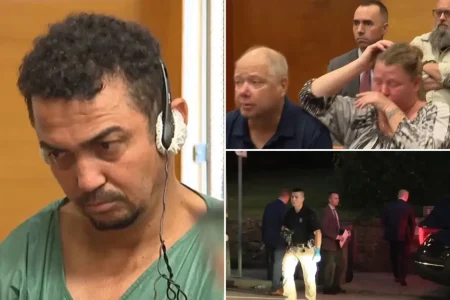
In a remarkable development that has sent ripples through both academic and legal circles, Yale epidemiology professor Alison Galvani is finally speaking out after her 81-year-old father, Patrick Galvani, was arrested for the 1982 murder of her mother, Nancy Galvani. This cold case, which remained unsolved for over four decades, has cast a long shadow over Alison’s life since she was just five years old. According to the Foster City Police Department in California, Patrick was taken into custody in San Francisco on November 24 and charged with murder after Nancy’s body was discovered floating in a sleeping bag near the San Mateo Bridge back in August 1982. While authorities haven’t specified exactly what new evidence led to this breakthrough, they’ve indicated that “recent developments” have finally allowed them to move forward with a case that had gone cold despite multiple reviews over the years.
For Alison, the arrest represents a painful but necessary step toward resolution. “I’m grateful to investigators and prosecutors for pursuing justice for my mom,” she told the Los Angeles Times, praising their “extraordinary combination of compassion and resolve” in working “tirelessly to ensure that light is shone upon even the darkest of cases.” This sentiment reveals the deep emotional impact the case has had on her life—a shadow that has followed her through childhood into her distinguished academic career. While Patrick had been considered a suspect early in the investigation, the case was previously dropped due to insufficient evidence and a lack of witnesses. His attorney at that time claimed Patrick had passed a polygraph test, and Patrick himself alleged in court filings that Nancy had been experiencing “mental illness.” His current attorney, Douglas Horngrad, maintains his client’s innocence, stating, “This murder charge was filed against him years ago and the case was dismissed for lack of evidence. As I understand it, the evidence is the same, and we believe the outcome will be the same. Mr. Galvani will be exonerated again.”
The circumstances surrounding Nancy’s death paint a troubling picture of a family in crisis. According to reports, Nancy and Patrick were separated at the time of her murder. She had filed for divorce, obtained a restraining order, and moved out of their Pacific Heights home to a residential hotel in San Francisco. The prosecution alleges that on August 8, 1982, Patrick asked Nancy to pick up their daughter Alison a day earlier than scheduled under their shared-custody arrangement. That same evening, Nancy disappeared, and her body was later discovered in the bay. In what investigators likely view as a crucial piece of physical evidence, Nancy’s yellow Buick was subsequently found inside Patrick’s garage. These details have fueled the prosecution’s confidence, with San Mateo County District Attorney Stephen Wagstaffe telling the Los Angeles Times, “We think we have enough to convict and we have an ambitious prosecutor who can accomplish that.”
The emotional toll on Alison has been immense, as she revealed in her interview with the Los Angeles Times. She has lived for decades with the haunting fear that “my father used me as bait to lure my mother to her death.” This devastating suspicion has colored her entire life, even affecting significant personal milestones. She described how on her wedding day, she asked her father to walk ahead of her so she would not “have to touch him”—a poignant illustration of how the unresolved trauma permeated even what should have been joyous occasions. In a particularly revealing moment, Alison recounted confronting her father during a 2008 visit to her home in Connecticut, directly telling him, “You killed my mother.” According to her account, his response—”It wasn’t my fault”—neither confirmed nor denied his involvement but has clearly lingered in her mind as something significant.
For many observers, this case highlights the enduring impact of unresolved violent crimes on families, particularly children. Alison’s experience demonstrates how the absence of closure can ripple through decades of a person’s life, affecting relationships, milestones, and psychological wellbeing. Her position as a respected epidemiologist at Yale—someone who has built a career understanding patterns of disease and health in populations—stands in stark contrast to her inability to fully understand or resolve the pattern of violence that shaped her own childhood. This dichotomy underscores how even those who achieve remarkable professional success can continue to carry the weight of unresolved personal trauma, especially when that trauma involves family violence and the loss of a parent at a young age.
As Patrick Galvani now sits in San Mateo County Jail, held without bail until his next court appearance on January 15, both the legal system and a daughter who has waited most of her life for answers face a difficult road ahead. The prosecution must now prove a four-decade-old case with whatever new evidence they have uncovered, while Alison must navigate the complex emotions that come with seeing her father potentially held accountable for her mother’s death. Regardless of the ultimate outcome in court, Alison Galvani’s willingness to speak publicly about this deeply personal tragedy reflects both her ongoing quest for justice and perhaps a step toward the closure that has eluded her for over forty years. In her story lies a powerful reminder that for victims’ families, the concept of justice isn’t merely abstract—it’s intimately tied to their ability to process grief, understand their own histories, and ultimately move forward with their lives.