


The New Geopolitics of East Asia: Xi Jinping’s High-Stakes Visit to a Newly Bolden Pyongyang
The Dawn of a Tripartite Tug-of-War: How a Resurgent Kim Jong-un Redefines His Relationship with Beijing
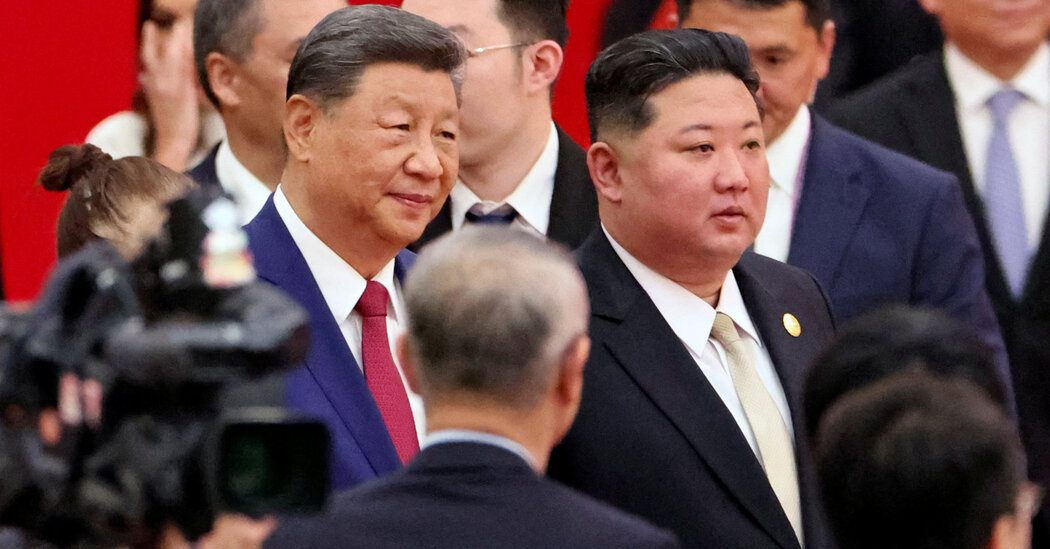
When Chinese President Xi Jinping last traveled to Pyongyang nearly seven years ago, he met with a North Korean regime that was visibly cornered, economically suffocated by international sanctions, and reeling from the abrupt collapse of high-profile denuclearization talks with the United States in Hanoi. Today, as the Chinese leader prepares for a highly anticipated return to North Korea, the geopolitical landscape of East Asia has undergone a profound realignment, presenting Mr. Xi with a vastly different and far more confident negotiating partner in Kim Jong-un. Emboldened by a rapidly deepening military and economic alliance with the Russian Federation, the North Korean dictator has successfully engineered an escape from diplomatic isolation, transforming his country from a vulnerable client state dependent on Beijing’s goodwill into a pivotal player in a new axis of authoritarian cooperation. As Mr. Xi secures his own domestic footprint and seeks to project Chinese dominance across the Indo-Pacific, his two-day summit with Mr. Kim is designed to showcase a formidable, united front against Western-led alliances; however, beneath the carefully choregraphed displays of communist solidarity lies a complex struggle for regional influence. Beijing is increasingly anxious to assert its traditional primacy over a neighbor that has pivoted sharply toward Moscow, while North Korea, fiercely resistant to being treated as a junior partner in the relationship, is poised to exploit its newfound strategic leverage with Russia to demand substantial economic and diplomatic concessions from China. This delicate diplomatic balancing act by Pyongyang poses a significant challenge to regional security: if Mr. Kim successfully plays his two giant neighbors against each other, he may feel entirely unconstrained in expanding his sophisticated nuclear weapons program, further destabilizing a region already deeply unnerved by China’s aggressive military buildup and raising urgent questions about Washington’s capacity to honor its security guarantees to regional allies like South Korea and Japan, particularly as American military resources remain heavily divided by conflicts in Europe and the Middle East.
              ┌─────────────────────────────────┐
              │          UNITED STATES          │
              │   (Alliances: Japan/S. Korea)   │
              └───────────────┬─────────────────┘
                              │ (Tensions/Deterrence)
                              ▼
┌─────────────────┐ Strategic Leverage ┌─────────────────┐
│ RUSSIA ├────────────────────────────>│ NORTH KOREA │
│ (Military/Tech) │<────────────────────────────┤ (Troops/Munitions)
└────────┬────────┘ Weapons & Energy └────────┬────────┘
│ │
│ Cooperation / │ Economic Dependence /
│ Rivalry for Influence │ Geopolitical Buffer
│ │
│ ┌─────────────────┐ │
└─────────────────────>│ CHINA │<─────┘
│ (Xi Jinping) │
└─────────────────┘
Beijing’s Global Gambit: Xi Jinping’s Strategy to Project Order Amid Western Disarray
For Beijing, the upcoming summit is a vital instrument of global messaging, designed to signal to Washington and its democratic partners that China remains the indispensable powerbroker of East Asia and that any attempt to resolve the region’s security dilemmas without its active participation is bound to fail. By embarking on this rare foreign trip, Mr. Xi is seeking to present his country as a responsible, stabilizing powerhouse on the world stage—a deliberate contrast to what Beijing portrays as the unpredictable, destabilizing behavior of the United States, which has recently struggled with internal political polarization, escalating trade disputes, and international entanglements ranging from its confrontation with Iran to its support for Ukraine. This narrative of a steady, reliable China was a central theme during Mr. Xi’s previous meetings with global leaders, including his interactions with Donald Trump and his recent summits with Russian President Vladimir Putin in Beijing, all designed to cement China’s status as a superpower commanding equal global authority to the United States. Analysts point out that Mr. Xi is highly motivated to demonstrate that the coordination within his authoritarian coalition is far more resilient and cohesive than the shifting, often fractious democratic alliances managed by Washington—a point underscored by Kurt Campbell, a former deputy secretary of state and chairman of the Asia Group, who observed that the Chinese leader is actively trying to project a image of domestic and international control that contrasts sharply with the political volatility of Western states. Yet, despite this public projection of supreme confidence, Mr. Xi’s decision to personally travel to Pyongyang reveals a pressing, underlying anxiety: the need to actively court a North Korean leadership that is no longer entirely dependent on Beijing’s economic patronage and is increasingly showing signs of strategic defiance.
Moscow’s Shadow and the Delicate Balance of Triangular Diplomacy
The primary source of China’s underlying anxiety is the dramatic resurrection of Cold War-era ties between Pyongyang and Moscow, a relationship solidified by a comprehensive mutual defense pact signed in 2024 that has effectively disrupted the balance of power in Northeast Asia. Desperately requiring military supplies to sustain its war of attrition in Ukraine, Vladimir Putin’s Russia has turned to North Korea for critical shipments of artillery munitions, short-range ballistic missiles, and troops, offering in return a vital economic lifeline that includes millions of barrels of refined petroleum, agricultural aid, and highly advanced military-technical assistance for North Korea’s space and submarine programs. This direct transaction has severely undermined China’s traditional leverage over North Korea, as Pyongyang now possesses an alternative superpower patron capable of vetoing United Nations actions and providing immediate material relief. For Beijing, which shares a long land border with North Korea, this unchecked alignment between a volatile, nuclear-armed neighbor and an increasingly isolated, aggressive Russia is a double-edged sword: while it distracts Western security planners, it also threatens to trigger a major military escalation or invite an increased, permanent U.S. military presence—including advanced missile defense systems and joint naval task forces—directly onto China’s periphery. According to Northeast Asia security expert John Delury, a senior fellow for the Asia Society in Seoul, the Chinese leadership is deeply concerned by the rapid pace of the Moscow-Pyongyang alignment, and Mr. Xi’s high-profile visit serves as a strategic intervention to reinsert Beijing into the center of the diplomatic equation, reminding Mr. Kim that while Russia can offer short-term military transactions, it is China that remains the permanent, indispensable guarantor of North Korea’s long-term economic survival.
Out of the Ashes of Isolation: Kim Jong-un’s Audacious Diplomatic Rebound
To fully appreciate the magnitude of Kim Jong-un’s current geopolitical leverage, one must look back to the dark period between 2019 and 2021, when the North Korean leader appeared increasingly isolated and economically vulnerable following the collapse of his direct diplomacy with the Trump administration. The failure of the bilateral nuclear summits was quickly compounded by the emergence of the international COVID-19 pandemic, prompting Mr. Kim to enforce an absolute, self-imposed blockade on his nation’s borders that completely paralyzed legitimate trade with China, froze the flow of foreign currency, and pushed the domestic economy to the brink of collapse. However, the subsequent fracturing of the global order—accelerated by Russia’s invasion of Ukraine—provided the North Korean regime with a unique historical opportunity to recalibrate its foreign policy, moving away from its total reliance on Chinese trade and positioning itself as a strategic partner to a embattled Moscow. By supplying the weapons Russia desperately needed to challenge the Western-backed coalition in Europe, Mr. Kim obtained billions of dollars in economic and technological assistance, transforming his country from an impoverished, isolated state into an essential actor in a global security crisis. While China has sought to reclaim its dominant position by reopening cross-border rail links, restoring commercial flights between Beijing and Pyongyang, and facilitating bilateral exchanges, North Korea is now aiming for far more ambitious economic integration, including Chinese investment in special economic zones, luxury hot springs, and coastal resorts designed to attract lucrative waves of Chinese tourists. As Lee Byong-chul, a prominent defense analyst at the Institute for Far Eastern Studies in Seoul, notes, North Korea is no longer a needy client state clinging desperately to a single foreign protector; instead, by securing a powerful strategic wing in Moscow alongside its traditional lifeline in Beijing, the regime has achieved unprecedented diplomatic flexibility.
                ┌───────────────────────────┐
                │     2019 FAILURE          │
                │   Trump-Kim Talks Stall   │
                └─────────────┬─────────────┘
                              │
                              ▼
                ┌───────────────────────────┐
                │     2020-21 ISOLATION     │
                │    Deep COVID Lockdowns   │
                └─────────────┬─────────────┘
                              │
                              ▼
                ┌───────────────────────────┐
                │    2022-23 REALIGNMENT    │
                │  Pivot to War-Weary Russia│
                └─────────────┬─────────────┘
                              │
                              ▼
                ┌───────────────────────────┐
                │    PRESENT LEVERAGE       │
                │ Dual-Patron Balance of PR │
                └───────────────────────────┘
The Specter of Washington and the Unyielding Nuclear Shield
Hovering over the discussions in Pyongyang is the persistent question of how the fluid state of domestic politics in the United States will impact the security dynamics of the Korean Peninsula, particularly with Donald Trump’s return to the presidency and his repeated assertions that he is prepared to resume personal diplomacy with the North Korean leader. While some analysts speculate that the White House may have quietly encouraged Beijing to use its influence to urge North Korea toward a path of de-escalation, Mr. Kim has made it explicitly clear that he has no interest in participating in any negotiations that demand the dismantling or suspension of his nuclear weapons capability. From the perspective of the North Korean military establishment, the possession of a reliable, deliverable nuclear deterrent is not a bargaining chip to be traded for economic relief, but a vital guarantee of regime survival, a shield against external invasion, and a crucial counterweight that prevents Pyongyang from being entirely subordinated by either Moscow or Beijing. This conviction was heavily reinforced by Washington’s own aggressive actions toward non-nuclear adversaries, such as the Trump administration’s strikes against Iranian targets and its stated rationale that military pressure was necessary to prevent Tehran from acquiring nuclear capabilities—a narrative that North Korean state media has frequently cited as proof that disarmament is a strategic trap. Consequently, Mr. Kim is highly likely to use his meeting with Mr. Xi to signal that his status as a nuclear power is an unalterable reality, forcing both China and the broader international community to adjust to a new security paradigm where North Korea must be accepted as a permanent nuclear weapons state.
The Fall of the Denuclearization Consensus: A New Era of Great Power Competition
This shifting dynamic highlights a profound, long-term breakdown in the international diplomatic consensus regarding how the world’s major nuclear powers handle the threat of a nuclear-armed North Korea. For nearly two decades, despite their deep geopolitical rivalries, the United States, China, and Russia shared a common, baseline interest in preventing Pyongyang from acquiring a deliverable nuclear arsenal, a consensus that was reflected in their joint support for sweeping UN Security Council sanctions in 2016 and 2017 designed to cut off North Korea’s access to global markets. That era of coordinated non-proliferation is now effectively over, shattered by the return of intense great-power competition; Vladimir Putin’s explicit endorsement of North Korea’s military capabilities and his public assertion that Pyongyang has every right to strengthen its defensive posture has effectively handed Mr. Kim a blank check to advance his nuclear ambitions. While Beijing officially remains committed to the denuclearization of the Korean Peninsula out of a deep-seated fear that a nuclear-armed North Korea will drive Japan, South Korea, and potentially Taiwan to develop their own independent nuclear arsenals, its primary focus has shifted toward utilizing its relationship with Pyongyang as a valuable source of asymmetric leverage in its broader, ongoing struggle for regional hegemony against the United States. This strategic evolution is evident in the subtle changes in joint diplomatic communiqués issued by Beijing and Pyongyang, which have notably omitted any mention of “denuclearization”—a term that was once standard boilerplate—and instead focus on “strategic communication” and “mutual defense.” As the United States and its regional allies grapple with a highly unstable East Asia, the upcoming summit in Pyongyang underscores a sobering reality: in this new era of fragmented global power, North Korea has successfully positioned itself at the vital crossroads of authoritarian solidarity, leaving the West with fewer tools than ever before to contain the nuclear ambitions of a remarkably resilient regime.