

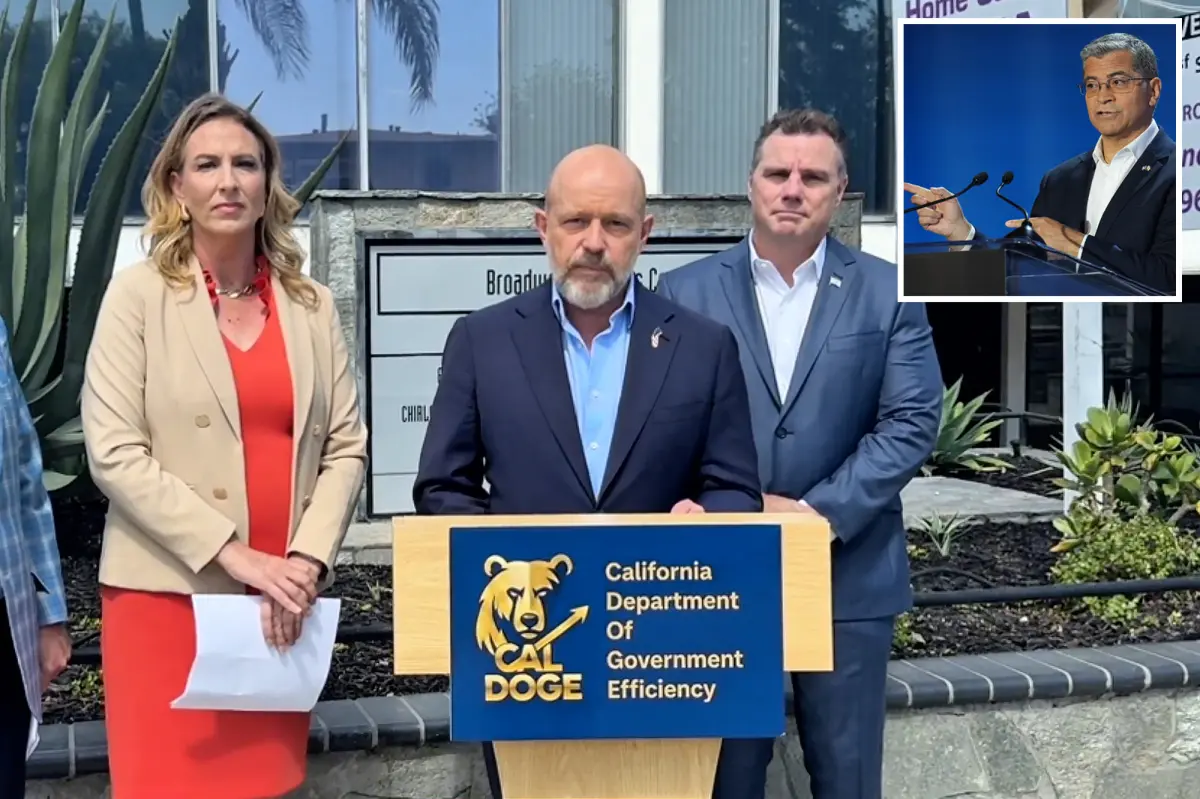
In the heart of California’s heated gubernatorial race, a storm is brewing that pits Republican contender Steve Hilton against his Democratic rival, Xavier Becerra. Picture this: a sun-drenched Santa Ana office becomes ground zero for accusations that could shake the state’s political landscape. Hilton, with his characteristic fervor, is lashing out, claiming Becerra is leveraging taxpayer dollars to build a formidable campaign machine powered by immigrant communities, some of whom lack legal status. It’s a bold move in a state where immigration debates are as common as freeway traffic jams, and one that ties into broader fears about election integrity and public funds. Hilton isn’t just spouting rhetoric; he’s pointing to a nonprofit at the epicenter of it all—the Coalition for Humane Immigrant Rights (CHIRLA) and its political offshoot, the CHIRLA Action Fund. On April 13, they formally backed Becerra, transforming what Hilton sees as a neutral service into a partisan powerhouse. As someone who’s watched politics from the edges, I can see how this narrative plays out in real life: neighbors rallying, phone banks buzzing, all fueled by what Hilton alleges is stolen public wealth. It’s the kind of scandal that makes voters question who’s really representing them, especially when millions in state funds are involved. Hilton’s team, through the California Department of Government Efficiency (CAL DOGE)—an initiative he launched on January 26 to combat waste and corruption—is painting this as more than a misdemeanor; it’s a violation of federal law, with immigrants supposedly campaigning en masse. It’s human drama at its core, where everyday people are caught in the crossfire, their lives intertwined with political ambitions. You imagine the struggles of those seeking a better life in California, only to have their efforts weaponized in a high-stakes game. Hilton’s tweet blasted it across social media: “California taxpayer $$$ funding illegal immigrants to campaign for Xavier Becerra,” capturing the outrage in 280 characters. And as the primary looms on June 2, 2026, this isn’t just noise—it’s a potential breaker of alliances and trust in a diverse electorate.
Delving deeper, CHIRLA’s model feels like a modern-day fable of transformation, where vulnerability meets activism. At its center is the so-called “pipeline” approach, a step-by-step process outlined in documents that HUMINT’s investigators flagged from CAL DOGE. It starts innocently enough with immigration legal services—think DACA renewals or paths to citizenship—offering a lifeline to those navigating the complexities of American bureaucracy. But then it escalates: from counseling sessions to active civic engagement, morphing individuals into voter registrants and election mobilizers. The materials speak of “creating as many citizens as possible” and forging a “new voter base” to sway state politics, which sounds empowering on paper but prickly under scrutiny. Organizers target the freshly naturalized, maintaining relentless contact—up to four to seven pre-election touches per person—through canvassers whose backgrounds vary wildly, from undocumented folks to lawful permanent residents. It’s a grassroots engine that CHIRLA Action Fund harnesses to endorse candidates and fund their races, blending humanitarian work with electoral strategy. As a storyteller who’s seen community efforts turn political, this pipeline evokes the immigrant dream: arriving with hopes and becoming a force for change. Yet, when taxpayer funds prop it up, it raises eyebrows about equity. Is this progress or exploitation? Families huddling in tight apartments, sharing stories of survival, might see it as hope; critics view it as a subsidy for advocacy. The narrative humanizes the immigration saga, where CHIRLA’s “civic pipeline” promises upliftment, moving participants from uncertainty to informed participation. But Hilton’s lens reframes it as a vehicle for Becerra’s ascension, fueled by questionable means. It’s the kind of tale that resonates in multicultural California, where borders are blurred and voices amplify through collective action, turning personal journeys into political leverage. People like you or me might wonder how far is too far when building power from public coffers.
Under the magnifying glass of CAL DOGE’s investigation, the allegations sharpen into a case study of blurred lines between charity and campaigning. Hilton’s entity, born from a vow to eliminate corruption, uncovers what it deems a clear link: public dollars funneling into activities that skirt ethical boundaries. The probe highlights payments made through CHIRLA to individuals without legal work authorization, ostensibly for outreach tied to Becerra’s bid. Imagine the irony—state funds meant for stability inadvertently bankrolling partisan zeal. Documents reveal a structured operation where immigrants, often juggling jobs and dreams, are compensated for canvassing, blending their lived experiences with electoral tactics. It’s not just about money; it’s about influence, with a network of undocumented workers reportedly deployed to build goodwill and votes. From a human perspective, these are people with stories etched into their skin—crossing deserts, rebuilding lives—now woven into a web where their contributions might violate the law. CAL DOGE frames it as exploitation, arguing that taxpayer resources indirectly bolster political agendas, potentially breaking rules on nonprofit funding and employment of unauthorized workers. As someone reflecting on such investigations, it feels like a riff on classic American tensions: ambition versus accountability. The findings echo real conversations in diners and community centers, where folks debate if these programs truly help or just sway elections. Hilton’s crew is methodical, piecing together evidence that paints CHIRLA as a conduit for Becerra’s campaign, transforming aid into ammunition. In this narrative, the unrecognized laborers become foot soldiers in a proxy battle, their compensation a double-edged sword of opportunity and risk. It’s a reminder of how far-reaching policies can entangle ordinary aspirations with grand strategies, humanizing the data into tales of hard work and systemic flaws.
CHIRLA, unyielding in its defense, counters with a narrative of purity and purpose, insisting that any public funding sticks strictly to legal services and social supports, leaving politics untouched. Their response is firm: allegations of misconduct are overstated, if not outright fabricated, by opponents seeking leverage. Angelica Salas, president of the CHIRLA Action Fund, cut through the noise with a bold endorsement announcement on April 13, pledging support for Becerra and vowing to “work hard to get him elected” through the primaries and beyond. Her words carried the weight of conviction, reframing the group’s efforts as pure civic engagement rather than tainted dealings. The “civic pipeline,” as they describe it, flows naturally from help to empowerment—immigration aid leading to voter mobilization without crossing into campaign territory. From an empathetic viewpoint, CHIRLA’s stance humanizes their mission: dedicated folks channeling trauma into action, providing sanctuary for the displaced. Disputing Hilton’s claims, they emphasize adherence to guidelines, portraying the pipeline as a beacon for integration, not a political playground. Yet, the explicit endorsement lingers as a point of contention, blurring those self-drawn lines. As a observer watching advocacy groups, I see the passion—the late nights planning events, the hope in participants’ eyes—fueling a drive for representation. Salas’ announcement wasn’t just a statement; it was a rallying cry, echoing in immigrant enclaves where stories of resilience thrive. CHIRLA’s narrative insists on separation, but the optics suggest otherwise, crafting a tale of misunderstood heroism amidst accusations of impropriety. It’s the kind of defense that resonates with those who’ve felt the sting of marginalization, transforming criticism into motivation for marginalized voices in California’s sprawling democracy.
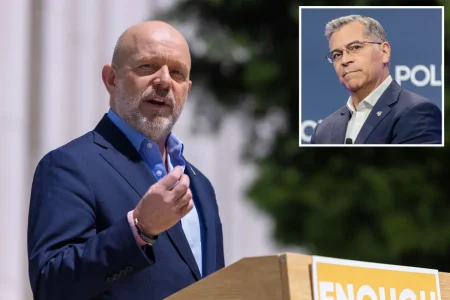
Escalating the drama, Hilton didn’t stop at tweets; he staged a confrontation, descending on the CHIRLA office in Santa Ana to amplify his message. Flanked by supporters and cameras, he declared, “Xavier Becerra cannot continue to accept support from a taxpayer-funded organization employing illegal immigrants to campaign for him.” The scene was charged, a mix of protests and chants that felt like a political theater piece, humanizing the ideological clash into visible emotion. Sharing a graphic on X, Hilton reiterated the CAL DOGE revelations: payments to undocumented individuals for political activity, all allegedly in breach of federal laws. It’s a bold gambit, positioning him as the watchdog in a narrative of oversight. His team now demands investigations—state and federal probes into potential labor violations and the misuse of funds. Picture the tension: advocates inside, calmly asserting innocence, while outsiders decry foul play. As someone剖析ing such standoffs, it evokes the raw energy of democracy, where personal stakes fuel public spectacle. Hilton’s actions aren’t isolated; they’re part of a broader playbook, using CAL DOGE as a tool to unearth what he sees as systemic abuse. The call for scrutiny targets not just CHIRLA, but the employers compensating unauthorized workers and the indirect boost to partisan causes. In this unfolding story, human elements shine through—Hilton’s determination mirroring the frustrations of everyday Californians skeptical of elite circles. The standoff symbolizes deeper divides, transforming accusations into calls for accountability, where symbols of authority clash with grassroots efforts. Becerra’s silence on specifics adds intrigue, leaving the air thick with unspoken defenses. It’s a testament to how one man’s crusade can ripple through a community, humanizing policy debates into lived confrontations that shape futures.
Amid this swirling controversy, Becerra maintains a lead in the polls, yet cracks are forming within his own party, adding layers to the gubernatorial saga. As a former Biden administration insider and Health and Human Services Secretary, Becerra embodies the Democratic establishment, but critics are voicing doubts. Xochitl Hinojosa, a seasoned former Justice Department official, took aim during a CNN panel post-debate, stating, “After working in Joe Biden’s administration, I do not trust Xavier Becerra to do that. I don’t think he’ll be able to stand up to Trump and lead.” Her words sting in a climate where national threats loom large, humanizing internal strife as a family feud turned public. With the June 2 primary approaching, Becerra’s campaign faces mounting pressure, deflecting allegations without diving into details, which fuels speculation about strategy and resolve. As someone reflecting on factional divides, it feels poignant—alliances strained by policy disagreements and personal ambitions. The CHIRLA imbroglio intersects with this, questioning Becerra’s judgment in accepting endorsements from entities under fire. Polling shows him ahead, but every leak erodes trust, reminiscent of fractured coalitions in California’s diverse tapestry. Stories emerge of supporters grappling with loyalty: immigrant families appreciating Becerra’s stance, yet wary of scandal; Democrats torn between unity and pragmatism. Hinojosa’s critique underscores fears of weakness against national foes, painting Becerra as unprepared for the spotlight. In this humanized drama, the race transcends personalities, delving into voter anxieties about representation and integrity. Becerra’s reticence invites narrative voids, where imaginations run wild with theories of hidden maneuvers. Amidst it all, California’s electorate watches, their hopes and apprehensions fueling a contest that mirrors America’s soul-searching—diverse, contentious, and undeniably alive. It’s a reminder that behind headlines lie real stories of resilience, ambition, and the quest for justice in a polarized world.