





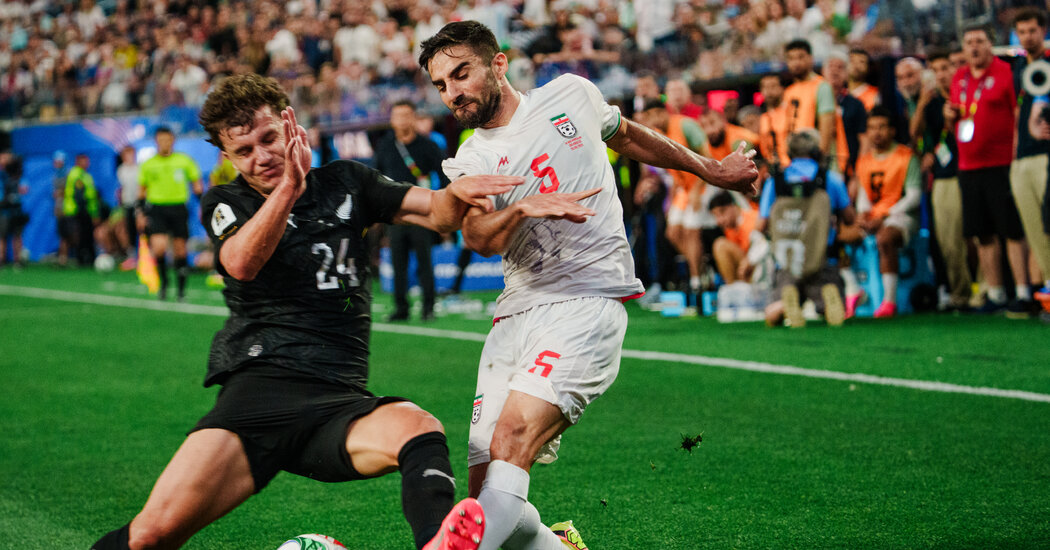
Over eighty thousand passionate soccer fans descended upon MetLife Stadium in East Rutherford, New Jersey, on a sweltering Saturday afternoon to witness the first of eight highly anticipated World Cup matches scheduled for the region. Yet, for the vast majority of these ticket-holders, the simple act of driving to the venue was an absolute impossibility due to strict transportation mandates. Under rigid security rules designed to manage the massive event, the World Cup Host Committee had severely restricted parking near the sprawling sports complex, forcing attendees to seek other ways of navigating the swampy, highway-ringed Meadowlands. The alternative options presented to fans, however, were both incredibly expensive and logistically daunting: they could purchase an exorbitant $98 round-trip train ticket from Midtown Manhattan—a price nearly eight times the standard NJ Transit rate—board a cramped yellow school bus operating as a $20 shuttle, or trust their luck with ride-share services like Uber, which offered no protection against aggressive surge pricing. The infrastructure was so hostile to pedestrians that public officials felt compelled to issue emergency advisories warning eager fans not to attempt to walk to the stadium, which is notoriously isolated by major highway corridors and tidal salt marshes. Eager to discover the fastest, least miserable, and most practical way to reach the pitch, four courageous journalists from The New York Times decided to stage an unscientific, head-to-head race from their Midtown headquarters. Braving a humid, triple-digit heatwave, they set off using four distinct modes of transportation—train, bus, personal bicycle, and ride-share—to document the physical reality, emotional highs, and deep frustrations awaiting hundreds of thousands of international visitors.
Taking up the mantle for public rail transit was reporter Stefanos Chen, who began his journey by plunging into the chaotic depths of Penn Station, which had been transformed into an exhausting maze of metal crowd-control barricades. To secure passage, passengers had to endure long, winding queues just to purchase a physical color-coded paper wristband—an essential, heavily guarded souvenir that served as their guaranteed ticket for the late-night journey back home. The financial markup was a major point of contention among traveling supporters, as the standard $12.90 round-trip fare to the Meadowlands had been drastically inflated to $98 to cover security and administrative overhead, resulting in nearly half of the train’s available capacity going completely unsold. Despite the corporate greed and heavy-handed crowd control, the emotional atmosphere inside the double-decker train was nothing short of magical once the doors closed and the air-conditioner kicked in. The train cars transformed into a vibrant, global block party where total strangers embraced, rival supporters traded friendly football chants, and Yasin Benhaddou, a talented Moroccan-American rapper from California, gave a high-energy impromptu concert in the mezzanine, rapping over a booming backing track to an ecstatic crowd. Following a seamless and organized transfer at the Secaucus Junction hub, the train rolled past the scenic green vistas of the New Jersey marshlands and arrived directly at the Meadowlands station. However, the ease of the rail trip ended abruptly at the platform, as passengers were cast out onto a vast, unshaded blacktop path that baked under a punishing sun, with ground temperatures registering a blistering 109 degrees. By the time Chen finally completed his fifteen-minute desert-like march to the stadium entrance, sweaty and dehydrated, his total travel time had clocked in at 1 hour and 23 minutes.
Meanwhile, reporter Christopher Maag’s journey on the official shuttle bus service quickly deteriorated into a grueling, multi-hour odyssey of structural dysfunction and driver confusion. The trip began on Manhattan’s East Side, where Maag joined an incredibly long, block-wrapping queue of international travelers waiting under the blazing afternoon sun to board a fleet of yellow school buses. At first, the operation seemed brilliantly coordinated; local traffic police had cordoned off 42nd Street, converting the bustling Midtown thoroughfare into an exclusive, high-capacity transit corridor that allowed the buses to dart through Times Square and plunge into the Lincoln Tunnel in record time. However, once the yellow bus emerged onto the New Jersey side of the Hudson River, the promised dedicated bus lanes vanished, and the vehicle became hopelessly trapped in a stagnant sea of gridlocked traffic. Sweated and desperate, the school bus driver eventually abandoned her official route, launching a chaotic, freelancing detour that took the passengers north on the New Jersey Turnpike, through a series of desperate U-turns, and down a confusing spaghetti bowl of industrial service roads. Inside the bus, passenger morale collapsed into a state of vocal panic as the driver repeatedly turned down streets that actively took them further away from the stadium, prompting riders to stand up and shout directions at the windshield. Ultimately, the driver conceded defeat, opening the doors on a random, dusty shoulder on the outer margins of the Meadowlands, forcing Maag and dozens of frantic fans to scramble down the highway and hike the final half-mile on foot, arriving at the turnstiles a mere fifteen minutes before kickoff after an agonizing 3 hours and 28 minutes.
For those committed to pure physical endurance, editor Wm. Ferguson and his athletic, twenty-something son rejected the quick ferry crossing as “cheating” and opted to conquer the nineteen-mile trek from Manhattan entirely on two wheels. Navigating the chaotic streets of Midtown, they quickly joined the Hudson River Greenway, heading north toward the iconic George Washington Bridge on a deceptively breezy afternoon that hid the severe physical toll of the 86-degree heat and high humidity. The true test of stamina began at the bridge, where a punishingly steep incline forced the cyclists to burn massive amounts of energy just to cross over into the steep, undulating hills of Fort Lee, New Jersey, where all bicycle-friendly infrastructure instantly vanished. The route soon turned highly perilous, forcing the father and son to navigate their bikes directly into a high-pressure, six-lane intersection at Routes 124 and 46, dodging lines of frustrated drivers before escaping into the quieter, industrial roads of the Jersey Meadowlands. As they drew closer to the stadium, the digital navigation apps mapping their route failed them, directing them onto a high-speed, multi-lane highway ramp where they had to slowly and nervously thread their bicycles through inches of space between bumper-to-bumper car traffic. Despite burning over 1,200 active calories, they successfully beat the digital time estimates and rolled up to Redd’s, a bustling local sports bar and unofficial fan hub that was charging an astronomical $225 for car parking. Enjoying a cold, celebrated beer among a joyful crowd of yellow-and-green clad Brazilian fans, Ferguson clocked their total cycling travel time at 1 hour and 53 minutes, though he wisely noted that for their return trip, they opted for a relaxing, $10.50 ferry ride from Weehawken that bypassed the highway madness completely.
While her colleagues battled the elements, navigators, and traffic jams, reporter Maria Cramer chose the luxury of high-priced convenience, hiring an Uber directly from Midtown Manhattan at 2:31 p.m. to test the absolute speed of a private ride-share. The mobile application initially predicted a highly expensive fare of $104.94 with an estimated arrival time of 3:15 p.m., a steep cost that highlighted the economic barrier to comfortable transit, but one that promised to bypass the exhausting physical trials of the bus and bicycle routes. The ride-share driver effortlessly cruised through the Lincoln Tunnel before weaving through the quiet, residential back streets of Secaucus, eventually joining Route 3 West, where traffic slowed to a sluggish ten-mile-per-hour crawl about four miles from the arena. Yet, unlike the stressful atmosphere of the lost school bus, the highway gridlock became a beautiful, festive parade; passionate Brazilian supporters draped green and yellow banners across their dashboards, while Moroccan fans slid open the doors of a large traveling van to wave flags, blast traditional music, and sing soccer anthems. Recognizing the approaching bottle-neck at the main stadium exit, Cramer’s driver executed a brilliant, expert lane change, sweeping past the idling traffic to enter a restricted stadium service road manned by overwhelmed parking directors in red vests. Seizing a quick window of opportunity, the driver dropped Cramer off in a vast gravel parking lot less than a mile from the stadium gates, bringing the final fare to $110.98. Standing on the warm gravel, completely cool and dry, Cramer checked her phone and realized she was the first of the four journalists to arrive, officially winning the race in exactly one hour.
The results of this journalistic race revealed a stark, uncomfortable truth about traveling to major events in the New York metropolitan area: speed is a luxury commodity, and those who cannot afford to pay high prices are often left to suffer the consequences of an unreliable transit network. The ride-share, though expensive, proved to be the fastest option, followed in order by the train, the bicycle, and the disastrously slow school bus shuttle. Yet, transit experts warn that these results are highly volatile and unlikely to remain consistent for future matches, as disappointing train ticket sales could convince more fans to drive, completely gridlocking regional highways and overflowing the parking lots at the neighboring American Dream mall, which charges $225 per space. Furthermore, the regional rail system remains highly vulnerable to summer infrastructure failures, with recent track fires and electrical issues at Penn Station forcing transit authorities to keep emergency ferries and backup buses on standby. The logistical challenge will only intensify for weekday afternoon matches, where stadium-bound crowds must directly compete with the punishing reality of New York’s standard rush-hour commute, at a time when yellow school buses are completely unavailable due to active school hours. Ultimately, the true test of endurance for the millions of international visitors traveling to the Meadowlands lies not just in the journey to the stadium, but in the long, dark journey back home; once the final whistle blows, eighty thousand exhausted fans must turn around and navigate the exact same dysfunctional, expensive system in reverse, participating in the most authentic local tradition of all: complaining about mass transit.