


On a warm summer afternoon in Boston’s historic Mattapan neighborhood, the promising life of an eighteen-year-old woman was abruptly and violently cut short, leaving a family shattered and a community searching for answers. It was approximately 1:52 p.m. on July 18 when Boston Police officers responded to a distress call reporting a shooting at a local residence. Upon arrival, first responders were met with a heartbreaking scene: Yoseliani Ann Marte Ocasio, a young woman with her entire future ahead of her, lay suffering from a devastating gunshot wound. Despite the rapid response of emergency medical personnel who rushed to save her, the severity of her injuries was too great, and she was pronounced dead at the scene. For weeks, those who loved Yoseliani hung onto the fragile hope that perhaps there had been some tragic mistake, or that the details surrounding her final moments would bring some semblance of peace. However, the harsh reality of her loss was officially cemented when the Office of the Chief Medical Examiner formally ruled her death a homicide. This official classification transformed the quiet neighborhood into an active crime scene and catalyzed a rigorous police investigation, thrusting a private family’s unimaginable grief into the public eye and highlighting the devastating toll of youth violence in urban communities.
At the dark heart of this tragedy is Elenie Ocasio, a mother now forced to navigate the agonizing reality of burying her teenage child, a grief that no parent should ever have to endure. Her pain is not silent; it is a raw, roaring demand for justice and accountability that echoes through the streets of Boston and demands to be heard. Speaking to local news outlet Boston 25, Elenie laid bare the visceral pain of a parent whose worst nightmare has become an inescapable daily reality. With fierce maternal love and indignation, she described the perpetrator as a “coward” who forcefully took her daughter’s life and abandoned her to die alone in the house. “He put a gun to her head, took my baby in that house and left her to die,” Elenie lamented, her words carrying the heavy weight of a broken heart and a soul in torment. She adamantly declared that her daughter did not deserve such a cruel and violent end, promising that the truth of what transpired that fateful July afternoon would eventually be revealed to the world. For Elenie, the pursuit of justice is not merely a legal process, but a sacred crusade to honor the memory of her daughter, ensuring that the person responsible for extinguishing Yoseliani’s bright light is held fully accountable under the law, and that her daughter’s name is never forgotten.
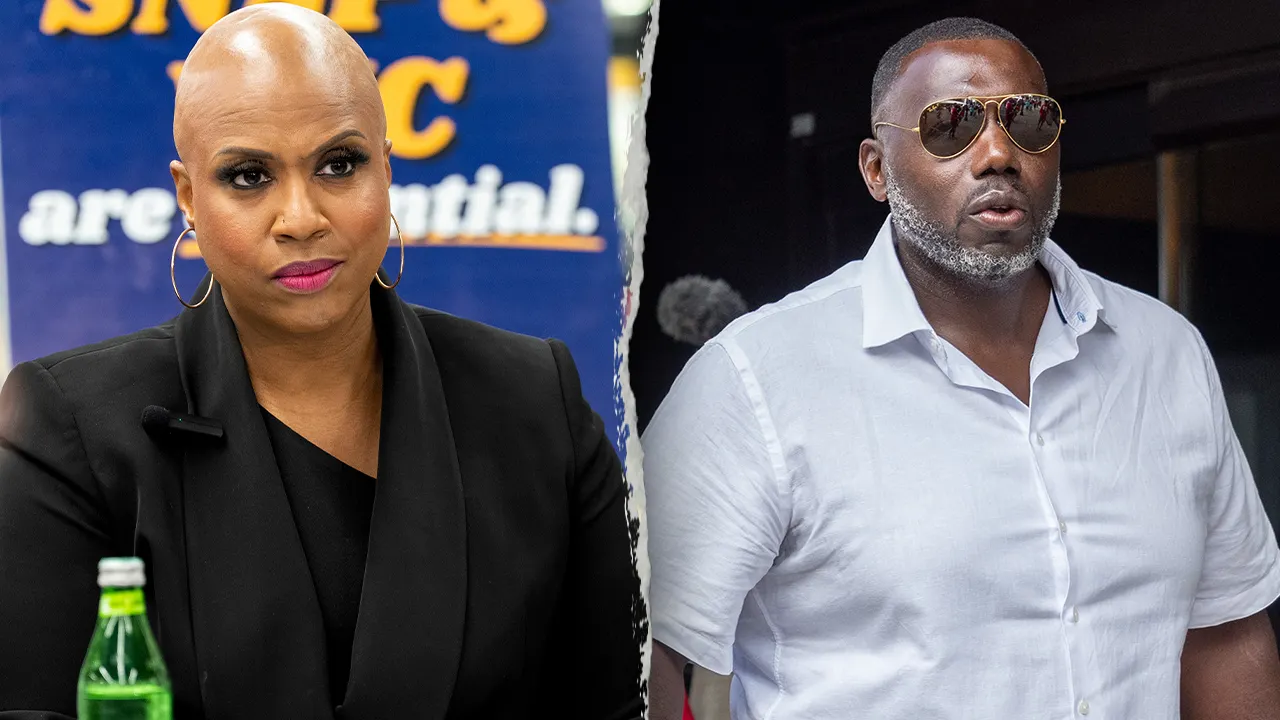
The investigation took an unexpected turn in the public eye when property records revealed that the home where Yoseliani’s body was discovered is owned by Conan Harris, the husband of prominent Massachusetts Congresswoman Ayanna Pressley. In the fast-paced, often sensationalized world of modern media, such a high-profile connection immediately drew intense journalistic scrutiny, threatening to overshadow the deeply personal tragedy of a young woman’s death. However, law enforcement officials and investigators have been quick to clarify that the ownership of the property is entirely incidental to the crime itself. There is absolutely no indication that either Harris or Representative Pressley had any connection to, knowledge of, or involvement in the violent incident that occurred under that roof. In a landscape where political names often dominate headlines, this detail serves as a stark reminder of how tragedies can intersect with the public sphere, requiring a delicate balance between reporting the facts of a property’s ownership and respecting the boundaries of an ongoing criminal investigation that centers on a victim who had no relation to the homeowners. It highlights the media’s responsibility to keep the focus where it truly belongs: on the loss of a young life and the search for her killer.
In the wake of the public disclosure regarding the property, Representative Ayanna Pressley released a deeply empathetic and personal statement addressing the tragedy. Rather than retreating behind sterile political rhetoric or official spokespeople, Pressley chose to speak directly from the heart, connecting with the tragedy not just as a lawmaker, but as a mother who understands the terror of losing a child. “I am devastated about the death of Yoseliani Marte, an 18-year-old with so many dreams ahead of her, her life cut short by domestic violence,” Pressley stated, framing the tragedy within the broader context of an ongoing societal crisis. She expressed how “beyond crushing” it is to imagine a young person violently losing their life, noting that as a parent of a teenager herself, the pain of such a loss is unimaginable. Pressley called upon the community to stand together in grief, to extend profound compassion to Yoseliani’s loved ones during this heartbreaking time, and to honor the young woman’s humanity. Her office also reaffirmed that neither the congresswoman nor her family had any involvement in the incident, steering the focus back to the victim and the urgent need to support the grieving family.
The classification of Yoseliani’s death as an act of domestic violence highlights a pervasive and often hidden epidemic that continues to claim the lives of young women across the nation. At eighteen, Yoseliani was at an age where the future should have been defined by academic pursuits, career goals, personal growth, and the slow transition into adulthood. Instead, her life became a statistic in the grim reality of intimate partner violence, which disproportionately affects young women of color in vulnerable communities. This tragedy underscores the urgent necessity of robust support systems, early intervention programs, and accessible resources for victims of domestic abuse, who often suffer in silence behind closed doors. By acknowledging the nature of Yoseliani’s death, community leaders and advocates hope to spark vital conversations about relationship safety, mental health, and the systemic failures that allow such violence to persist. The loss of Yoseliani is a somber reminder that domestic violence is not a private matter to be swept under the rug, but a public health crisis that requires collective vigilance, education, and unwavering support for those who feel trapped in abusive dynamics.
As the Boston Police Department continues to follow leads and piece together the timeline of events leading up to that tragic July afternoon, the memory of Yoseliani Ann Marte Ocasio must not be lost in the bureaucratic gears of the justice system or the fleeting cycles of the news. Her legacy deserves to be defined not by the violence of her final moments, but by the love she shared with her family, the dreams she harbored, and the potential that was stolen from her. For Elenie Ocasio and the rest of Yoseliani’s family, the path to healing will be long, arduous, and forever incomplete, but the hope remains that the truth will indeed “come out to light” as promised. Until justice is served, the community must continue to wrap its arms around the grieving family, offering the compassion and solidarity that Representative Pressley spoke of. In remembering Yoseliani, there is a collective call to action to protect the vulnerable, to denounce domestic violence in all its forms, and to ensure that no other mother has to stand before the world and plead for justice for a child taken far too soon.