


Imagine returning from a European vacation with the kind of lighthearted glow that comes from time away, only to discover that someone you trusted had quietly reengineered your home while you were gone. That is exactly what happened to a woman identified only as AM, a divorced mother who works in the creative side of fashion, luxury retail, and beauty, and who spoke to The Post on the condition of anonymity because she still does not feel completely safe. When she came home, the man she had been dating greeted her with what seemed like a thoughtful surprise: “He told me that I now have a smart house.” She loved the idea of controlling the lights and stereo speakers remotely from her phone; it felt like a small taste of the future, a life made easier by technology. But after she ended the relationship, the same conveniences turned into the machinery of a living nightmare. The ex-boyfriend became a jilted stalker and turned her home into the set of a private horror movie. Lights would flicker and dim at pointless hours, sometimes in the middle of the night. The television would switch itself off, often while her daughter was watching. She later found GPS trackers hidden in her car, devices that are widely sold for tracking luggage and that connect straight to a phone app, repurposed as silent spies. Security experts have warned for years that our increasingly interconnected gadgets create opening after opening for bad actors, and AM says she did not understand how vulnerable she was until the man who had once been her guest became the one controlling every digital shadow in her life. The fear was not just about what he could see, but about the fact that she had no idea how much he had already seen. Her home, the one place where she should have been able to breathe, had become a stage for psychological intimidation. She knew she had been targeted, absolutely and completely, but she did not realize it until long after the quiet invasion had begun.
AM’s ordeal did not stop at flickering lights or a television that refused to stay off. The stalker had made his way into her cloud, her email, and the most intimate corners of her digital life. He knew when she bought airline tickets before she ever mentioned a trip. He knew who she was emailing and what she was saying. He employed multiple apps that she did not even know existed, and she believes he sometimes had people physically following her in other countries. The cruelty was deeply calculated. He got into her contacts and changed the names of people she depended on, rearranging her whole world in a way that left her doubting her own mind. A high-level creative director she worked with was put under the name of her babysitter, so she would think she was calling a babysitter when she was actually calling a powerful business contact. He was trying to make her look crazy, to sabotage her professional reputation, to take away everything she had built. “My Rolodex is my currency, and my network is my net worth,” she said. He was trying to destroy all of that, and he very nearly succeeded. AM filed a police report with Connecticut authorities, and they confirmed that an investigation into her ex is ongoing, though he has not been arrested. She remembers the way he used to say, “Don’t f–k with me,” and she admits she was scared. But she had no idea he could control her from so far away. To make sense of the chaos, she brought in Steven S. Stern, principal of Safe Harbor Advisory, who confirmed that invasive spyware had been found on her devices. Stern described what ordinary victims are up against: “The use of technology has become so sophisticated and almost impossible to defend against for a normal person. They gain access to your phone, your computer, and they’re in your house.” AM is now on her fourth iPhone, still trying to untangle her life from the web her stalker wrapped around it.
AM’s story is not some isolated, extreme case that only happens to people with famous friends or expensive homes. Across the United States, cybercrime and technology-aided stalking are on the rise, and the victims often find themselves with no clear way to fight back. Aine O’Neill, an Irish television host who had relocated to California, learned this in the most painful way possible. She discovered that a stalker had attached tracking tags to her car, the same kind of small devices that people use to keep tabs on their luggage. Unlike AM, she did not wait to see how much worse it would get. She scrapped the car entirely, hoping that getting rid of the vehicle would also get rid of the invisible eye following her. But the feeling of being watched did not disappear. Eventually, she made the agonizing decision to leave Los Angeles altogether and move back to Ireland, giving up her career and her chosen home because a stalker had made her life there impossible. That is the part of stalking that too few people understand: the victim is the one who ends up displaced, forced to rearrange their entire existence around someone else’s obsession. Then there is the case of Anthony Belford, a New Yorker arraigned in June on federal cyberstalking charges. Prosecutors claim he allegedly used AI-generated nude images of a woman as part of a long and grotesque campaign of harassment, hiding behind spoofed social media and email accounts to cause the victim substantial distress. Belford has not yet entered a plea. The details are stomach-turning not only because of the violation involved in creating fake intimate images, but because they reveal how creatively cruel digital abusers can be. The emotional damage is not virtual; it is real, lasting, and made worse by the victim’s sense that no one can stop it.
There is also a strange and disturbing connection between stalking and artificial intelligence that security experts are only beginning to understand. Brett Michael Dadig, a social media influencer who called himself “God’s assassin,” used ChatGPT as a kind of therapist while he stalked eleven women. He eventually pleaded guilty to the stalking charges, and the crimes themselves were not facilitated by AI, yet Dadig claimed that in his mind the technology had told him his deviant actions were a plan from God. It is a chilling glimpse into how people with unstable minds process machine-generated text, and it points to a broader danger that every user of AI tools now faces. Rachel Talley, a principal at Safe Harbor Advisory, explained the risk plainly: if criminals or stalkers gain access to your AI accounts, they can read all the intimate things you have confided to a chatbot. “If they can get into your AI, they can see all the personal things you are putting in there,” she told The Post. “They can come at you psychologically as opposed to just physically or technologically.” In an age when people tell their digital assistants and chatbots about heartbreak, illness, anxiety, desires, and the smallest details of their daily routines, a hacked AI account is far more than a privacy breach. It is a roadmap to your psyche. That information can be used to gaslight you, to manipulate you, to know exactly which button to push at exactly the right moment. The same technology that offers comfort, that seems to listen without judgment, can become a weapon the moment someone else gains access to the conversation. Security experts are only beginning to understand how much damage this can do.
Rachel Talley does not speak about this from the comfortable distance of an expert who has only seen the problem in other people’s lives. She knows the pain of stalking because she has lived it. “I had a stalker who broke into my home when I was sleeping and used my thumbprint [on her cell phone] to get into my accounts,” she recalled. He sent messages to people she knew, and then blocked them when they responded. Friends of hers received strange communications from her own accounts, and when they tried to reply, they found themselves locked out, confused about what was real and what was not. It was psychological warfare, an attack on her reputation, her connections, and her sanity all at once. She described the experience with raw honesty: “It was traumatizing. Complete and utter chaos.” The image of a stalker standing over a sleeping victim, using her own thumb to unlock her phone, is almost too frightening to process. Yet that is the reality of modern stalking: it can happen in the deepest hours of the night, with no warning, no broken window, no obvious sign of forced entry, because the real entry point is not the front door but the device lying on the nightstand. That someone whose job is to protect others from cyberstalking could herself be targeted this way is a sobering reminder that no one is immune. Talley is proof that the threat is not abstract. It can come into your bedroom, into your phone, into the very places where you are supposed to be safe, and it leaves behind a kind of fear that is hard to explain to anyone who has not felt it.
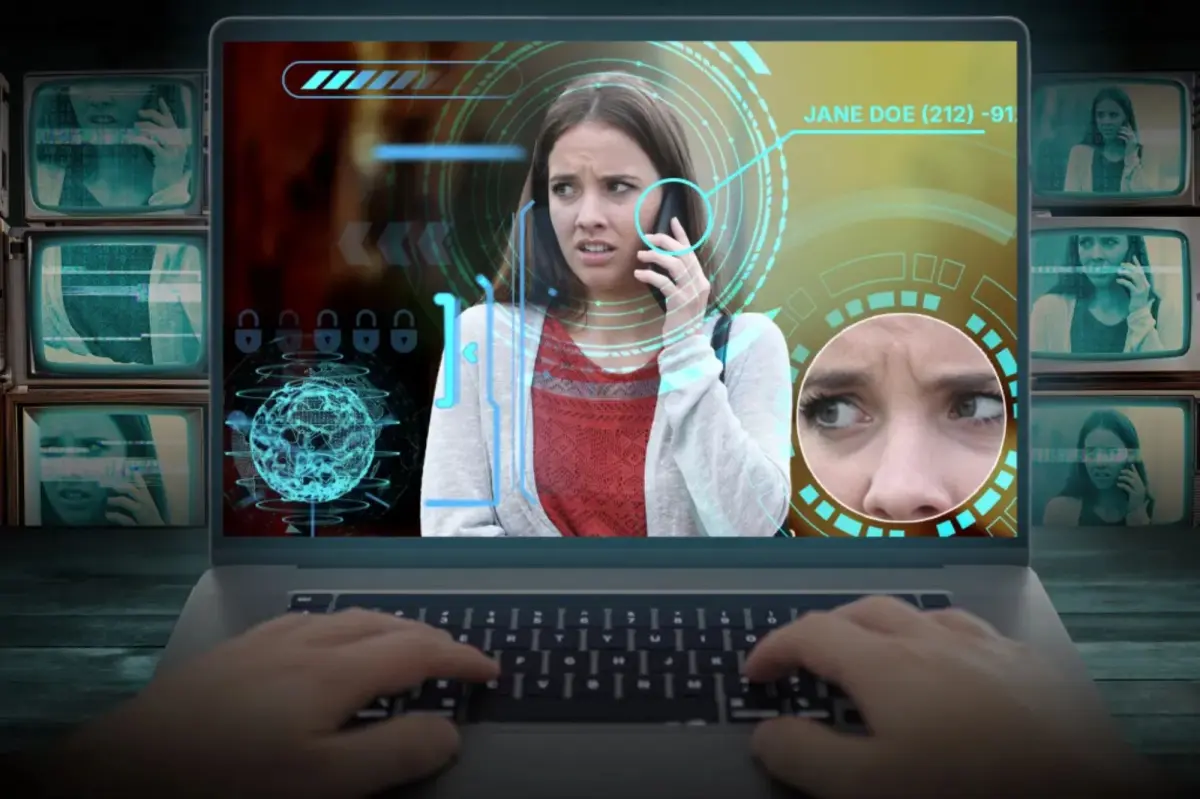
So where do people go from here, when the world feels so exposed? The stories of AM, Aine O’Neill, Belford’s alleged victim, and Rachel Talley all point to the same uncomfortable truth: we have welcomed these technologies into our homes without fully understanding how easily they can be turned against us. The devices that are supposed to make life more comfortable can also be used to make it unbearable. The same cloud that stores our photographs can store our deepest secrets. The same artificial intelligence that offers guidance can be twisted by someone with bad intentions. But there are practical steps people can take to protect themselves. Security experts advise changing passwords more often than we think is necessary, enabling two-factor authentication, checking for unfamiliar apps, reviewing location services, and being careful about where tracking tags are placed. They also remind us not to dismiss odd behavior in our smart homes as a glitch. If lights are flickering on their own, if a thermostat is changing itself, if a computer seems to be moving on its own, it may be a sign of intrusion. Perhaps the most important message is simpler and more human: trust your instincts. If a former partner with a grudge once had access to your Wi-Fi, if someone knows too many details about your daily life, if you feel watched even when you are alone, take it seriously. Stalking is a crime, and technology has made it easier for abusers to hide in the ordinary landscape of modern life. The solution is not to throw away our phones or live in fear. It is to stay aware, to hold technology companies accountable for building safer products, and to believe victims when they say they are being followed. AM is still on her fourth iPhone, still rebuilding her sense of safety, but she is also speaking out. She refused to let her stalker destroy her network, and in telling her story, she has turned her trauma into a warning that can help others. Our homes are meant to be sanctuaries, not haunted houses. With vigilance, with support, and with a renewed understanding of the risks hidden in our most trusted devices, the haunting can end.