





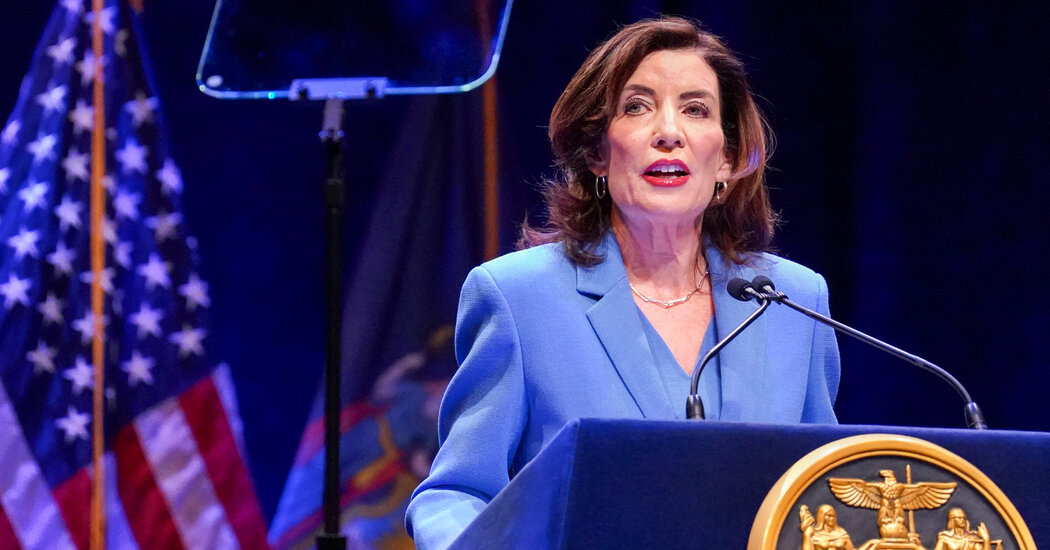
After nearly two months of tense negotiations, midnight sessions, and mounting public frustration, New York state lawmakers finally passed a massive $269 billion budget late Wednesday night. Marking the state’s latest budget approval in almost two decades, the delay deeply disrupted the legislative calendar, leaving lawmakers with just a single remaining week to scramble for their own local initiatives before the session ends. At the center of this legislative gridlock was Governor Kathy Hochul, a Democrat facing a challenging re-election campaign this fall, who used her executive leverage to push through controversial reforms on auto insurance, environmental reviews, and state climate goals. For everyday New Yorkers, this budget is far more than a dry collection of balance sheets; it is a sprawling, deeply personal blueprint that directly impacts how they protect their children online, how they afford their commute, and how safe they feel in their neighborhoods and places of worship. The resulting document represents a fragile compromise between immediate political survival and long-term vision, leaving many to wonder whether the human cost of these delays will find justification in the policies now set to govern their daily lives.
Perhaps nowhere is this compromise more evident, or more controversial, than in the state’s dramatic pivot on its climate commitments, where high-minded environmental ideals collided head-on with the immediate financial anxieties of working-class households. Under the ambitious 2019 Climate Leadership and Community Protection Act, New York had branded itself a national leader in environmental justice, yet a sobering reality check revealed the state was nowhere near achieving its green targets. To address this, the budget allocates a fresh $1 billion toward renewable energy development, but in a move heavily insisted upon by Governor Hochul, it also quietly rewrites the statutory fine print to make those goals much easier and slower to reach. Sensing that the steep consumer transition costs of green energy could alienate financially strapped voters just active at the ballot box this November, Hochul chose to prioritize immediate affordability over long-term atmospheric targets. This pragmatism drew intense fire from environmental advocates and progressive lawmakers like Assemblywoman Jessica González-Rojas, who passionately denounced the concessions on the Assembly floor, arguing that forcing vulnerable community members to choose between affordable utility bills and environmental survival is a deeply damaging, false choice. Meanwhile, Republicans countered from the opposite side, arguing that the rollback did not go far enough to lift the heavy regulatory burdens currently crushing local industries and everyday consumers.
The human element of the legislative battle was also vividly clear in the fierce struggles over public sector retirement security, pitting the psychological well-being of the state’s essential workforce against the long-term stewardship of public tax dollars. For over a decade, public employees had labored under the restrictive “Tier 6” pension structure—originally implemented in 2012 under former Governor Andrew Cuomo to save the state upwards of $80 billion—which forced younger teachers, police officers, and firefighters to work longer hours for significantly smaller retirement payouts than their older colleagues. This deep disparity fueled a severe retention crisis, leaving classrooms understaffed and emergency response units stretched thin as public servants left the profession in droves. This year, Albany finally relented to fierce labor organizing, revising Tier 6 to allow dedicated public workers to retire with dignity at age 58 instead of 63, a victory celebrated by New York State United Teachers president Melinda Person as proof of what united workers can achieve. Yet, this hard-won victory for working families comes with a staggering $550 million annual cost to state and local governments. This heavy fiscal reality drew sharp criticism from fiscal conservatives like Assemblyman Michael Fitzpatrick, who lamented that the massive pension sweetener would ultimately place a sour, expensive burden on the shoulders of ordinary taxpayers, suggesting that lawmakers chose their own political survival over the long-term economic health of the communities they represent.
This delicate balancing act between immense wealth and municipal survival is also playing out on the historic streets of New York City, where a gaping multibillion-dollar budget deficit forced local leadership to look directly to the state’s wealthiest residents for help. Mayor Zohran Mamdani repeatedly appealed to Albany for critical funding, ultimately securing a monumental $8 billion state assistance package over the next two years, alongside a brand-new tax surcharge targeting the opulent second homes of multimillionaires in the city. Designed to generate roughly $506 million annually, this progressive tax will roll out in two distinct phases, initially targeting luxury properties with a market value of $1 million or more with a surcharge between 4 and 6.5 percent. However, because the city’s traditional property tax valuation methods notoriously understate a luxury home’s true market value—exemplified by a Midtown penthouse value assessed at $4.2 million that recently sold for an astronomical $135 million—the city will transition to a fairer valuation system based on actual sales prices, with tax rates ranging up to 1.3 percent for properties valued over $25 million. While these progressive tax measures represent a significant step toward addressing systemic inequality, the budget also permits the city to utilize risky short-term financial strategies, such as delaying existing public pension payments, which will inevitably cost local taxpayers billions of dollars in interest over the coming decade.
Beyond the complex economics of public finance, the budget contains deeply personal provisions aimed at restoring human dignity and legal accountability within immigrant communities and courtrooms across the state. In a major milestone for civil rights groups, lawmakers successfully passed a long-awaited legislative package designed to restrict controversial tactics by Immigration and Customs Enforcement (ICE) agents, banning them from wearing masks that conceal their identities, requiring formal judicial warrants to enter hospitals, schools, and churches, and ending sharing agreements with local police. The legislation aims to give vulnerable, undocumented families a sense of security during their daily routines, even allowing individuals to sue ICE agents in state courts for constitutional violations, though immigration advocates remain concerned that informal police communication will continue to lead to unfair deportations. Simultaneously, Governor Hochul engaged in a high-stakes legislative brawl with the powerful trial lawyers’ lobby to reform the state’s skyrocketing auto insurance rates. By prohibiting individuals who are more than 50 percent at fault in a car crash from claiming pain-and-suffering damages and tightening the definition of “serious injury,” Hochul successfully curbed fraudulent claims, ignoring accusations of corporate favoritism to ensure that daily commutes become safer and more affordable for average motorists.
Finally, tucked deep within the thousands of pages of this massive budget are numerous micro-provisions that directly shape the social fabric, safety, and health of daily life in New York. For young consumers and parents, the state has introduced a steep tax on alternative nicotine products like Zyn pouches and implemented urgent new online safety protections to shield children from addictive algorithms on social media. Commuters will face a strict new crackdown on reckless driving, requiring those with 16 or more speeding tickets in a single year to install speed-limiting devices in their vehicles or face registration revocation, while environmental reviews have been streamlined to accelerate housing construction on previously developed land. However, the budget also delayed a highly anticipated commission to study reparations for descendants of enslaved people, highlighting the ongoing political difficulties of addressing historic racial injustices. Meanwhile, reflecting a society deeply on edge, the budget establishes a controversial 50-foot safety buffer around churches, temples, and community centers to protect worshippers from harassment and rising antisemitism. Supported by local champions like Assemblyman Jeffrey Dinowitz and opposed by free speech organizations concerned about civil liberties, this complex measure embodies the core spirit of the entire budget: a deeply human, profoundly complicated effort to navigate the fragile space between collective safety, individual freedom, and the daily pressures of modern life.