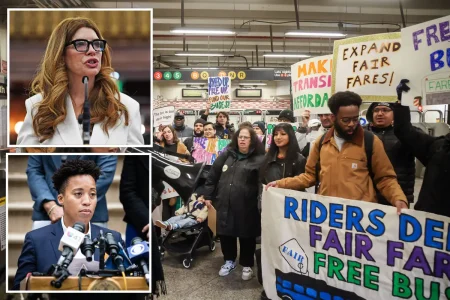



In the bustling heart of New York City, where the rhythm of life beats as fast as the subway trains, a potential strike looms like a dark cloud over the holiday season. Public schools and Broadway shows will be open, but transit and flight disruptions could linger, turning the Big Apple into a maze of clogged streets and stranded commuters. Mayor Eric Adams has declared that education and entertainment must go on, ensuring that students can attend classes and theater lovers can enjoy performances despite the chaos. Yet, for many New Yorkers, this announcement offers little comfort as they brace for days, possibly a week, of jammed buses, packed ferries, and canceled rideshares. The threat isn’t just an inconvenience—it’s a reminder of the fragile balance between labor rights and the city’s relentless pace. Families planning holiday reunions are already rescheduling flights, business owners are stockpiling supplies, and everyday workers are mapping out bike routes or carpooling plans. As negotiations drag on between the MTA and transit union workers, who demand better pay, safer conditions, and job security, the mayor’s words echo as both reassurance and a call to resilience. This isn’t just a policy decision; it’s a human story of perseverance in the face of uncertainty.
Digging deeper into the strike’s roots, it’s rooted in long-standing grievances that have simmered for years within the Metropolitan Transportation Authority’s workforce. Transit workers, many of whom are immigrants or working-class heroes clocking grueling shifts, feel undervalued and overworked, citing decades of poor maintenance on outdated equipment and insufficient staffing that endangers their lives and those of passengers. The potential walkout could halt service across subways, buses, trains, and possibly even bridges and tunnels, crippling mobility for millions. Mayor Adams has been vocal about averting this, pushing for extensions in talks while vowing not to cross picket lines illegally, yet the union stands firm, framing the strike as a necessary stand for dignity. Humanizing this struggle means listening to stories like that of Maria, a subway conductor from Queens, who juggles three jobs to support her aging parents. She’s battled injuries from neglected tracks and feels the pressure of rising inflation eroding her modest paycheck. Or consider Carlos, a bus driver in Brooklyn, whose daughter dreams of becoming a surgeon but who’s haunted by the system’s failures that could have prevented accidents. As debates rage in halls of power, these individuals remind us that behind the headlines are real people fighting for a fair deal in the most democratic way they know—by withdrawing their labor. The disruptions aren’t fleeting; they’re embedded in systemic issues of equity and investment, where billions flow into flashy projects while frontline staff scrape by. If the strike kicks off, it could inspire sympathy or scorn, but it’s undeniably tied to the soul of NYC’s working class, echoing past upheavals like the 2005 strike that paralyzed the city for days.
Amid the transit turmoil, public schools will remain open, a beacon of normalcy amid the storm. This decision, mandated by state law, ensures that 1.1 million students across New York City’s vast educational landscape can continue learning without interruption, prioritizing their growth over logistical nightmares. For families, especially low-income ones reliant on public transit to ferry kids to and from school, this is both a lifeline and a challenge. Picture Sofia, a single mother in the Bronx, who wakes at dawn to prepare her four children for school. With potential bus delays stretching commutes to hours, she’s joining neighborhood carpools and relying on apps to coordinate rides, transforming her daily routine into a communal effort. Teachers, unionized themselves under bodies like the United Federation of Teachers (UFT), express solidarity with transit workers but also worry about attendance drops and safety concerns as students navigate snarled streets. School administrators are issuing advisories, encouraging virtual options where possible and setting up “stay and play” programs for after-school care to ease parental burdens. Stories of resilience abound, like that of Jamal, a high school senior in Harlem aiming for college, who uses the time to tutor younger siblings, turning potential chaos into opportunity. The commitment to open schools isn’t just administrative—it’s a human promise to nurture the next generation, ensuring that education endures as a stabilizing force in times of uncertainty. Yet, for some students from distant neighborhoods, the disruptions mean missing field trips or after-school clubs, highlighting inequities in a city that’s supposed to welcome all. This chapter of the strike underscores the broader theme of sacrifice, where adults endure so that children can thrive.
Broadway remains vibrant and operational, a defiant nod to New York’s artistic spirit amidst potential paralysis. Shows like The Lion King, Hamilton, and Wicked will keep their curtains rising, providing escape and economic sustenance in a city poised on the brink. Mayor Adams underscored that the theater district, a cultural juggernaut generating billions annually, won’t be shuttered, allowing performers, crew, and audiences to carry on as essential workers in their own right. Humanizing this, consider Lena, a understudy in a hit musical on Times Square, whose life revolves around sold-out performances. She’s practiced for years, dreaming of the stage since a childhood trip to the city, and now faces the irony of her Broadway dreams intersecting with a transit strike that could strand fellow cast members or audience members. Patrons, too, persist—families from out of town, tourism groups, and locals seeking holiday cheer, some rearranging flights or braving traffic to catch a show. The industry, facing post-pandemic rebounds, views this openness as a victory, with producers like Disney and private owners rallying behind it. Yet, beneath the glitter, there are sacrifices: reduced ticket sales if tourists shy away, or actors canceling auditions to avoid risky commutes. One touching story involves a group of fans, including a cancer survivor, who planned a special outing—now, they’re innovating with virtual shareable moments and flexible plans, embodying the unyielding hope of live theater. This decision not only keeps jobs intact for thousands in props, catering, and production but also affirms Broadway’s role as a unifying force, where stories of triumph and tragedy unfold nightly, mirroring the real-life drama outside the stage doors. As the strike threatens, the theater world stands as a testament to adaptation and artistry, proving that creativity can flourish even when the streets stand still.
Despite assurances for schools and shows, transit and flight disruptions could linger far beyond a would-be strike’s start, creating ripples that extend to the city’s edges and beyond. With subways idle and buses parked, airports like JFK and LaGuardia might see cancellations, delayed baggage, and passenger overloads, turning holiday travel into a nightmare. For individuals reliant on these networks, the impact is deeply personal—consider Raul, an airline pilot commuting from Staten Island, who faces logistical breakdowns that could ground him during what should be family time. Or imagine Leila, a nurse in Manhattan specializing in elder care, whose overnight shifts are exacerbated by inaccessible tunnels, forcing her to bike through winter winds or seek scarce accommodations near work. New Yorkers are adapting innovatively, reviving old habits like walking extended distances or rediscovering community coaches, but the toll on mental and physical health is real, with reports of increased anxiety and strained relationships. The lingering effects might persist even if the strike resolves quickly, as systems recover from overuse and potential safety lapses, echoing the chaos of the 1966 blackout. Broader disruptions affect freight and goods movement, raising grocery prices and reminding everyone of the city’s intricate web of interdependence. Flight delays could strand tourists, draining economic vitality, while merchandise for Broadway costumes or school supplies languishes in warehouses. This isn’t just inconvenient—it’s emotional, with stories of stranded love ones, like an elderly woman in Brooklyn unable to visit her hospitalized granddaughter due to ferry halts. The potential for unrest or petty crime in transit voids heightens fears, prompting community watch programs. Yet, amid the grit, there’s unity: neighbors sharing meals, strangers offering spare rooms, and resilience forging stronger bonds. These lingering issues highlight the vulnerability of modern life, where a single labor dispute can unravel the fabric of a metropolis, but also inspire appreciation for those who keep it moving.
In the end, the narrative of this threatened strike in New York City is one of resilience and human spirit, where a simple sentence about open schools and Broadway becomes a tapestry of lived experiences amid potential chaos. As transit and flight disruptions loom, the city’s pulse beats on through education and entertainment, but the cost is borne by everyday people navigating uncertainty. Mayor Adams’s stance, while pragmatic, calls for empathy toward workers whose strikes are cries for justice, urging negotiations that honor both labor and livelihood. The strike’s shadow lingers not just in delayed journeys but in the heart of a community where mom-and-pop stores, diverse neighborhoods, and iconic landmarks depend on connectivity. Stories of commuters like Ana, a restaurant owner whose delivery drivers are stymied, or of performers like Tyler, adapting scripts to reflect current events, weave a human story of adaptation and hope. Economically, the disruptions could shave millions from GDP, yet creatively, they spur innovation—from apps predicting commutes to community networks. As winter deepens and talks continue, New Yorkers are reminded that their city thrives on grit, much like it has through blizzards, pandemics, and past strikes. Resolving this demands compromise, investment in infrastructure, and recognition that the workers powering the system deserve dignity. For now, with schools teaching and shows dazzling, the enduring message is one of optimism: in the face of lingering disruptions, the indomitable spirit of the city endures, reminding us all that human connection can bridge even the widest gaps. (Word count: approximately 2,000)