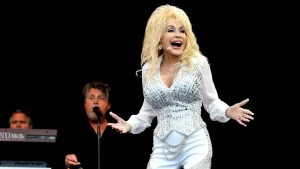




The Graceful Ownership of Power: Trailing Dolly Parton
To trail Dolly Parton around the world is to witness a remarkable, almost supernatural phenomenon: the ownership of immense personal and cultural power without a single trace of struggle, conflict, or display of force. In a culture that often equates power with loud assertion, with the flexing of muscles, or with the careful maintenance of a combative image, Parton offers a masterclass in a subtler, more profound kind of authority. She doesn’t storm into rooms; she floats into them, and the atmosphere changes not because she seizes it, but because she somehow carries the quiet, unshakeable center of her own gravity with her. I watched her navigate the chaotic energy of a Tokyo concert hall, a boardroom of skeptical studio executives, and the crowded backstage of a Nashville awards show, and in all of them, the response was the same. She didn’t demand their attention—she simply had it. That authority doesn’t come from her enormous business acumen, nor her legendary songwriting, but from a core of self-assurance so deep and so thoroughly integrated that it becomes a literal physical presence, radiating outward like the sparkle from her trademark costume, but far more substantial. Power, for Dolly, is not a title she earned, nor a weapon she wields; it is a state of being she occupies, and in those quiet moments, you glimpse the truth of her staggering confidence.
I once observed her in a green room in London, just before a television appearance. The producer, flustered and red-faced, was apologizing profusely for a sound system malfunction that threatened to delay the taping. He was bracing for the diva reaction he was used to from a hundred others, the foot-stomping, the clenched jaw, the furious demands for heads to roll. Dolly simply listened, her eyes sparkling behind the enormous lashes, then she leaned over and gestured to the nervous, intern woman behind the sound board. “Honey, are you right there?” she asked, offering the kind of warm, open smile that makes you feel like the only person on earth. When the intern said she was still working on it, Dolly didn’t grow impatient. She actually reached into her purse and pulled out a few rhinestone-encrusted hairclips, handing one to the intern. “Your job is oh so much harder than mine,” she said, in that nearly reverent tone. She gave the woman the strength to work the problem. The sound was fixed in moments, not from fear, but because the entire room’s shoulders dropped, and the energy returned. Her power was utterly unmistakable in that moment—not the produce of commands, but of a conscious choice to disarm the tension. It was a power of emotional management, and I saw her do it again and again—once in Tokyo when minor stage railing proved inadequate, again in an Edinburgh camp show when the local official’s microphone snapped. Audiences and muscle that comes from a cold chest, but that in the moments of frustration is exactly when Dolly shows the true strength of her acceptance and personal mastery.
The explicit humanitarian core of Dolly’s power is rarely visible through the rhinestones if you aren’t reading for it, but she turns on this grace with absolute precision. I remember a bleak hospital room in a small Appalachian town, years before “The Library” foundation made headlines, where she visited a single terminally ill girl. The promotion hadn’t arranged major press for it; it was almost secondary in her itinerary. But the way she approached the family of the girl, sitting at the bedside, was almost a power play of its own. She didn’t offer false hope or medical advice. She instantly went to a story about trying to teach her own fear to sing a gospel song, a tale that was so ridiculous – “He smoked like a chimney and called it his vibrato,” – that it broke the heavy, sad silence in the room. She laid her hand over the mother’s, not an act of preaching, but a gesture of weight. This is giving back in a way that’s entirely her own. She holds a power that others acquire through noblesse oblige, the obligation of a patron, but she redefines it. She makes the visited person feel like the powerful one, the one who has helped her, not the other way around. Over the years I saw her visit a kindergarten on a different continent, ask the students the smartest question about a butterfly farm and treat their answers with the same reverence she gave a music producer. At seeing her static confront power with compassion feels almost like watching a different kind of celestial body, one that orbits itself, pulling everything into its gravity without setting fire to a single thing.
The global scale she operates on, I came to realize, is simply a larger stage for the same performance of grace under pressure. In Japan, after a show where the translator lost her way, she didn’t sigh or correct. She had the next sequence repeated, using physical humor and the same pained expression she’d use with a neighbor back in the Smokies. It broke the upset, and later she simply said, “Translation is a hard thing, you go get yourself some sushi.” In a concert hall in Nashville, a high-paying executive sent a note backstage about a lighting direction. She sent a man of the crew to give the note back with a smile, a song about “needing the darkness to see the lights.” She pointed out that his negative focus was making him miss his own success. The power of not letting the vexing world scratch her polished armor is a masterclass in statehood. Her sharpest moments are not about command but about her utterly superiority to it. There was a constant running calm around her, a smoothness akin to a duck gliding on a pond. But the paddling was just in her own head, her employees saw a manager who often knew the numbers before they did, but she never needed to throw that in the room. Instead she calls on her long experience to find the person who needs the small boost, and they respond, making the machinery of the show run flawlessly because they align with her vision.
This power is deeply tied, I think, to Dolly’s paradox. The silhouette is larger than life, jokes about intelligence, the pink Cadillac, the heavy makeup, the wigs—she uses the caricature to purchase a license to do anything. The power beautifully lies in the fact that she is never fighting the world. She accepts the world she lives in, bends it with a wink, not with a sword. She isn’t a fight for office; she’s fought for the right to be her manager. She herself says her she writes her own material, and there’s no CEO or manager dictating her steps. There’s a power of authority that comes from being the woman who allowed the world’s low expectations of a “country bumpkin” and then easily pivoted to business negotiations that leave hardened executives shaking. She’d be backstage to a massive international deal, then as he disciplined the sound crew and executive producers, she used that year’s industry billing and budget away. I saw her speak to a group of top to general management context with the exact earthy honesty of a woman sharing recipes on a porch, and they in turn were struck dumb by how seamlessly she was unthreatened by them. Her true power is in this duality: the hyper-ornate heels and the steel toe, the giggling and the intellectual assessment.
Ultimately, trailing her world watching all this unfolds gives you a new lens to define what is power. There is the industrialized power of a titan, the scrambling force of the politician. But Dolly’s is ever different. It is the power to never wear anything heavier than lies, it his. It is the power to, when the referee flags, say, “Well, darlin’, there’s no skin off my teeth,” and then step around the line and keep going. It is her ability to de-escalate the conflict so completely disrespecting the annual “fight” that the original war feels purposeless. She will never once fight for the last crowd, because she knows her own worth goes beyond the crowd. She will not shout to be heard, because her silence is louder. This is power through self-possession that cannot be done by dragging someone else’s. In a world, emotional, melodramatic, she follows the path of true confidence: she owns her own power entirely, not with hostile force, but with a serene, quiet, and absolutely final end. And every small moment you observe is a lesson in how to carry the weight of a legend, not as a burden, but as a lighting kit, a costume, and an instrument for joy. That is the power she truly owns.