

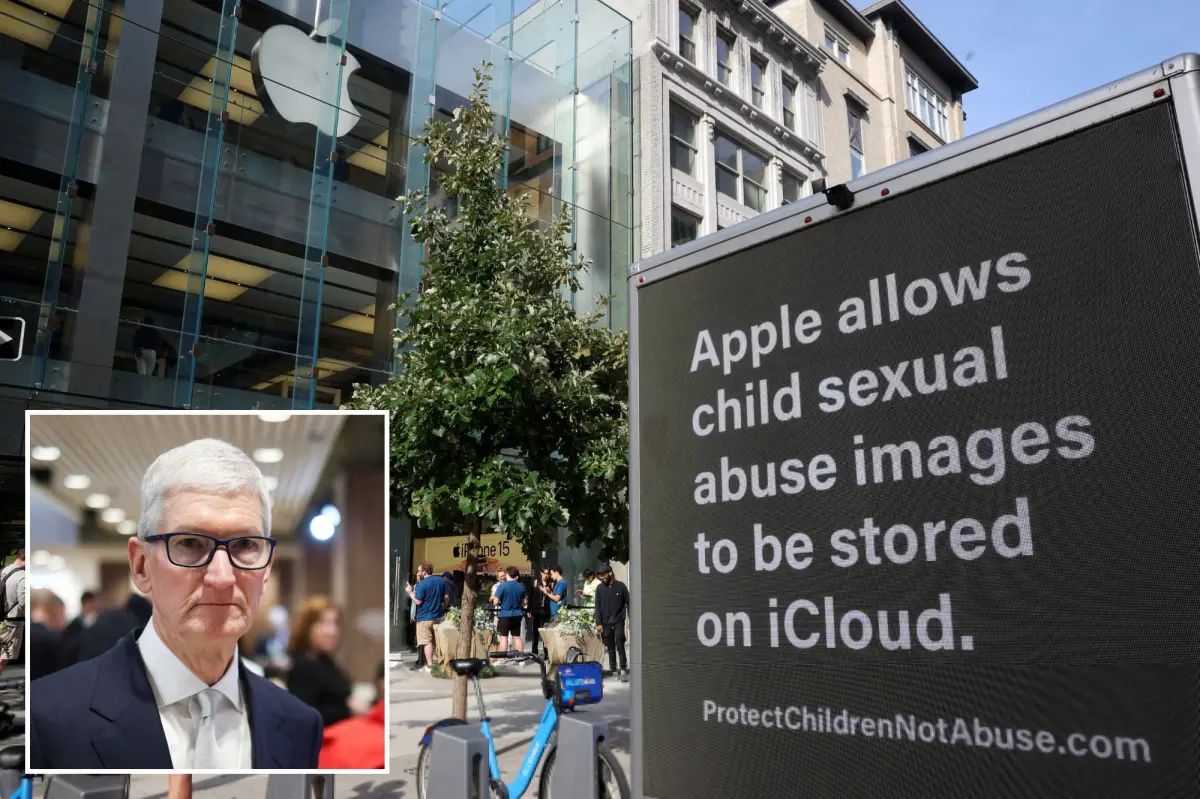
In the heart of West Virginia, where rolling hills and community values run deep, a dedicated public servant named Attorney General JB McCuskey took a bold stand against a tech giant that many consider a beacon of innovation. On a crisp Thursday morning, he filed a lawsuit in Mason County Circuit Court, accusing Apple of turning its iCloud service into what internal company messages chillingly described as “the greatest platform for distributing child porn.” McCuskey, a Republican committed to protecting the vulnerable, argued that Apple had put user privacy ahead of child safety in a way that allowed horrific child sexual abuse material to flourish unchecked. This wasn’t just about business policies; it was a human tragedy. As he put it in a heartfelt statement, these images were permanent scars of trauma for children, revictimizing them each time they were shared or viewed. He called Apple’s inaction “despicable and inexcusable,” a stark condemnation from someone whose job is to uphold justice in a state where families hold tight to their moral compass.
Apple, ever the polished defender, responded with a statement emphasizing their ongoing efforts to protect users, especially kids. They highlighted features like Communication Safety, which automatically intervenes when nudity is detected in Messages, shared Photos, AirDrop, or even live FaceTime calls, blurring sensitive content to shield young eyes. The company portrayed themselves as innovators battling elusive threats, claiming these tools were built with safety, security, and privacy at their core. Yet, beneath the surface, there was reluctance to go further. Apple had once considered scanning images but backed off after fierce debates over privacy invasions, fearing government misuse for censorship or targeted arrests, as Reuters reported. This tension between protecting digital freedoms and stopping predators created a real dilemma for engineers and executives alike, who grappled with how to honor individual rights without enabling harm. For parents across America, this explained the anxious nights wondering if their children’s photos were safe in the cloud.
Digging deeper into the lawsuit, McCuskey’s office pointed to a damning text from Apple’s then anti-fraud chief in 2020, which bluntly stated that the company’s priorities made iCloud the top spot for child porn distribution. This wasn’t hyperbole; it was a candid admission from within. The state sought not just symbolic apologies but real change: statutory and punitive damages, plus a court order forcing Apple to implement stronger detection measures and safer product designs. To humanize the stakes, imagine a single mom’s nightmare realizing her daughter’s innocent images might be mixed with something monstrous online. Apple’s approach contrasted sharply with competitors—at least until 2022, they didn’t scan all files on iCloud, and data wasn’t end-to-end encrypted then, allowing warranted access by law enforcement. But even that shifted; Apple planned full encryption, only to abandon it after FBI pushback, highlighting the tug-of-war between tech progress and investigative needs.
The saga intensified with Apple’s ill-fated NeuralHash initiative in August 2021, a tool meant to detect child abuse material by scanning images locally before uploading, balancing privacy with prevention. Security experts criticized it for potential false positives, and privacy advocates raised alarms, fearing it could pave the way for broader government surveillance—a slippery slope in a world where data is power. Just a month after launch, Apple delayed it, and by December 2022, canceled NeuralHash entirely, opting instead for full end-to-end encryption on iCloud. The state of West Virginia argued NeuralHash was flawed, easily evaded, and inferior to other methods, allowing abusive content to sync undetected. It was a reminder of the constant innovation battle: engineers toiling to create safeguards, only to face ethical quandaries. For everyday users, this meant trusting apps with their most personal moments, while knowing that somewhere, a child might still suffer because of gaps in that trust.
Comparisons with tech giants like Google, Microsoft, and Meta underscored the divide. Those companies actively checked uploads against databases from the National Center for Missing and Exploited Children, flagging known identifiers of child sex abuse material. Apple lagged behind, with only 267 reports to the center in 2023, dwarfed by Google’s 1.47 million and Meta’s 30.6 million. Federal law mandated such reporting, yet Apple’s paltry numbers painted a picture of complacency. This disparity hurt—federally mandated or not, why prioritize privacy so fiercely when it endangered the innocent? Parents might empathize, wondering why one company’s cloud felt like a sanctuary while another’s left doors ajar. McCuskey’s lawsuit echoed similar grievances from victims, amplifying voices long silenced by trauma and shame.
Echoing the state’s case, a proposed class-action lawsuit filed in late 2024 in California federal court by individuals depicted in such images mirrored the pain and outrage. They alleged Apple facilitated this horror, suing for accountability. Apple swiftly moved to dismiss, invoking Section 230 of the Communications Decency Act, a shield protecting online platforms from liability for user-generated content. It was a legal fortress, but for those affected, it raised questions about corporate accountability in the digital age. As families healed from revictimization echoes, McCuskey’s fight symbolized hope—a reminder that even against sprawling tech empires, one state’s resolute voice could push for systemic change, ensuring children’s screams were heard over the hum of data servers. In summing up this unfolding drama, it’s clear the battle between innovation and morality continues, affecting real lives from boardrooms to bedrooms, demanding we weigh privacy against the unbreakable human rights of the young and vulnerable. The outcome remains uncertain, but the dialogue it sparks might just forge a safer future for all internet users. As we reflect on these events, it’s essential to remember the human faces behind the headlines: the children whose trauma persists in digital shadows, the parents grappling with fear, and the officials tirelessly seeking justice. This isn’t just about corporations; it’s about safeguarding innocence in an increasingly connected world, where every upload carries profound weight. Ultimately, the push for better safeguards reflects society’s growing recognition that technology must serve humanity, not vice versa. Families everywhere are left pondering the true cost of convenience, hoping for pivotal shifts that protect the next generation from unseen predators lurking in code.<|reserved_81|>As we delve into the broader implications, it’s hard not to feel a pang of empathy for those navigating this fraught landscape. Take, for instance, a single father in West Virginia who entrusts Apple with family photos, only to later hear about such accusations—his trust shaken, wondering if his kids’ memories are mingling with darkness. McCuskey’s lawsuit isn’t isolated; it taps into a national unease about tech’s role in society. Beyond the legal jargon, stories emerge: another lawsuit by victims in California, battling stigma and seeking reparations, their lives forever altered by images that defy deletion. Apple’s invocation of Section 230 feels like a bureaucratic wall, but it underscores a system where profit motives sometimes eclipse ethical imperatives. For developers at Apple, this must be a soul-searching moment—balancing mission statements with real-world harm. Privacy is sacred, yes, but when it enables revictimization, as McCuskey’s words poignantly illustrate, the scales tip toward urgent reform.
Moreover, the human angle extends to law enforcement officers who rely on tools like warrants for unencrypted data. Imagine detectives piecing together cases, thwarted by encryption that seals away clues to rescue more victims. Apple’s pivot to full encryption post-2022, after scrapping plans due to FBI complaints, highlights this friction—a dance between progress and protection. Yet, the state’s claims reveal a chilling reality: without robust scanning, iCloud acts as an unwitting archive for abuse, undeterred by the “greatest platform” label from within. Parents, educators, and advocates advocate for NeuralHash’s cancelled potential, seeing it as a missed opportunity against evasion tactics. It’s a narrative of innovation derailed, not by technology’s limits, but by fear’s paralysis. As societal outrage builds, could this spark a renaissance in ethical AI, where machines detect harm without infringing freedoms?
Transitioning to the empathy for afflicted families, the lawsuit’s seek for punitive damages resonates deeply. These aren’t abstract numbers; they’re demands for atonement from a company ostensibly devoted to magic and safety. Victims in the California suit, representing countless unnamed survivors, embody resilience amid hurt, turning personal agony into collective advocacy. Apple’s low reporting figures aren’t just stats—they’re a metric of silence, where millions of alerts from competitors contrast sharply. One wonders how executives rationalize this disparity: is user trust worth the price of overlooking laws mandating diligence? The revictimization McCuskey describes is visceral, imagining a child’s first violation compounded by endless digital echoes. This case humanizes tech debates, urging us to consider generational trauma in every policy decision.
On the other hand, Apple’s perspective merits nuance—crafted by a team dedicated to “innovating every day,” as their statement affirms. Communication Safety, with its automatic blurs and interventions, represents genuine strides for familial peace of mind. Security experts who critiqued NeuralHash for inaccuracies sought to protect against unwarranted intrusions, echoing historical fears of mass surveillance akin to Orwellian dystopias. Governments worldwide eye such tools for broader control, a cautionary tale from realms like China or Russia. Yet, when privacy shields abusers, as alleged, it becomes a moral quagmire. Apple’s abandonment of scanning foes this dilemma head-on, prioritizing individual sovereignty, but at what emotional cost to society? Families using iCloud find solace in its seamlessness, but now question if innocence is truly safeguarded.
The narrative broadens to competitors’ vigilance, where Google and Meta’s proactive checks against NCMEC databases embody a proactive ethos. Their voluminous reports paint a picture of accountability—1.47 million from Google alone in 2023, versus Apple’s scant 267. It’s not mere competition; it’s a commitment to humanity, scanning uploads without sacrificing encryption fully. Microsoft joins this vanguard, flagging identifiers swiftly. For West Virginians, where coal-country roots value straightforward action, this disparity ignites frustration. McCuskey’s Republican stance aligns with community protectors, viewing Apple’s excuses as corporate overreach. But soften the lens: Apple’s leaders, perhaps torn between idealism and pragmatism, weigh billions of users against rare horrors. Humanizing this, it’s a story of ethics in overload, where engineers dream of perfect balances, yet reality intrudes with abuse’s unforgiving toll.
Finally, this lawsuit’s ripples could redefine accountability, pushing tech giants toward transparency. As Apple mulls dismissals under Section 230, survivors’ voices amplify, challenging immunity for user content. It’s a David-vs-Goliath dynamic, where a state’s resolve confronts a device’s ubiquity. For the average person, it prompts reflection: how does one balance privacy with protection in a hyper-connected era? Families might adopt more vigilant habits, advocating local reforms. Ultimately, McCuskey’s closure—that these images are “a permanent record of a child’s trauma”—caps a human tragedy begging resolution. If successful, it might catalyze industry-wide change, ensuring iCloud evolves from platform to protector. In closing, this tale is a poignant reminder: behind screens and lawsuits lie lives affected, urging collective empathy and action to bridge the gap between technology’s potential and profound human needs. As debates rage, the hope lingers for a world where no child’s pain echoes in silence.