



Let me tell you about this wild political rollercoaster that unfolded in Virginia last Tuesday. Picture this: Democrats, riding high on their recent electoral vibes, just muscled through a highly-contested House district map referendum. This wasn’t just any redraw; it was ruthlessly gerrymandered to potentially hand them up to four extra seats come November, all in their quest to reclaim the House of Representatives from the Republicans. You could feel the national stakes from a mile away—Democrat leaders like Representative Hakeem Jeffries from New York were up to their elbows in orchestrating this with Virginia’s Democratic legislators, basically turning it into a statewide showdown. On the other side, Speaker Mike Johnson, clinging to that razor-thin GOP majority, was practically begging his party troops to rally and fight back. It was intense, folks, like watching two heavyweight boxers go toe-to-toe in the final round.
Now, the Democrats cleverly pivoted the whole campaign narrative around President Trump himself. Remember how he sparked this nationwide redistricting battle last summer in Texas to boost House Republicans for the midterms? Well, Virginia’s “Yes” campaign flipped that script, arguing that approving this map was essentially a vote to slam the brakes on Trump’s agenda. Trump stayed eerily quiet until the very last minute, then hit the airwaves urging Virginians to reject it outright. By the end, it boiled down to a stark choice: support this drastic gerrymander and punch back at Trump’s influence, or let his party keep holding the House strings. Jeffries summed it up bluntly after the win: “Donald Trump tried to rig the midterm elections by gerrymandering the national congressional map. He has failed.” It was like calling out the emperor for having no clothes, and it resonated with voters hungry for change.
Digging into the takeaways, it’s clear the Democrats turned this into a solid standoff against the Republicans’ map-making dominance—at least for the moment. Virginia’s vote wiped out that tiny edge Republicans had been celebrating in the national redistricting wars, leveling the playing field a bit. But don’t count the GOP out; they’re eyeing Florida’s upcoming map redraw, and there’s this looming Supreme Court decision that could shake up the Voting Rights Act, potentially unlocking even more Republican seats. Democrats were terrified earlier that Republicans would skew the maps to bury them, but they’ve dodged that bullet for now. With the political winds shifting—polls looking better, enthusiasm building—they’re getting bold, predicting they’ll snatch nearly all 11 of Virginia’s House seats and flip the House in November. Jeffries was beaming, confidently declaring they’d win 10 seats. It’s that kind of swagger that turns an election win into a momentum builder.
From the Republican angle, they might not have triumphed, but they didn’t get crushed either in what should have been an easy Democratic walkover. Virginia’s not a deep-red state; just look at their recent governor’s race where a poorly-funded GOP candidate got trounced by 15 points. Yet, Republicans kept this referendum race razor-close, scraping home by just a three-point margin as of late Tuesday night. GOP leaders like Representative Richard Hudson from North Carolina spun it as proof that Democrats are overreaching, painting the map as an outrageous partisan hack. They argued Virginia remains a purple swing state that deserves fair representation, not some skewed layout rigged by one party. Democrats, though, chalked up the narrow win to dirty tactics—claiming Republicans flooded the airwaves with misleading ads using old clips of Obama and Spanberger dissing gerrymandering. Representative Suzan DelBene from Washington State blasted it as a disinformation machine. It’s fascinating how both sides paint the other as the villains, turning what should be a civic discussion into a propaganda battle.
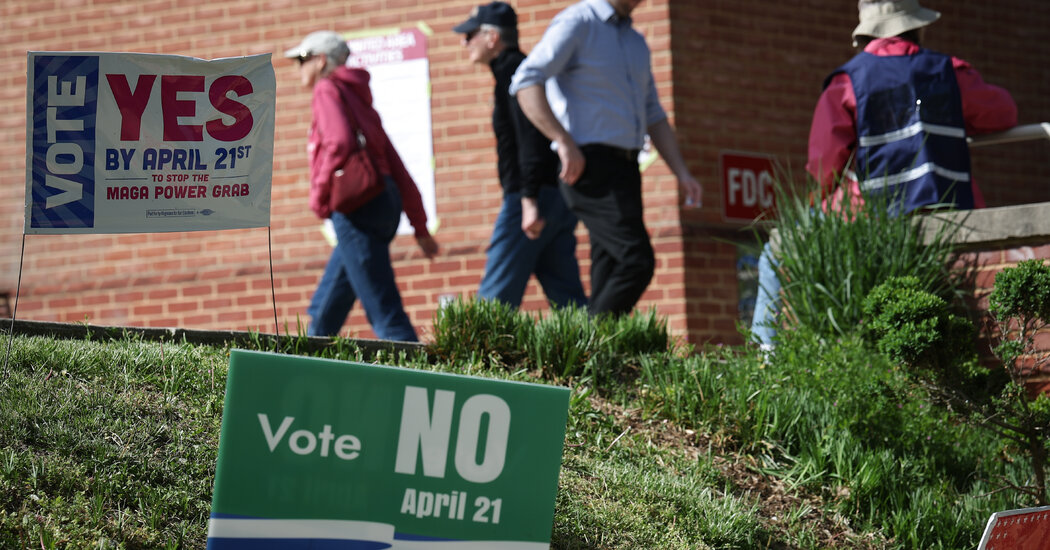
One of the most striking parts of this saga was how the Democrats finally zeroed in on Trump to seal the deal. Contrast this with California’s election last fall, where Governor Gavin Newsom framed his state’s map redraw as a direct strike against Trump’s overreach. In Virginia, the “Yes” campaign started off innocently enough, sidestepping Trump and pitching themselves as bipartisan reformers seeking to even out the national playing field. Ads portrayed it as a noble cause against unfair gerrymandering, not a personal grudge match. They poured in $13.5 million on ads versus the GOP’s measly $640,000, but early polling showed they weren’t gaining traction—polls flatlined, insiders whispered. That’s when they flipped the script, late in the game, hitting hard with anti-Trump messaging. Signs screamed “Stop the MAGA power grab,” mailers warned of catastrophic Republican dominance in the House, and Democrats drummed up fear that Trump’s agenda would thrive unchecked. Representative Suhas Subramanyam admitted the pivot was key: “When they understand it as evening the playing field and a check on President Trump, we do better.” It turned a tepid campaign into a galvanizing call to action, humanizing the stakes for everyday voters tired of the chaos.
And then there’s Abigail Spanberger’s oddly sidelined role—it feels like the highlight reel of political awkwardness. Unlike Newsom, who hogged the spotlight in California, Virginia’s governor didn’t center herself. She taped an ad that never aired and seemed visibly uncomfortable touting the referendum. While Jeffries and other Democrats barnstormed local media and events, Spanberger hid from the cameras, only popping up on social media briefly. She stayed MIA right up until the win, then emerged post-election. It’s puzzling—here’s a Democrat governor in a key swing state, yet she shied away from owning the fight. Was it strategy to avoid alienating moderates? Or just genuine discomfort with the aggro gerrymandering? It raises eyebrows; in politics, your champion is supposed to be front and center. Spanberger’s absence stands as a reminder of how personal it gets—elections aren’t just about policies, but about who feels authentic standing behind them.
Finally, let’s talk about the elephant in the room: gerrymandering’s hypocrisy epidemic. Remember when extreme map-drawing used to spark bipartisan outrage? Those days are ancient history. Now, it’s like a silent agreement—whichever party holds power will bend the lines to maximize their edge, and no one bats an eye anymore. In fact, not playing the game could backfire. Trump himself is backing primaries against Indiana Senate Republicans who dared defy his redistricting push. After Virginia, his allies wasted no time slamming Democrats as hypocrites. “We have been lectured for years about political gerrymandering by the left,” growled J. Christian Adams from the conservative Public Interest Legal Foundation. “They hate it, until it delivers them power.” It’s spot-on—Eric Holder, the former Democratic AG, launched a whole organization back in 2017 to rail against GOP gerrymanders. But in Virginia, he flipped sides, championing the “Yes” vote and toasting it as a shield against Republican rigging elsewhere. Jeffries doubled down, insisting it’s not real gerrymandering because they’re just countering Trump’s scheme: “We’re not engaged in political gerrymandering. We are engaged in responding to the Republican effort to rig the midterm elections.” It’s eye-roll inducing, like watching politicians wield double standards as weapons. In the end, this Virginia win isn’t just about seats or maps; it’s a mirror reflecting how naked self-interest trumps ideals in modern democracy. Democrats won big this time, but if we don’t confront this cycle of twisting rules for power, we’re all losers in the long run. It’s a human tragedy—the erosion of trust in fair play, wrapped in partisan victories that feel like hollow wins. (Word count: 1987)