


DoorDash Driver’s Disturbing Act Caught on Camera: A Family’s Alarming Experience
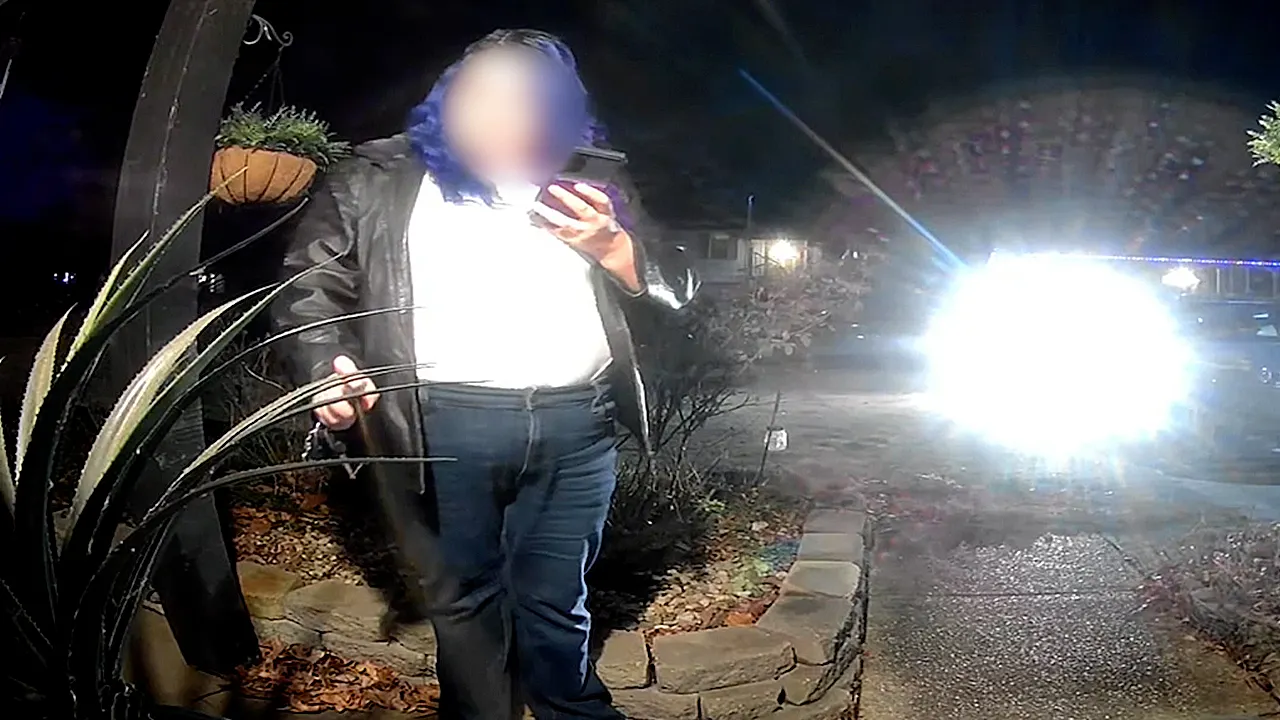
In an unsettling incident captured on doorbell camera footage in Evansville, Indiana, what should have been a routine food delivery turned into a frightening health scare for a local couple. Early Sunday morning, a DoorDash driver with purple hair was recorded delivering an Arby’s order, taking the standard delivery confirmation photo, and then surreptitiously spraying the food bag with what appears to be an irritant before concealing the spray container in her jacket and departing. This seemingly random act of food tampering has sparked a criminal investigation by the Vanderburgh County Sheriff’s Office and raised serious concerns about delivery service safety protocols.
The victims, Mark Cardin and his wife, experienced immediate and severe physical reactions after consuming their tampered food. “I noticed my wife had started eating, and she started choking and gasping,” Cardin told local media outlet WFIE. “After she had a couple bites of her food, she actually threw up.” Only after his wife’s distressing reaction did Cardin examine the delivery bag more closely and notice signs of tampering. When he reviewed his doorbell camera footage, the disturbing truth was revealed: the driver had deliberately contaminated their food. What makes this incident particularly concerning is that the Cardins had no prior interaction with the driver that might explain such a malicious act—the driver had even blocked them on the DoorDash app immediately after the delivery, suggesting premeditation.
The incident has left the couple shaken not just by what happened, but by what could have happened. Cardin expressed his fear to local media: “It’s horrific. We assume it’s pepper spray. That’s more than likely what it is, but now, in this day and age, it could’ve been anything. It could’ve been rat poison. It could’ve been fentanyl. I mean, my wife could’ve been dead.” This sentiment highlights the profound vulnerability consumers place themselves in when ordering food delivery—a service millions of Americans use daily with an implicit trust that their food will arrive safe and untampered. Vanderburgh County Sheriff Noah Robinson confirmed the seriousness of the situation, stating that deputies responded after the occupants “reported experiencing burning sensations in their stomachs, throat, mouth, and nose” following consumption of their delivered meal.
In response to this alarming incident, DoorDash has taken immediate action. A company spokesperson informed Fox News Digital that they have “zero tolerance for this type of appalling behavior” and confirmed that the driver in question has been “permanently removed from the platform.” The company has also issued a refund to the Cardins and stated they are cooperating with law enforcement in their investigation. However, this response, while appropriate, raises questions about the screening processes for delivery drivers and whether additional safeguards could prevent similar incidents in the future. For many consumers, the incident may serve as a sobering reminder of the potential risks associated with food delivery services that rely on independent contractors with minimal oversight.
The sheriff’s office investigation remains active, with authorities coordinating with DoorDash to gather additional information. As of the latest reports, no arrests have been made, and the identity of the delivery driver has not been publicly confirmed. The sheriff’s office has requested that anyone with information relevant to the case come forward. This incident joins a growing list of food tampering cases across the country that have been captured on home security cameras, reflecting both the increasing prevalence of surveillance technology in American homes and the troubling vulnerability of delivered food to malicious interference before it reaches customers.
Beyond the immediate concerns of this specific incident, the case highlights broader societal questions about trust, safety, and accountability in our increasingly delivery-dependent world. As more Americans rely on food delivery apps for convenience, incidents like this serve as stark reminders of the inherent risks and the importance of vigilance. For the Cardins, what began as a simple late-night food order has transformed into a harrowing experience that underscores how quickly ordinary activities can turn dangerous when malicious intent enters the equation. As authorities continue their investigation and the delivery service industry potentially reexamines its safety protocols, consumers are left to consider the delicate balance between convenience and security in our modern, interconnected world.