





Tragedy and Resilience in Venezuela: Inside the Desperate Search for Survivors After Devastating Twin Earthquakes Strike
The Sudden Nightmare: How Two Seismic Jolts Shattered Venezuela’s Urban Centers
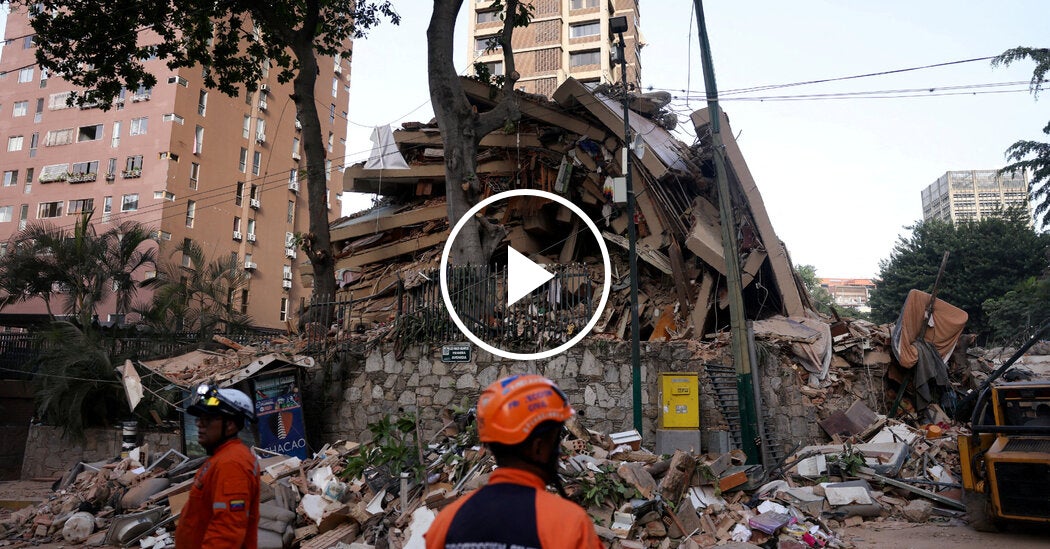
When the first violent tremor rippled through the Earth beneath Venezuela on Wednesday, June 24, 2026, it felt to many like an isolated, terrifying aberration—a sudden convulsion of the ground that sent residents rushing into the streets in a frantic search for safety. Yet, before the initial panic could even begin to settle, a second, equally devastating earthquake tore through the region, completing a catastrophic double-blow that has left the nation’s northern urban centers reeling in ruin. The twin earthquakes, striking in quick succession, transformed bustling metropolitan landscapes into chaotic disaster zones in a matter of minutes, causing multi-story apartment complexes to pancake, arterial roadways to crack open, and ancient brick facades to spill onto crowded thoroughfares. As the dust slowly settled under a hazy June sky, the sheer scale of the disaster became painfully clear: entire neighborhoods had been rendered unrecognizable, power grids were completely severed, and communication networks lay silent. In Caracas and surrounding coastal municipalities, the air was quickly filled with the deafening wails of sirens, the desperate shouts of citizens calling out for missing family members, and the ominous sound of shifting concrete as fractured buildings threatened to collapse entirely under the strain of continuous, shuddering aftershocks.
              +--------------------------------+
              |  VENEZUELA TWIN EARTHQUAKES    |
              |       (June 24, 2026)          |
              +---------------+----------------+
                              |
     +------------------------+------------------------+
     |                                                 |
     v                                                 v
+——————+ +——————+
| FIRST JOLT | | SECOND JOLT |
| – Initial Panic | | – Structural Ruin|
| – Escapes Begin | | – Pancaked Homes |
+——–+———+ +——–+———+
| |
+————————+————————+
|
v
+——————————–+
| URBAN CRISIS & RESCUE |
| – Severed Power & Comms |
| – Collapsing Infrastructure |
+——————————–+
Battle Against the Clock: The Gritty Reality of Urban Search and Rescue
 ========================================================
 EMERGENCY DISPATCH: CARACAS METROPOLITAN RESCUE EFFORTS
 ========================================================
 [Phase 1] Rapid Grid Assessment & Thermal Imaging
 [Phase 2] Manual Extraction (Bucket Brigades & K9 Units)
 [Phase 3] Heavy Machinery & Structural Stabilization
 ========================================================
In the immediate aftermath of the twin disasters, a massive and highly complex urban search and rescue operation was launched across the hardest-hit sectors, mobilizing emergency responders, humanitarian organizations, and local volunteers in a frantic race against time. Clad in bright red and safety-orange jumpsuits, rescue crews equipped with heavy helmets, protective eyewear, and high-intensity headlamps descended upon the mountains of twisted rebar and pulverized concrete that once stood as vibrant residential estates. As night fell over the scarred landscape, these brave professionals worked alongside ordinary citizens under the harsh, artificial glare of mobile floodlights, meticulously searching for any signs of life trapped deep within the dark, suffocating cavities of collapsed structures. Using specialized sonic listening devices, highly trained canine units, and thermal imaging cameras, search teams would periodically call for absolute silence across the disaster sites, listening with bated breath for the faint sound of tapping, scratching, or muffled cries coming from beneath the heavy debris. Every bucket of rubble cleared by hand represented a fragile thread of hope, and despite the ever-present danger of structural instability and gas leaks, the rescue workers pushed forward through sheer exhaustion, driven by the profound knowledge that every passing second diminished the chances of pulling survivors out alive.
Voices Amidst the Ruins: The Intimate Trauma of Survivors and Seekers
Behind the sobering statistics of structural damage and casualties lie the deeply personal, harrowing stories of the men, women, and children whose lives were forever altered in the span of a single afternoon. For many survivors, the memory of the twin quakes is defined not just by the physical violence of the shaking ground, but by the overwhelming psychological terror of the unknown and the agonizing wait for news of loved ones who remain unaccounted for. Mothers stood helplessly on the perimeter of police cordons, their eyes red from crying, clutching photographs of their children and pleading with rescue workers to search the specific corners of collapsed apartments where their families were last seen. Those who were fortunate enough to escape the falling structural ruins shared harrowing accounts of running down crumbling stairwells, watching walls split open like paper before their eyes, and feeling the terrifying sensation of the floor dropping out beneath them. This collective trauma has cast a long, dark shadow over the affected communities, leaving citizens afraid to step back inside any intact buildings, forcing thousands to spend the night sleeping on open asphalt plazas, sports fields, and public parks, wrapped in thin sheets and united by a shared, trembling dread of the earth moving once again.
Tectonic Crossroads: The Seismological Underpinnings of the Double Shockwave
To understand the extraordinary violence of this disaster, scientists and seismologists point to the complex geological mosaic of northern South America, where the tectonic boundary between the Caribbean Plate and the South American Plate creates a highly active zone of seismic vulnerability. This region is cut by major geological fault lines, most notably the Boconó and San Sebastián fault systems, which run parallel to the Venezuelan coastline and have historically been the source of some of the continent’s most destructive natural occurrences. What made this particular event so unusual and exceptionally damaging was the phenomenon of “twin earthquakes”—closely timed, separate ruptures of nearby fault segments where the stress relieved by the first tremor almost immediately triggered a second major failure on an adjacent line. This double-tap seismic movement subjected urban buildings to two distinct cycles of violent, multi-directional ground acceleration; structures that managed to survive the first shockwave with minor, unseen structural cracking were completely deprived of their integrity, leaving them utterly defenseless when the second wave of energy ripped through their foundations minutes later. Seismological monitors registered numerous substantial aftershocks in the hours that followed, a stark reminder that the subterranean forces beneath the Venezuelan coast remain highly unstable and unpredictable as the earth slowly adjusts to this massive rupture.
| Earth Science Indicators | Primary Event (First Jolt) | Secondary Event (Triggered Rupture) |
|---|---|---|
| Fault System Involved | Boconó Fault Zone | San Sebastián Fault Zone |
| Ground Motion Type | Lateral Strike-Slip | Compressional/Vertical Shearing |
| Aftershock Frequency | High (First 12 Hours) | Extreme (Compounded Cycles) |
| Infrastructure Impact | Superficial/Severe Fractures | Complete Structural Pancaking |
Crises Intersecting: How Infrastructure Vulnerabilities Exacerbated the Calamity
+————————————————————-+
| INTERSECTING STRUCTURAL RISKS |
+————————————————————-+
| [A] Deteriorated Concrete & Poor Building Code Enforcement |
| |
| [B] Intermittent Hydraulic & Electrical Municipal Services |
| |
| [C] Lack of Localized Search & Rescue Heavy Equipment |
+————————————————————-+
The scale of the destruction caused by these twin earthquakes cannot be attributed to tectonic force alone; rather, it represents a tragic intersection of natural power and systemic engineering vulnerabilities that have developed over decades of economic and social challenges. In many of Venezuela’s rapidly expanded urban centers, informal settlements and high-density apartment blocks were constructed with minimal adherence to modern seismic building codes, utilizing sub-standard concrete mixtures and inadequate steel reinforcement that offered little resistance to intense geological shifting. Additionally, the pre-existing strain on public utilities—such as intermittent water supplies, an unstable electricity grid, and a lack of localized emergency response equipment—severely hampered the initial phase of the humanitarian response, leaving local neighborhoods to rely on primitive tools and manual labor in the crucial first hours. Roads cracked by the quakes quickly became choked with debris and abandoned vehicles, blocking the passage of fire engines and heavy excavation machinery, while the lack of functional water mains made controlling localized fires an nearly impossible task. This disaster has laid bare the urgent need for comprehensive municipal reforms and structural reinforcement projects, proving once again that in seismically active regions, the quality of civil infrastructure is quite literally a matter of life and death for millions of citizens.
The Long Dawn After: Rebuilding Lives and Mobilizing Relief in a Shattered Landscape
As Venezuela transitions from the immediate chaos of search and rescue to the agonizingly slow process of recovery and rebuilding, the global community is beginning to mobilize in solidarity with the devastated nation. International aid organizations, regional neighbors, and domestic civil groups are working tirelessly to establish temporary shelters, field hospitals, and clean water distribution centers to prevent the outbreak of waterborne diseases and assist those left homeless by the structural collapses. The road ahead will undoubtedly be long and fraught with immense logistical, financial, and political hurdles, requiring a coordinated effort to not only clear millions of tons of debris but to rebuild shattered neighborhoods with safer, modern, and earthquake-resistant designs. Yet, amidst the profound grief and physical ruins of this disaster, the enduring spirit of the Venezuelan people remains remarkably unbroken, visible in the quiet acts of heroism performed by neighbors helping neighbors, the tireless dedication of volunteer rescue crews, and the shared resolve to restore their communities. This tragedy is a solemn testament to the destructive power of our dynamic planet, but it also serves as a powerful reminder of human resilience, community solidarity, and the unbreakable bonds that unite a society when faced with its darkest hour.