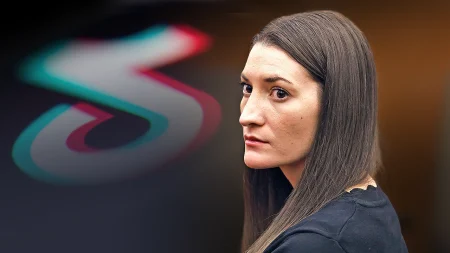



In the quiet aftermath of a sudden and shocking tragedy, the human heart demands a certain measure of swiftness from the machinery of justice, yet the legal reality is often a slow, grinding process of attrition. It was September 2025 when the political landscape was violently disrupted at Utah Valley University during a Turning Point USA event, culminating in the tragic assassination of conservative commentator Charlie Kirk. In an instant, a bustling college campus became a crime scene, and a family’s life was irrevocably shattered. For Erika Kirk, Charlie’s grieving widow, the months following her husband’s death have not been a time of healing, but rather an agonizing limbo. Stepping into the heavy, painful role of the designated victim’s advocate under Utah law, Erika has found herself fighting an emotional battle in a cold courtroom, desperately pleading with the state’s legal system to prevent the case from stalling. Under the state’s victims’ rights statutes, she has invoked her right to a speedy trial, a poignant reminder that behind the dry filings of prosecutors and the complex maneuvers of defense attorneys lies a real human being who is forced to relive her worst nightmare with every subsequent delay. For Erika, each postponed hearing is not just a calendar change; it is an open wound that cannot begin to heal until the truth is laid bare in the light of day.
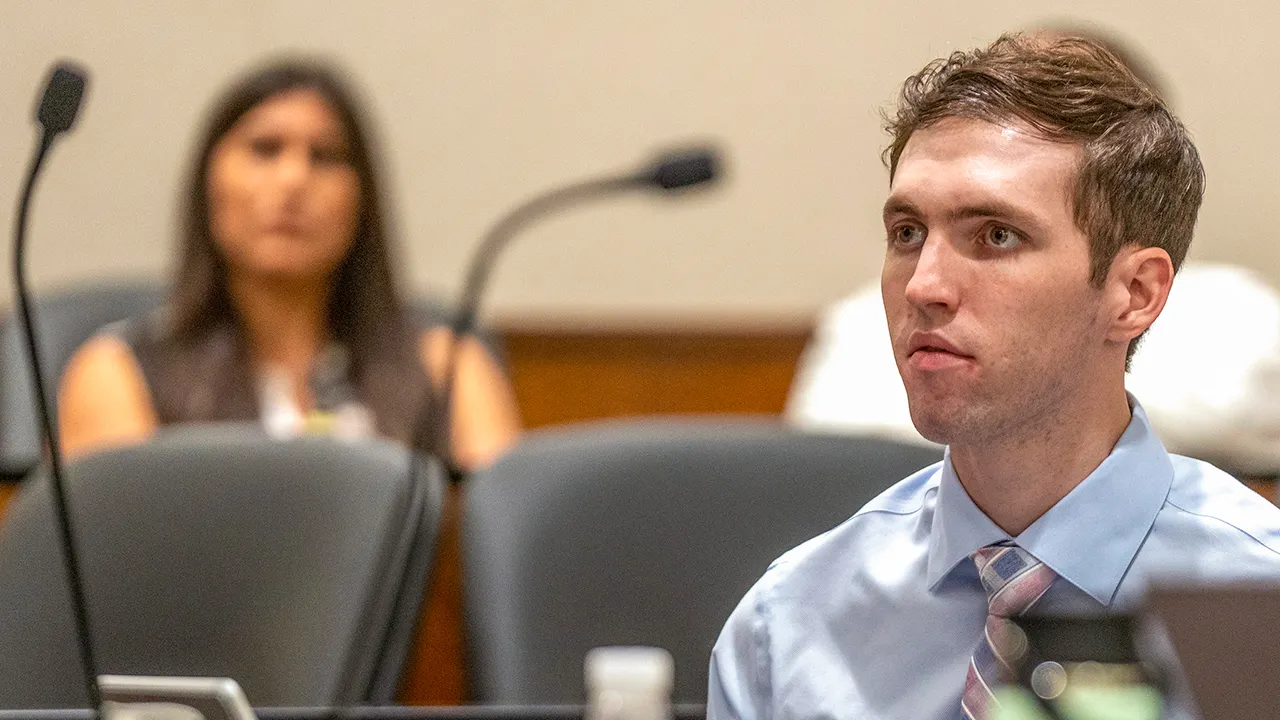
Standing in stark contrast to this urgent plea for closure is the deliberate, highly strategic defense mounted by the legal team representing 22-year-old Tyler Robinson, the young man accused of carrying out the assassination. Nearly nine months after Robinson’s arrest, the case remains frozen in its preliminary stages, with the defense continuously seeking to push the boundaries of the pre-trial timeline. The epicenter of the current legal gridlock centers on a fundamental dispute over public access and transparency in the courtroom. When Judge Tony Graf Jr. denied a defense motion to ban news cameras from the upcoming high-profile preliminary hearing, Robinson’s attorneys immediately mobilized, refusing to accept the ruling as final. Rather than preparing to face the evidence in court, they filed a formal appeal with the Utah Supreme Court, asking the state’s highest judicial body to intervene. To ensure that no progress is made while they await a decision, Robinson’s legal team petitioned Judge Graf to grant a formal stay of the entire proceeding, effectively attempting to put the trial on ice. To the defense, this is a necessary shield to protect a young defendant from the potentially toxic and prejudicial glare of the media spotlight. To those watching from the gallery, however, it appears to be a calculated mechanism designed to delay the inevitable day of reckoning.
This effort to halt the wheels of justice has met with fierce resistance from state prosecutors, who argue that the defense’s maneuvers are both legally deficient and deeply unfair to the victim’s surviving family. Deputy Utah County Attorney Christopher Ballard spearheaded the state’s formal opposition, filing a compelling Saturday brief that pulled no punches regarding the defense’s tactics. Ballard pointed out that under Utah criminal procedure, obtaining a stay during an interlocutory appeal is a monumentally high hurdle that requires the defense to meet three distinct, non-negotiable criteria. Specifically, the defense must demonstrate a high likelihood that their appeal will ultimately succeed on its merits, prove that they will suffer “irreparable harm” that vastly outweighs any harm to the prosecution or the public interest, and show that a delay is not detrimental to the community’s right to prompt justice. In his filing, Ballard argued forcefully that Tyler Robinson’s lawyers had utterly failed to satisfy even a single one of these elements, choosing instead to ignore the state’s established legal standards altogether. The prosecutor stressed that much of the damning evidence against Robinson has already entered the public domain through previous filings, rendering the defense’s panic over media exposure entirely moot. By trying to stall the preliminary hearing, Ballard asserted, the defense is merely dragging out the community’s trauma without any legitimate legal justification.
The battle over cameras in the courtroom touches upon a profound, centuries-old democratic debate regarding the delicate balance between a defendant’s right to a fair trial and the public’s right to an open, accountable judicial process. This tension has drawn major media organizations directly into the fray, with a powerful coalition of local and national outlets, including Fox News and Fox News Digital, preparing to file their own legal responses to Robinson’s high court appeal. The media’s argument is rooted in the belief that when a crime of this magnitude occurs—the assassination of a prominent public figure on a public university campus—the community has an absolute, constitutional right to witness justice being administered in real-time. Banning cameras, advocates argue, does not protect the defendant; rather, it breeds suspicion, feeds conspiracy theories, and alienates a public that deserves to see that the rule of law remains robust and impartial. In high-stakes cases such as this, the courtroom is not merely a venue for legal debate, but a theater of collective storytelling where a community seeks to understand how such a tragedy could happen. By keeping the doors open and the cameras rolling, the court ensures that the proceedings remain transparent, allowing citizens to judge the fairness of the trial for themselves.
While the fight over media access dominates the headlines, the defense has simultaneously launched a parallel, highly technical legal assault aimed at rewriting the rules of the preliminary hearing itself. In a massive, 51-page constitutional broadside, Robinson’s defense team has petitioned Judge Graf to block the use of hearsay testimony during the hearing, boldly claiming that Utah’s long-standing laws allowing such evidence are unconstitutional. In Utah, as in many states, preliminary hearings are not meant to establish absolute guilt beyond a reasonable doubt, but are instead designed as a lower-threshold proceeding where prosecutors must show “probable cause” to justify holding a defendant for trial. To streamline this process and protect witnesses, state law permits law enforcement officers to testify about statements made to them by others. By challenging the constitutionality of this practice, Robinson’s lawyers are attempting to force a dramatic showdown that could have sweeping ramifications for the entire Utah judicial system. This maneuver has transformed a single assassination case into a battleground for systemic constitutional reform, adding another layer of complexity that threatens to push the actual trial even further into the distant future, leaving those who seek immediate answers caught in a labyrinth of academic legal theory.
Ultimately, the clash in this Utah courtroom reflects the classic, agonizing struggle between the cold, procedural perfection sought by defense attorneys and the raw, human need for resolution. As the preliminary hearing remains suspended—having already been pushed from mid-May to the week of July 6—Tyler Robinson has still not entered a formal plea of guilty or not guilty, preserving a state of frustrating non-resolution. For a grieving widow like Erika Kirk, and for a public deeply jarred by political violence, the courtroom serves as the only place where some semblance of peace can eventually be reclaimed. Christopher Ballard’s filings serve as a voice for this collective exhaustion, reminding the court that the public interest is actively harmed when trials are permitted to drift indefinitely. If the Utah Supreme Court chooses to intervene, the state will adapt, but the prosecution maintains that the pressure must remain on the defense to face the charges in an open, public forum. As Judge Graf prepares to rule on these competing motions, the eyes of the community remain fixed on the bench, waiting to see whether the legal system will continue to indulge the stalling tactics of an accused assassin, or if it will finally clear the path for the long, painful journey toward justice.