



Pentagon’s Troop Pullback: Reshaping America’s World War II-Era Footprint in Germany
The Announcement That Echoes through Transatlantic Ties
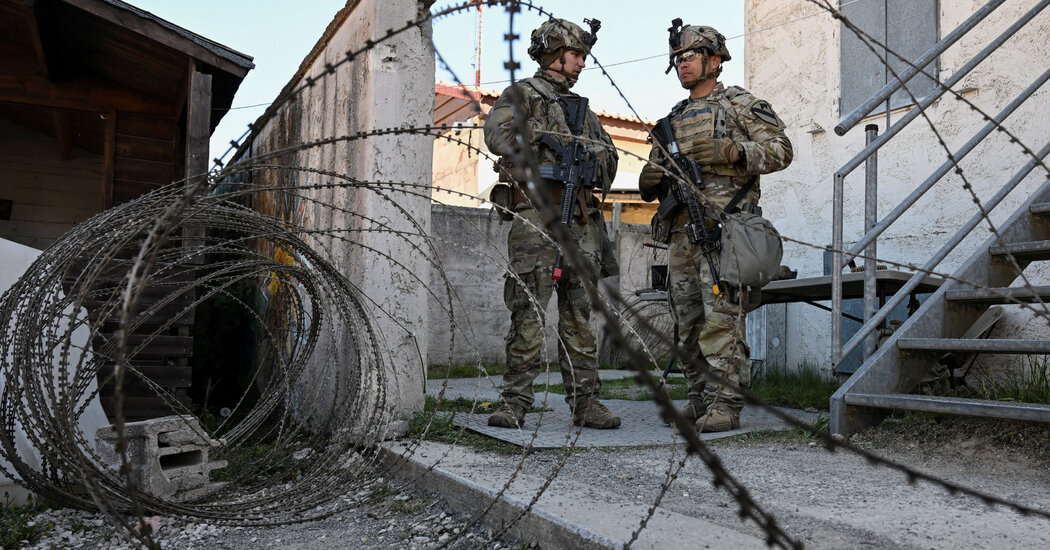
In a move that underscores shifting geopolitical priorities, the Pentagon unveiled plans on Friday to withdraw approximately 5,000 U.S. troops from Germany, a European ally that has recently clashed with President Trump over issues ranging from military spending to shared burdens within NATO. This decision marks a significant reduction in what has long been one of the largest American military deployments abroad, signaling a pivot after decades of Cold War-era commitments. Yet, even as thousands prepare to depart, tens of thousands of U.S. service members will remain embedded in the German landscape, maintaining a formidable presence that harks back to the immediate aftermath of World War II. Defense officials emphasized that the pullout aims to realign forces strategically, potentially bolstering readiness elsewhere amid evolving global threats. Critics and allies alike are watching closely, as this withdrawal—set to bring troop levels back to pre-2022 figures before Russia’s invasion of Ukraine—could reshape the U.S.-German alliance at a pivotal moment. Germany’s Chancellor Olaf Scholz quickly responded with a calibrated statement, affirming the enduring friendship while diplomatically noting the need for clear communication in military affairs. This isn’t just about numbers; it’s a recalibration that reflects broader debates on American engagement in Europe, with implications for NATO’s unity and the defense of the continent against rising tensions.
A Slice of Life: The Scale of America’s German Garrison
Germany stands as a cornerstone of U.S. military strategy overseas, hosting more than 36,000 active-duty personnel—a total eclipsed only by forces in Japan, according to data from the U.S. Defense Manpower Data Center. With roughly half of all American troops in Europe stationed here, the nation acts as a hub for operations that span the Atlantic and beyond. Think of it as a sprawling network: five of Europe’s nine U.S. Army garrisons call Germany home, creating a self-contained American ecosystem that includes schools, hospitals, and even fire departments catering not just to soldiers but to their families as well. The upcoming reduction of 5,000 troops—encompassing various branches like the Army, Air Force, Marines, Navy, Coast Guard, and Space Force—will shrink this footprint, yet leave a substantial contingent that underscores the Pentagon’s commitment. This doesn’t mean abandonment; rather, it’s a strategic adjustment to make room for rapid responses in other theaters, perhaps the Indo-Pacific or Africa. For months, analysts at think tanks like the Brookings Institution have debated the wisdom of such moves, warning that a diminished presence could embolden adversaries like Russia or China. On a human level, the shift affects thousands of lives—families who’ve made Germany their home amid picturesque villages and bustling military complexes. As one unnamed officer stationed in Kaiserslautern told reporters, “We’ve built communities here; pulling out feels like dismantling a family album.” This pullback, therefore, isn’t merely logistical; it’s a narrative of adaptation in an era where global power dynamics demand flexibility.
Historical Roots: From Nazi Defeats to Cold War Guardians
To understand the depth of U.S. military presence in Germany, one must rewind to the ashes of World War II. When Allied forces, led by American troops, claimed victory over Nazi Germany in 1945, they didn’t just liberate—they occupied key territories, establishing a foothold that would evolve into a permanent alliance. Garrison Wiesbaden, for example, began life on an abandoned Luftwaffe airbase, and today it serves as the nerve center for U.S. Army Europe and Africa. Fast-forward to the Cold War, and Germany’s role became even more critical. With West Germany as the de facto front line against Soviet expansion, American forces swelled, mirroring the escalation of tensions between Washington and Moscow. Decades of standoff saw an influx of troops, bases, and infrastructure, all cemented by NATO’s formation in 1949—a defensive pact born out of shared fears of communist aggression. Historians argue this wasn’t merely a military exercise; it was a symbol of democratic resilience, embedding American troops as guardians of freedom. Even as the Berlin Wall fell in 1989 and the Soviet Union dissolved, the presence endured, adapting to new realities. Now, with the Pentagon’s decision to revert to pre-invasion numbers, echoes of that history reverberate. Scholars like Georgetown University’s Derek Reveron point out that such withdrawals have happened before, like the post-Cold War reductions in the 1990s, but today’s context—marked by hybrid threats from Moscow and economic pressures—makes this one uniquely fraught. It’s a reminder that while world wars fade into textbooks, the lessons of vigilance persist.
What the Troops Accomplish: Beyond Battle Lines
American service members in Germany aren’t confined to idle sentry duty; their duties span the spectrum of modern warfare and support. As of December’s latest figures, nearly 22,727 Army personnel and 12,628 Air Force airmen tackle everything from frontline operations to intricate logistics chains. Marines, Navy sailors, Coast Guardsmen, and Space Force operators add layers of expertise, ensuring a multifaceted deployment. At the heart of it all is U.S. European Command, headquartered in Stuttgart since World War II’s end, which orchestrates everything from NATO exercises to the surging flow of arms to Ukraine in response to Russia’s aggression. This command’s role has expanded dramatically post-2022, coordinating aid that includes billions in military hardware and training. Beyond Europe, Stuttgart also hosts U.S. Africa Command, managing operations across that continent and highlighting Germany’s unintentional pivot as an African affairs hub. Then there’s Landstuhl Medical Center—the largest U.S. military hospital outside the States—treating wounded from battlegrounds spanning the Middle East and Africa. These activities paint a picture of a strategic fulcrum, where troops train, simulate scenarios, and project power globally. Interviews with veterans reveal a sense of purpose: one retired sergeant, reflecting on his time at Ramstein Air Base, described it as “a launchpad for freedom,” underscoring how these roles extend America’s influence. Yet, as reductions loom, questions arise about sustaining this momentum without the full complement of forces. Analysts suggest the exodus could strain supply lines, forcing a reevaluation of priorities.
NATO’s Backbone: Ramstein and the Alliance’s Pulse
No discussion of U.S. troops in Germany is complete without spotlighting NATO, the 75-year-old alliance whose heartbeat resonates from facilities like Ramstein Air Base—one of America’s most iconic overseas outposts. Established initially to counter Soviet threats, RAMSTEIN now accommodates personnel from 24 member nations, including Germany, Britain, Canada, and France, making it a veritable melting pot of international defense. This base isn’t just American territory; it’s a cornerstone of collective security, facilitating coordinated air operations and intelligence sharing that deter potential aggressors. The withdrawal of 5,000 troops could subtly weaken that front, as skeptics worry about diluting the alliance’s edge in Europe. European leaders have voiced concerns privately, with French officials hinting at broader burdens shifting to other members. Yet, proponents argue it’s an opportunity to recalibrate—perhaps by enhancing cyber defenses or bolstering European Union-led initiatives. Ramstein’s history, evolving from a WWII airfield to a Cold War titan to today’s digital warfare hub, mirrors NATO’s transformation. As geopolitical analyst Susan Gates from the Atlantic Council notes, “America’s presence in Germany isn’t optional; it’s integral to transatlantic stability.” This announcement tests that bond, prompting allies to ponder whether reduced boots on the ground equates to diminished resolve. In interviews, NATO officials emphasized contingency plans, but the underlying message is clear: in a world of multipolar threats, every troop matters.
Economic Ties and Communities: The Human Legacy of Withdrawal
The U.S. military’s presence in Germany isn’t solely about geopolitics; it’s a major employer and cultural bridge that weaves into the fabric of local societies. Military installations spawn entire ecosystems—schools for kids, hospitals for health, and fire stations for safety—that benefit both American expatriates and native Germans. In rural regions like those surrounding Kaiserslautern in Rhineland-Palatinate, American enclaves have flourished for generations, with tens of thousands of U.S. citizens making it home. The Kaiserslautern Industrial Center in this area exemplifies the synergy, manufacturing ammunition, overhauling vehicles, and sustaining the military supply chain, all while driving local economies. As one of the area’s largest employers, the Pentagon’s footprint generates jobs and revenue, indirectly supporting German small businesses through cross-border interactions. The impending withdrawal of 5,000 troops raises valid questions about the economic fallout—potential job losses, shuttered facilities, and ripple effects on communities that have depended on this transatlantic lifeline. Residents speak of a bittersweet reality: pride in the alliance, tempered by anxiety over voids that might appear. Experts predict short-term disruptions but long-term adaptations, such as increased private-sector involvement in defense industries. Ultimately, this pullback invites reflection on America’s global role. In the words of a local mayor near Ramstein, “We’ve grown together—now we must grow stronger separately.” As the Pentagon lines up logistical challenges ahead, the story of U.S. troops in Germany transitions from wartime legacy to a peacetime evolution, reminding us that alliances, like infrastructure, require constant maintenance in an unpredictable world. (Word count: 2,012)