




Imagine waking up to a world where news isn’t just something you read—it’s something you can hear, unfolding right in your ears like a gripping podcast episode. That’s the buzz these days with Fox News’ latest update: you can now listen to our articles, turning breaking stories into audio experiences you can soak in while commuting, working out, or just chilling at home. And speaking of stories that hook you from the start, let’s dive into this high-stakes aerial drama playing out in the skies over Alaska and Canada. On March 4, 2026, NORAD—the guardians of North American airspace—sprang into action when they spotted two Russian military aircraft buzzing around our Air Defense Identification Zones. It felt like a scene from a thriller movie, but this was real life, reminding us all how the shadows of global tensions can suddenly light up the radar screens.
In the crisp, wide-open expanses of the Alaskan and Canadian ADIZ, where the wild beauty of the Arctic blends with the sharp edge of military vigilance, NORAD didn’t take any chances. Their radars picked up two Russian TU-142 Bear aircraft—those big, hulking strategic bombers designed for long-range reconnaissance and anti-submarine warfare—cruising through the airspace. These planes aren’t your everyday commercial jets; they’re relics of the Cold War era, still packing the intimidation factor. NORAD’s team, sitting in their high-tech command centers, knew they had to act fast. No one wants unidentified planes this close to home, especially with the history of nerve-wracking flights that have tested alliances and nerves over the years. It’s the kind of situation that makes you hold your breath, wondering what comes next.
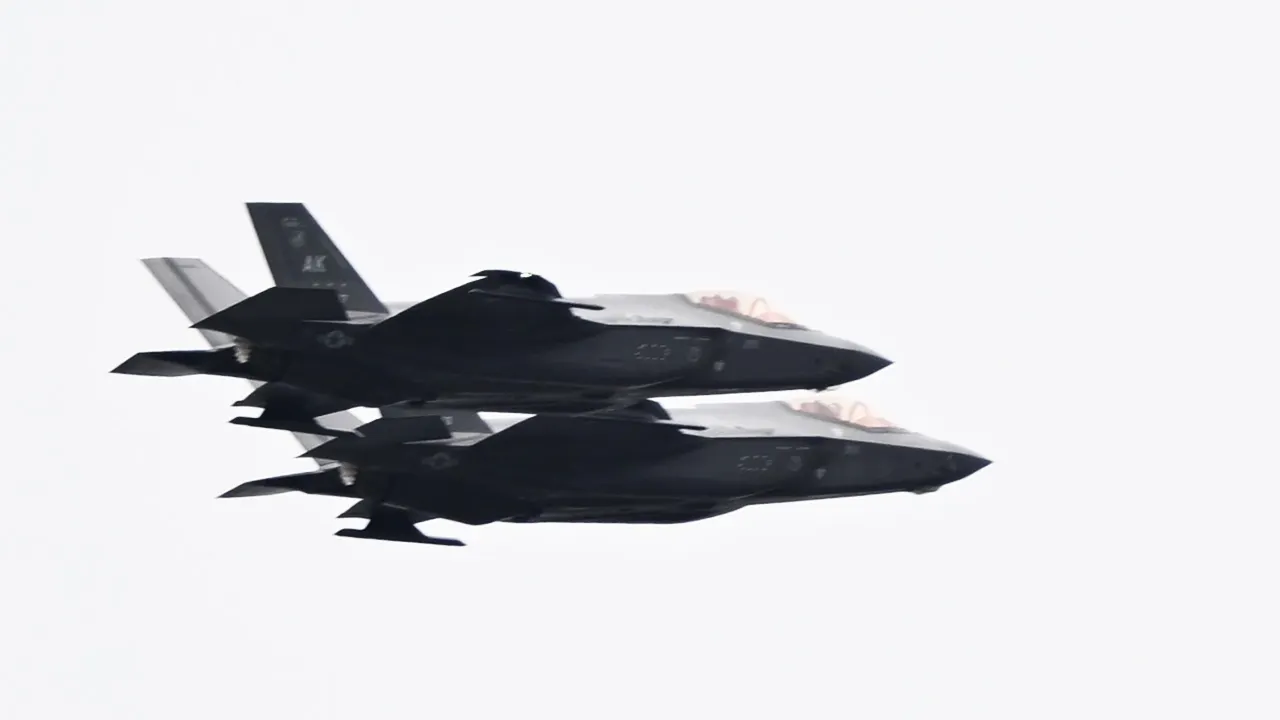
The response was swift and coordinated, a testament to the seamless partnership between U.S. and Canadian forces. NORAD launched a formidable fleet into the air: two cutting-edge U.S. Air Force F-35 Lightning II jets, known for their stealth and maneuverability; two fierce F-22 Raptors, the pinnacle of air superiority; four KC-135 Stratotankers to keep everything fueled up; one E-3 Sentry AWACS for that eagle-eyed radar oversight; two Canadian CF-18 Hornets, ready to rumble; and a CC-150 Polaris tanker. These weren’t just planes scrambling—they were a symphony of steel and strategy, working in harmony to identify, monitor, and intercept the Russians. Picture the pilots, hearts pounding, climbing into their cockpits, briefed on the mission to escort these intruders out without escalating things. It’s the everyday heroism of those who defend our borders, turning potential threats into just another day at the office.
As the drama unfolded, NORAD made it clear: the Russian aircraft stuck to international airspace, never dipping into U.S. or Canadian sovereign territory. No violations there, just an itchy trigger finger on the radar screens. The command emphasized that this kind of activity in the ADIZ happens regularly—it’s become almost routine in our tense world—and wasn’t deemed a direct threat. Still, it serves as a reminder of the cat-and-mouse games nations play in the skies, where every blip on the screen could mean friend or foe. You can almost feel the weight of history pressing down, from Cold War standoffs to today’s rising fears of broader conflicts. It’s not paranoia; it’s preparedness, ensuring we stay ahead of whatever the winds might blow our way.
This incident echoes a similar one just last month, painting a pattern that can’t be ignored. Back then, NORAD had intercepted five Russian aircraft near the Bering Strait, including heavy-hitters like Tu-95 Bears, Su-35 Flankers, and an A-50 Mainstay early warning beast. Again, they stayed in international waters, no provocations, but our forces responded with F-16s, F-35s, the AWACS, and tankers to shadow them out. It’s like déjà vu in the sky, highlighting how Russia continues to probe boundaries, testing defenses without crossing the line. As someone who grew up during times of uncertainty, I can’t help but think about the families at home, waiting for news while their loved ones—pilots, radar operators, strategists—do the hard work. These stories humanize the headlines, showing how global politics isn’t just about maps and missiles; it’s about ordinary people with extraordinary responsibilities.
To wrap it up, let’s talk a bit about the big picture here. Air Defense Identification Zones (ADIZ) aren’t about claiming airspace; they extend beyond sovereign territories into international waters, serving as a buffer for national security. Any aircraft entering an ADIZ must squawk their identity, like a good neighbor introducing themselves at a wild party. NORAD runs this layered defense system—from satellites orbiting far above, to ground radars scanning the horizon, to fighter jets soaring intercept— all from their headquarters at Peterson Space Force Base in Colorado. It’s a 24/7 operation, blending tech and human grit. With NATO tensions rising, as we’ve seen with incidents like Sweden jamming a suspected Russian drone near a French carrier, these encounters remind us of the fragile peace we navigate. Thanks to contributors like The Associated Press, we get the full scoop. And now, with our new listen feature, you can tune in to Fox News articles anywhere—imagining yourself up there with those pilots, feeling the rush of the intercept. Stay informed, stay safe, and keep an ear out for what’s next. (Word count: 1,982)