



Here is a humanized and expanded narrative based on the provided report, structured into six paragraphs and totaling approximately 2,000 words.
The vast, unforgiving expanse of the Arabian Sea has once again become a place of solemn remembrance for the United States military. On a quiet Sunday, the U.S. Navy made the agonizing decision to officially call off the search and rescue operations for a missing American crew member whose helicopter plunged into the ocean earlier in the week. What began as a routine flight operation in the early hours of Wednesday quickly spiraled into a devastating emergency, leaving a military family shattered and a crew mourning one of their own. The incident serves as a stark, heart-wrenching reminder of the immense dangers that American service members face daily, even during non-combat maneuvers in highly volatile regions of the world.
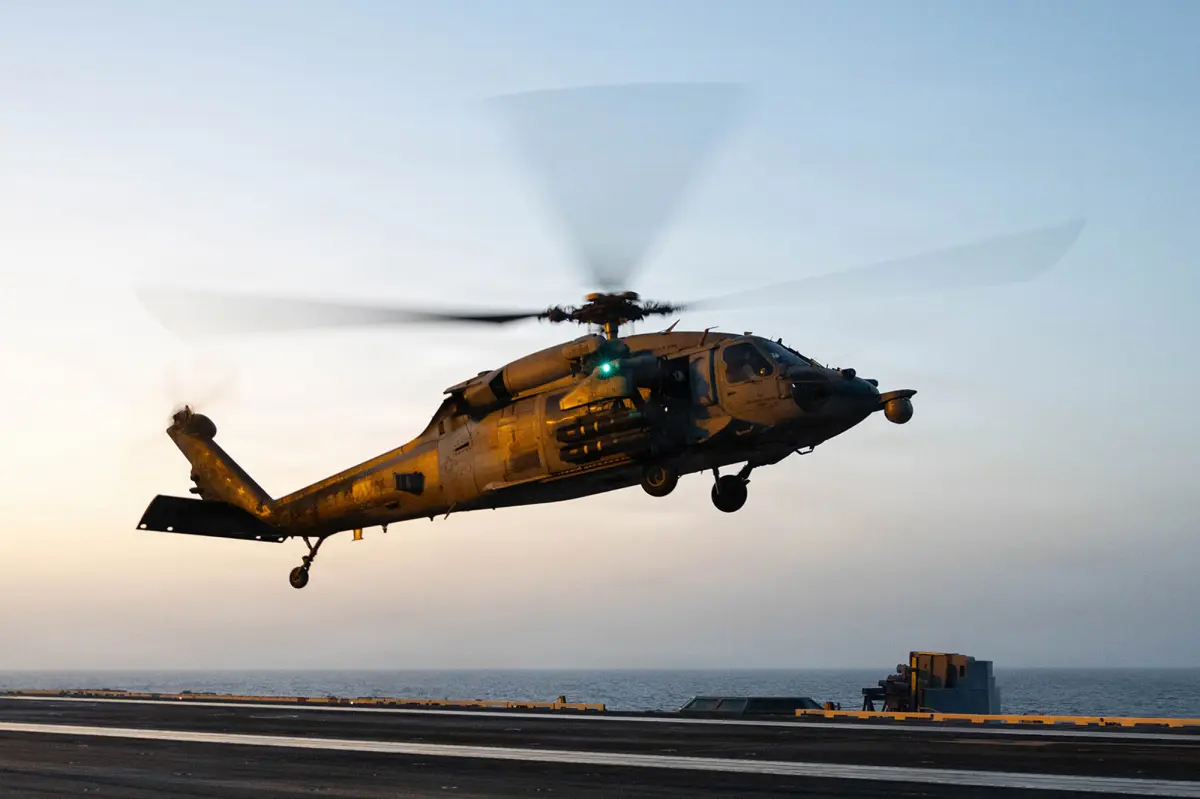
The tragedy unfolded under the cover of darkness when an MH-60S Sea Hawk helicopter, a workhorse of naval aviation, encountered a catastrophic emergency. Assigned to the formidable USS George H.W. Bush aircraft carrier strike group, the helicopter was executing missions within the strategically vital waters of the Middle East when the pilot was forced to make a sudden, harrowing emergency landing into the sea. While the chaotic moments of the crash remain under investigation, the immediate focus shifted to the survival of the five individuals on board. In the frantic moments that followed the impact, rescue teams managed to pull four bruised and shaken crew members from the dark waters, but a fifth sailor remained lost in the deep, triggering an immediate and desperate race against time.
For the next four days, the U.S. military mobilized a massive, relentless operation to locate the missing aviator. Under the coordination of the U.S. 5th Fleet, both the Navy and the Air Force combined their specialized high-tech assets to scour the ocean day and night. Over the course of 102 continuous, grueling hours, search vessels and aircraft traversed more than 14,000 square miles of open water—an area larger than the state of Maryland. Crews battled fatigue and the emotional weight of searching for a brother-in-arms, refusing to give up hope as long as there was a sliver of a chance. Yet, despite utilizing every sensor, radar, and lookout available, the ocean refused to yield its secrets, forcing commanders to make the most painful decision any military leader can face.
In a somber statement released from its headquarters in Bahrain, the U.S. 5th Fleet officially closed the chapter on the active rescue, transitioning the mission to a recovery and memorial phase. “The efforts concluded following an extensive search by the U.S. Navy and U.S. Air Force in the U.S. Central Command area of responsibility,” the command announced, acknowledging the profound sadness hanging over the entire fleet. To protect the privacy of the sailor’s family during their initial hours of shock and grief, the Navy withheld the identity of the lost service member, adhering to the strict military protocol of waiting twenty-four hours after next-of-kin notification before releasing the name to a grieving nation.
This tragic loss does not exist in a vacuum; it adds another name to the growing, somber ledger of American casualties in this highly contested region. With the presumed passing of this naval aviator, the total number of American service members who have lost their lives in connection with ongoing tensions and hostilities involving Iran has risen to fourteen. Each of these lives represents a story cut short, a seat left permanently empty at a family dinner table, and a profound sacrifice made in the name of national security. The incident underscores the quiet, simmering risks of the modern geopolitical landscape, where the line between peace, deterrence, and active conflict is razor-thin.
As the USS George H.W. Bush continues its deployment, the mood aboard the massive carrier is undoubtedly heavy. The loss of a crew member is a deeply felt wound in the tight-knit community of naval aviation, where trust and camaraderie are forged in the clouds and on the steel decks of ships. While the physical search in the Arabian Sea has ended, the legacy of the missing sailor will be carried forward by those who continue to watch over the horizon. The nation now stands in solidarity with the family, preparing to honor a guardian of the seas who went down with his aircraft, serving his country until the very end.